
 EN
A well-planned aggregate crusher plant starts long before steel hits the ground. Layout, circuit type and screening strategy decide whether the line meets spec gradation at the rated throughput or stalls under real quarry conditions. Process engineers must treat plant design as a system, not a list of machines. Poor early decisions raise operating cost for the whole life of the asset and erode return on investment, so the configuration phase deserves the same rigor as equipment selection.
Site Survey and Process Flow Planning
Feed Material Characterization
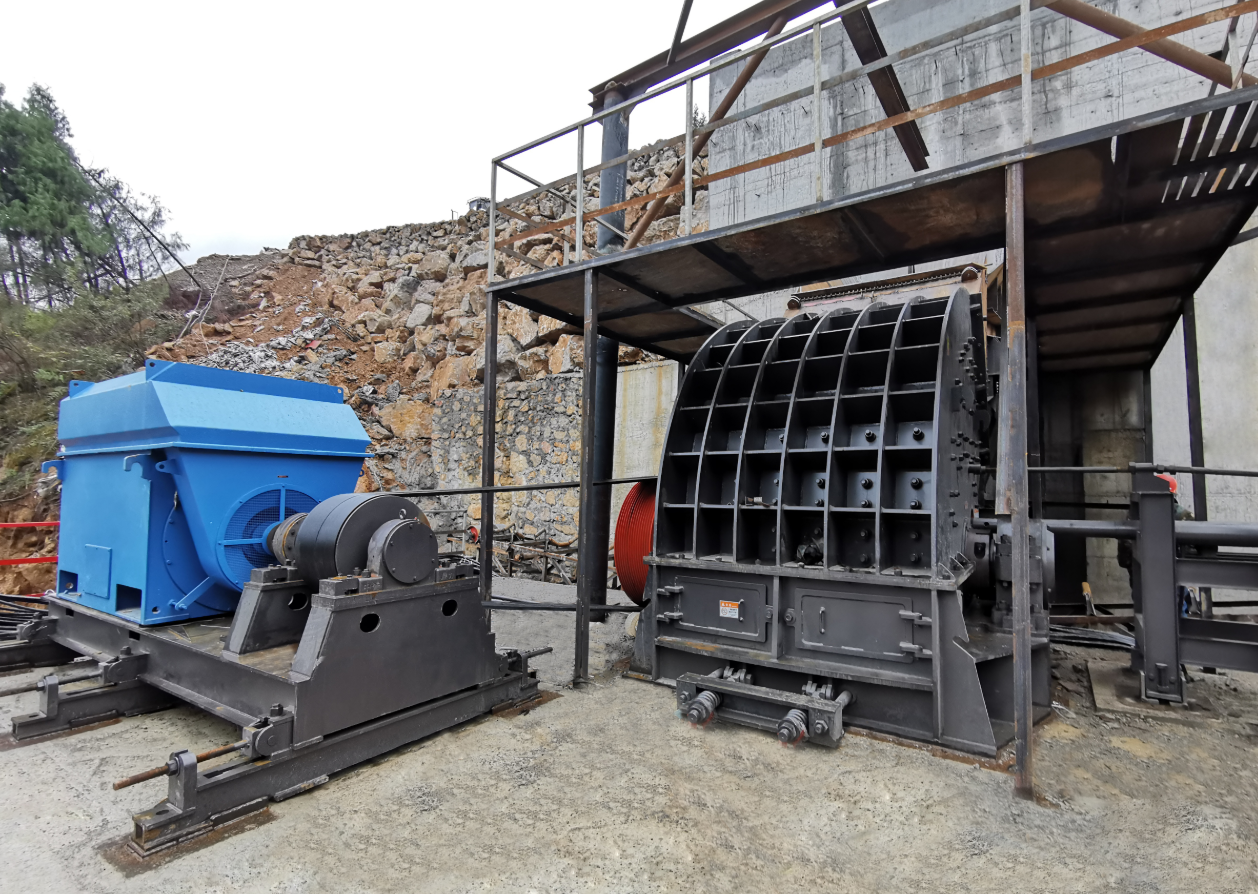
The first step in any aggregate crusher plant project is a site survey that defines feed rock hardness, silica content and moisture. A crushed-stone line in Renshou, Sichuan processing 600 TPH of mountain rock used a PCZ1615 heavy-duty hammer crusher after the survey confirmed abrasion levels. Matching the rotor and liner plate to material hardness protects wear parts, keeps the reduction ratio stable and delivered steady 600 TPH output with longer wear-part intervals. Wet feed also changes screening efficiency, so drill-core testing and moisture sampling belong in the same study. The survey should also record feed size distribution and the abrasiveness index, since both shape the liner plate and rotor specification for the primary crusher.
Throughput Targets and Capacity Sizing
For any aggregate crusher plant, capacity sizing begins with a feasibility study that fixes the target tons per hour and the required discharge sizes. A granite production line in Xichang runs 250–300 TPH across five product fractions from 1–5 mm to 26–31 mm. Oversizing the jaw crusher or impact crusher wastes capital expenditure, while undersizing forces recirculation that raises operating cost. Surge bins and smart control systems help balance the load between stages and absorb feed swings. Peak hourly demand and average daily tonnage differ, so the design should size the primary stage for surge and the finishing stages for steady state.
Open vs Closed Crushing Circuit
When to Choose an Open Circuit
An open circuit in an aggregate crusher plant sends crushed material straight to the next stage without returning oversize. This configuration suits a primary crushing plant where feed size is large and the final gradation tolerance is loose. Open layouts cut conveyor belt length and simplify commissioning, which lowers the initial capex for remote or modular design sites handling uniform rock. Avoid open circuits when the product spec demands tight, repeatable sizing bands.
Closed Circuit for Tight Gradation
A closed circuit within an aggregate crusher plant routes oversize back through a vibrating screen, producing a tighter particle size distribution. When the specification demands consistent aggregate for concrete or asphalt, the closed loop controls gradation within narrow bands. The trade-off is extra motor power and higher wear on screening media, but the return on investment shows in premium product value and fewer rejects. Screen efficiency and circulating load must be modeled to size the loop correctly. Selecting the correct screen deck aperture and ensuring high screen efficiency keeps the circulating load below thirty percent of fresh feed. A well-tuned loop also lowers the recirculation cost, since returning less oversize saves conveyor power and extends screen media life across the whole crushing circuit and reduces maintenance calls.
Screening Stages and Gradation Control
Multi-Deck Vibrating Screen Layout
Within an aggregate crusher plant, a multi-deck vibrating screen splits the stream into several fractions in one pass, which is central to gradation control. Placing 2YKZ or 3YKQ decks after the secondary cone crusher lets the plant design hit multiple discharge sizes without extra crushers. Screen aperture, slope and vibration frequency must match the target particle size to avoid blinding and carryover between decks. Polyurethane media reduces pegging on fine fractions. Regular screen inspection and proper deck tension keep the separation sharp, while a clear feed size window upstream protects the screening stage from overload.
Crushing Chamber and Reduction Ratio Matching
Each crushing chamber has an optimum reduction ratio tied to feed size and liner plate profile. A hammer crusher excels on limestone, while an impact crusher handles abrasive rock with better shape. Matching the chamber to material hardness keeps the product cubic and reduces the load on downstream screening, improving total plant throughput and extending spare parts life across the production line. Choke feeding and even distribution protect the crushing chamber from uneven wear. Setting the closed-side gap to match the target discharge size prevents over-crushing and saves motor power at every stage.
Material Flow, Dust Control and Commissioning
Conveyor Routing and Hopper Design
Material flow in an aggregate crusher plant depends on hopper geometry and conveyor belt routing that avoids long lifts and sharp transfers. A poorly shaped hopper causes bridging that halts the production line, so a site survey should model draw-down. Dust control at transfer points, guided by NFPA and OSHA expectations, protects workers and cuts cleanup labor on the crushing plant. Enclosed transfer chutes and tuned belt speed limit both dust and noise. Belt speed and width are calculated from peak material flow, with transfer chutes angled to keep the material stream centred.
EPC Commissioning and Maintenance Plan
EPC delivery covers equipment selection, process design, installation and commissioning under one contract, which shortens the payback period. A maintenance plan built around wear parts inventory and scheduled inspection keeps availability high. ISO 9001 managed factories and ANSI guarded machines give procurement teams confidence in long-term operating cost and safety compliance during continuous operation. Operator training and a smart control system dashboard turn commissioning data into daily uptime gains.
Good plant design balances circuit choice, screening stages and material flow against capital expenditure and operating cost. A properly engineered aggregate crusher plant delivers stable gradation, controlled dust and reliable throughput from day one of commissioning.
Frequently Asked Questions
Question
What determines whether an aggregate crusher plant should use an open or closed circuit?
Answer: Circuit choice depends on the required gradation tightness and product value. Open circuits suit primary stages with loose tolerance and lower capex, sending material forward without recirculation. Closed circuits return oversize through a vibrating screen, tightening particle size for concrete or asphalt aggregate. Engineers weigh extra motor power and wear against premium pricing. A site survey and feasibility study confirm the right balance before equipment selection.
Question
How many screening stages are needed for tight gradation control?
Answer: Most aggregate lines use two to three screening stages to separate fine, medium and coarse fractions. A primary screen after the secondary crusher removes finished product, while a closed-loop screen recirculates oversize. Multi-deck vibrating screens split several sizes in one pass, reducing conveyor complexity. The number of decks depends on the product spec, with 3YKQ or 2YKZ decks common for three to five fractions.
Question
Which crusher type fits abrasive versus soft rock?
Answer: Material hardness and silica content drive crusher selection. Hammer crushers and heavy hammer crushers suit limestone and moderate abrasion, delivering high reduction in one stage. Impact crushers handle harder, abrasive rock with better particle shape. Cone crushers excel in tertiary closed circuits for cubical product. Matching the crushing chamber and liner plate to rock hardness protects wear parts and stabilizes the reduction ratio across the production line.
Question
Can dust and noise control be built into the plant layout?
Answer: Yes. Dust control starts at transfer points with enclosed conveyors, spray systems and baghouse collection sized to throughput. Noise control uses dampened hopper liners, distance buffers and screened enclosures. NFPA guidance informs electrical and dust-explosion safety, while OSHA expectations protect worker exposure. Designing these into the layout during the site survey avoids costly retrofits and supports green mine and community compliance for the operation.
Question
What should a procurement team verify during commissioning?
Answer: Verify gradation against the product spec using sampled discharge sizes from each vibrating screen deck. Confirm throughput reaches the rated tons per hour under continuous feed. Inspect wear parts, guard placement per ANSI, and smart control system alarms. Review the maintenance plan, spare parts stock and EPC handover documents. A structured commissioning checklist protects return on investment and shortens the payback period after startup.