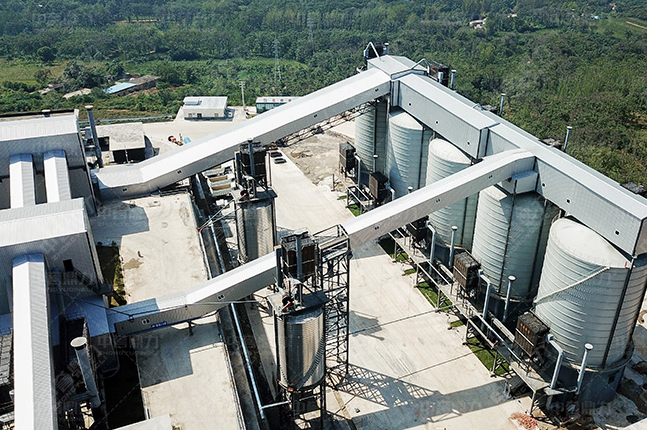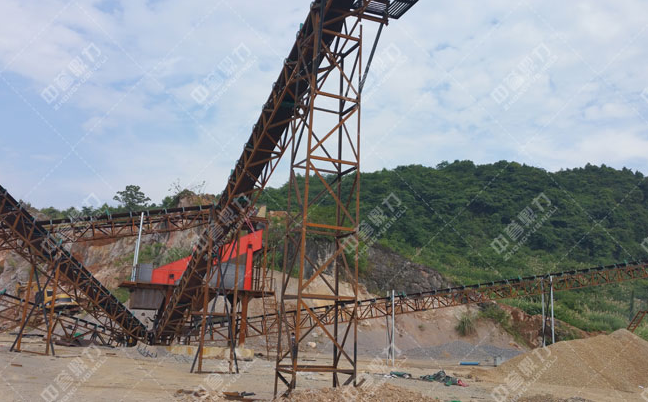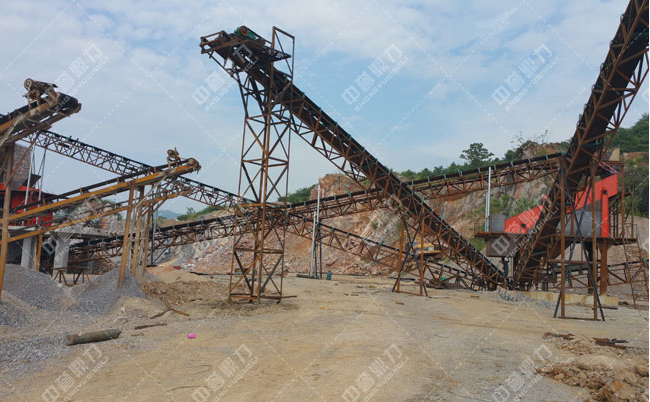
Output: 1000-1200T/H Configuration: ZG2038 vibrating feeder, PCZ1620/PCZ1615 hammer crusher, two sets of parallel double vibrating screens. Solution Introduction: Widely used in building materials, fire protection, fire extinguishing agents, welding ...
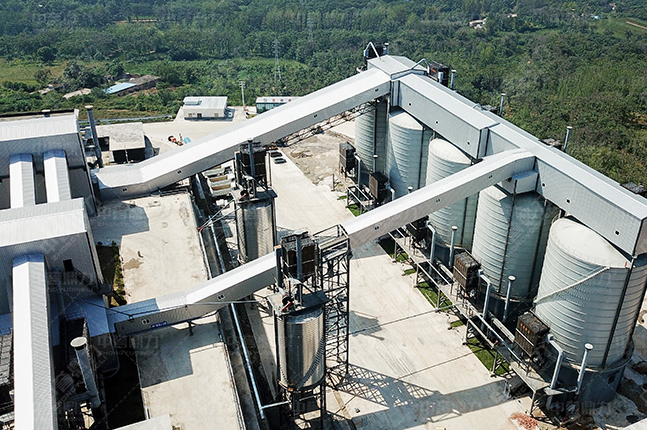
Output: 1000-1200T/H
Configuration: ZG2038 vibrating feeder, PCZ1620/PCZ1615 hammer crusher, two sets of parallel double vibrating screens.
Solution Introduction: Widely used in building materials, fire protection, fire extinguishing agents, welding rods, plastics, electrical insulation, papermaking, asphalt paper, rubber, pearlescent pigments and other chemical industries.
Production Line Details
Mica is a rock-forming mineral, typically occurring in pseudo-hexagonal or rhombic tabular, platy, or columnar crystal forms. Its color varies with its chemical composition, primarily deepening with increasing Fe content. Mica is characterized by its luster, high temperature resistance, and stable physicochemical properties, exhibiting good thermal insulation, elasticity, and toughness. In industry, muscovite is the most commonly used, followed by phlogopite. It is widely applied in building materials, fire protection, fire extinguishing agents, welding electrodes, plastics, electrical insulation, papermaking, asphalt paper, rubber, pearlescent pigments, and other chemical industries. Mica has also appeared as a character name in anime. Mined mica needs to be crushed into smaller pieces for use in actual production and construction. The following is a detailed explanation of the configuration of a common 200T/H mica production line.
The configuration solution for a 1000-ton-per-hour mica production line involves feeding mined mica into a hopper using loaders and trucks. The hopper is then fed evenly into a PCZ1620 heavy-duty crusher via a ZG2038 vibrating feeder. The crushed mixture then enters a PCZ1615 crusher for secondary crushing and shaping. After secondary crushing and shaping, the mixture enters a 2YKZ3070 vibrating screen for primary screening. Larger, unqualified materials are returned to the PCZ1615 crusher, producing one type of finished product. The undersize mixture enters a second vibrating screen (2YKZ3070) for secondary screening. The second screening produces two types of finished stone. The remaining undersize mixture enters a third vibrating screen (2YKZ2670) for tertiary screening, producing two more types of finished stone. Materials between the hammer crusher and each vibrating screen are transported by belt conveyors, and the three types of finished stone are stacked using belt conveyors.
 EN
EN