
 EN
EN
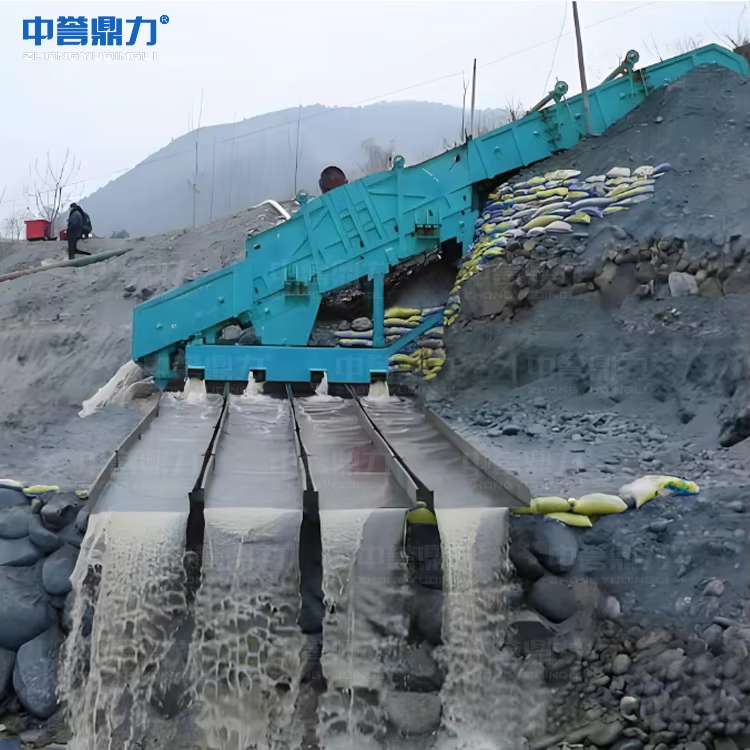
The Quarry That Doubled Its Sand Output – A Production Case Study
A granite quarry in southern India was producing manufactured sand, but the quality was inconsistent. Flakiness index hovered around 22%, fines content fluctuated between 8% and 18%, and concrete producers were rejecting shipments. The plant used a jaw-and-cone circuit with no tertiary shaping stage. After redesigning the line to include a VSI crusher and adding a closed-loop water recovery system, flakiness dropped to 12%, fines stabilized at 12–14%, and the sand consistently met IS 383 Zone II specifications. Throughput increased by 35%, and the quarry secured contracts with three major ready-mix concrete producers within six months.
This outcome is not unusual. Over the past six years, mineral processing consultants have observed that artificial sand production lines built on the three core principles—parent-rock integrity, precision process control, and environmental stewardship—consistently deliver superior product quality and operational efficiency. Understanding these fundamentals isn't just about equipment selection; it is about building a reliable, compliant, and profitable sand production operation.
Core Principles – The Three Non-Negotiable Fundamentals
A successful artificial sand production line rests on three non-negotiable fundamentals: parent-rock integrity, precision process control, and environmental stewardship. These directly determine output quality, operational efficiency, and long-term viability.
Parent-Rock Integrity
Parent-rock selection is the foundational step. Only hard, clean rock with a compressive strength of at least 80 MPa—and no potential for alkali-aggregate reactivity—should enter the process. Limestone, granite, and basalt are proven candidates. Weak or weathered feedstock introduces inconsistent fines and compromises concrete durability.
| Rock Type | Compressive Strength (MPa) | Alkali-Reactive Potential | Suitability |
|---|---|---|---|
| Granite | 100–250 | Low | Excellent |
| Basalt | 150–300 | Low | Excellent |
| Limestone | 80–150 | Low to Moderate | Good |
| River Pebble | 120–200 | Low | Excellent |
| Weathered Sandstone | 30–60 | Moderate | Poor |
Precision Process Control
Once raw material is secured, the focus shifts to controlled processing. A balanced circuit of crushing, screening, and (where needed) washing ensures particle shape remains cubical, gradation stays consistent, and the critical 0–5 mm fraction meets tight specifications. Unlike natural sand, manufactured sand gives operators full control over size distribution and eliminates organic contamination. High-quality artificial sand can reduce cement demand in concrete by up to 15%, delivering both performance and cost advantages.
Environmental Stewardship
Environmental responsibility is now integral—not optional. Modern plants use closed-loop water-recovery systems achieving over 90% reuse and dust suppression measures that maintain emissions within regulatory limits. When rock integrity, controllable processing, and sustainable water management align, the result is a sand product that consistently outperforms variable natural deposits while shrinking the operation's environmental footprint.
Key Equipment Selection – Matching Crushers to Material and Shape Requirements
Crusher selection follows a logical progression based on feed hardness, size, and desired particle shape. Jaw crushers serve as primary units, accepting blasted rock up to 1 m and reducing it to 100–200 mm; their compression action handles abrasive materials like granite efficiently. Cone crushers excel in secondary reduction of hard to moderately abrasive feeds, producing cubical aggregates through mantle-and-concave compression—with modern units achieving reduction ratios up to 8:1. For critical grain shape—especially in high-performance concrete—vertical shaft impact (VSI) crushers use rock-on-rock impact to generate well-rounded, low-flakiness particles. Horizontal impact (HSI) crushers offer high reduction ratios and good shape control for softer, less abrasive materials like limestone or recycled concrete.
| Crusher Type | Max Feed Size | Reduction Ratio | Best Material Hardness | Grain Shape Output |
|---|---|---|---|---|
| Jaw | Up to 1 m | 4:1–6:1 | Hard, abrasive | Angular, flaky |
| Cone | 200–300 mm | 6:1–8:1 | Medium-hard, abrasive | Cubical |
| HSI | 300–500 mm | 10:1–20:1 | Soft-medium, non-abrasive | Cubical, low fines |
| VSI | 40–60 mm | 3:1–6:1 (shaping) | Any (tertiary) | Very cubical, round |
A typical optimal configuration is jaw → cone → VSI. Adjustments—such as adding an extra impact stage—are made when feed hardness or flakiness thresholds require enhanced shaping.
Screening and Washing – Achieving Gradation and Water Recovery
Multi-deck vibrating screens with high-frequency drives and polyurethane mesh panels classify crushed material to isolate the 0–5 mm fraction reliably, resisting blinding even under high-fines conditions. Sand washing then removes silt-sized particles below 75 µm.
| System Component | Function | Typical Performance |
|---|---|---|
| High-frequency screens | Isolate 0–5 mm fraction | 90% classification efficiency |
| Hydrocyclones | Deslime and thicken slurry | Removes <75 µm particles |
| Dewatering screens | Reduce moisture content | 12–15% final moisture |
| Thickeners + Filter presses | Water recovery | 95% recovery rate |
A standard setup routes screen underflows to hydrocyclones, which deslime and thicken the slurry; cyclone overflow recirculates after flocculant-assisted thickening, enabling 90% water recovery. The underflow discharges onto dewatering screens, yielding sand with 12–15% moisture—dry enough for stockpiling. Closed-loop systems integrating cyclones, thickeners, and filter presses push water recovery beyond 95%, cutting both environmental impact and operating costs. For stringent gradation requirements—particularly trimming the 150–600 µm band—air classifiers can supplement wet processing with precision.
Material-Specific Adjustments – Granite, River Pebble, and Recycled Concrete
The design of an artificial sand production line must adapt to raw material properties to ensure efficiency, product quality, and equipment longevity. Granite, river pebble, and recycled concrete differ markedly in hardness, abrasivity, and particle shape generation—directly influencing crusher selection, screening layout, and dust control.
| Material | Hardness (Mohs) | Abrasivity | Recommended Process | Key Challenge |
|---|---|---|---|---|
| Granite | 6–7 | High | Jaw → Cone → VSI | Excessive fines generation |
| River Pebble | 7 | Very High | Jaw + Cone/VSI | Silica abrasivity |
| Recycled Concrete | 5–6 | Moderate | Jaw → HSI + Magnetic Separation | Contamination removal |
Granite (Mohs 6–7), with high quartz content, generates excessive fines during crushing. A three-stage process—jaw → cone → VSI—is recommended to manage fines and improve cubicity, keeping flakiness below 15% per IS 383. Dedicated dust collection systems are essential.
River pebble shares similar hardness but exhibits higher silica abrasivity (Abrasion Index 0.3), demanding wear-resistant liners in cone crushers and VSIs. A two-stage crushing approach (jaw + cone/VSI) is common, and wet screening helps suppress dust.
Recycled concrete aggregate (RCA) has lower hardness but higher angularity and contamination from brick, wood, and steel. Plants must integrate magnetic separators, air classifiers, and impact crushers to remove impurities and improve particle shape. Because RCA yields flaky particles under pure compression, impact crushing is preferred. Recirculation circuits and adjusted crushing ratios further optimize gradation to meet ASTM C33 standards.
Performance Validation and Quality Compliance
Throughput and Fines Control
Throughput is measured hourly against design capacity; deviations exceeding 8% prompt review of feed size distribution or wear-part condition. Fines control—particles passing 75 µm—is critical: too many micro-fines increase water demand in concrete, while too few impair particle packing. Most producers target 10–15% fines for optimal cohesion and workability.
| Parameter | Typical Target | IS 383 Requirement | ASTM C33 Requirement |
|---|---|---|---|
| Flakiness Index | <15% | <15% (Zone II) | Not specified |
| Fines (<75 µm) | 10–15% | <15% | 3–5% |
| Fineness Modulus | 2.6–3.0 | 2.5–3.5 | 2.3–3.1 |
Sand Quality Compliance
Sand quality must comply with grading and shape requirements in IS 383 (Zone II for general concrete) and ASTM C33, which caps material finer than 75 µm at 3–5%. Routine sieve analysis and shape testing verify conformance. Consistently aligning crusher discharge with these standards enables up to 12% cement reduction in downstream concrete mixes—providing a strong economic incentive for sustained quality discipline.
Quality Consistency – The Manufacturing Connection
Achieving consistent particle shape, tight gradation, and reliable fines control in artificial sand production requires not only the right crusher configuration but also precision in every upstream and downstream process. The same principle applies in mineral filler production for plastics and composites—where particle size distribution directly affects material properties. BXKM's expertise in plastics processing equipment—including compounding, mixing, and pelletizing systems—relies on consistent feedstock quality, which is often achieved through similar crushing, screening, and classification techniques used in mineral processing. By understanding the interplay between raw material preparation and downstream compounding, BXKM helps manufacturers achieve consistent product quality and production efficiency across their entire value chain.
FAQ
| Question | Answer |
|---|---|
| What is the importance of parent-rock integrity? | It determines the consistency, quality, and durability of manufactured sand. Weak or weathered feedstock produces inconsistent fines and compromises concrete durability. |
| Which crusher configuration is optimal for artificial sand production? | A typical optimal configuration is jaw → cone → VSI. Adjustments may be needed based on feed hardness and desired grain shape. |
| How does water recovery influence environmental sustainability? | Closed-loop systems achieve 90% water reuse, cutting environmental impact and operating costs while maintaining regulatory compliance. |
| What are the key standards for artificial sand quality? | IS 383 (Zone II for concrete) and ASTM C33—covering gradation, shape requirements, and limits on silt-sized particles. |
| How can recycled concrete aggregates be optimized? | Use impact crushers for shape enhancement, magnetic separators, air classifiers for contaminant removal, and ensure compliance with ASTM C33. |