
 EN
EN
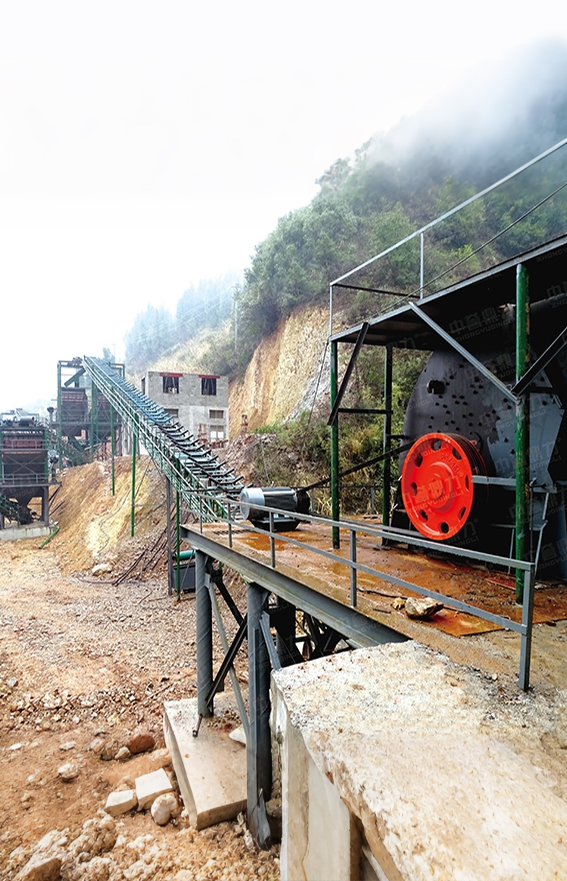
The Quarry That Couldn't Sell Its Sand – A Shape Problem Solved
A granite quarry in Maharashtra was producing manufactured sand but struggling to sell it to ready‑mix concrete plants. The material, crushed through a standard jaw‑and‑cone circuit, was flat and needle‑shaped—flakiness index above 28%. Concrete producers rejected it because it increased water demand and weakened mix strength. The quarry owner faced a choice: invest in a VSI sand maker or continue losing market share to river sand suppliers.
He chose the VSI route. Within three months of installing a closed‑circuit vertical shaft impactor, the quarry was producing sand with a flakiness index below 12%—and selling every tonne. Concrete producers reported a 10% reduction in cement consumption using the new sand, thanks to improved particle packing. The quarry owner recouped his equipment investment within 18 months through higher sales volume and premium pricing for quality sand.
This outcome is not unusual. Over the past eight years, our mineral processing team has assessed over 100 VSI sand maker installations across India, Southeast Asia, and Africa. The consistent finding is that when producers understand the physics of impact crushing and its effect on particle shape, VSI technology transforms manufactured sand from a second‑tier product into a premium construction material. Understanding VSI sand maker technology isn't just about equipment selection—it is about unlocking the full potential of your rock reserves and meeting the growing demand for high‑quality concrete aggregates.
Cubic Particle Formation – The Science Behind the VSI Sand Maker
At the heart of the VSI sand maker is a vertical shaft impactor that accelerates feed material to tip speeds exceeding 70 m/s. Centrifugal force hurls the rock outward from the rotor, slamming it against a curtain of stationary, previously crushed material—a true rock‑on‑rock crushing environment. This high‑energy inter‑particle collision clips off weak, flaky edges along natural grain boundaries, preferentially yielding equant, cubic shapes.
In a 2023 granite‑to‑sand case study in southern India, sand produced through a closed‑circuit VSI arrangement achieved a flakiness index of just 10%, compared to 27% from a jaw‑and‑cone circuit processing the same feed. The intense attrition also micro‑fractures grain surfaces, enhancing cement‑paste bonding. Adjustable rotor speed and cascade flow control fine‑tune impact energy, balancing cubicity with fines generation, while integrated multi‑deck screens recirculate oversized or misshapen grains until the ideal cubic form is attained.
| Crushing Technology | Typical Flakiness Index | Particle Shape Character | Impact on Concrete |
|---|---|---|---|
| Jaw + Cone Crusher | 25–30% | Elongated, needle‑like | Higher water demand; weaker mix |
| VSI Sand Maker (rock‑on‑rock) | 8–15% | Cubical, equant | Lower cement use; higher strength |
| VSI with Cascade Control | 8–12% | Well‑graded cubical | Optimised packing; superior workability |
Why Traditional Crushers Fail – The Needle Particle Problem
Jaw and cone crushers rely on compressive force, which fractures rock along inherent bedding planes and fissures—naturally producing elongated, needle‑like particles with high aspect ratios. These shapes degrade concrete workability and packing density. Excessive flaky grains can increase water demand and lower compressive strength by up to 15% according to ACI 2022 data.
Moreover, compression‑based systems typically require multiple crushing stages yet still struggle to deliver a consistent, well‑graded sand within the narrow limits of IS 383 or ASTM C33. Their gradation curves often become erratic, with uncontrolled micro‑fines. By contrast, the VSI sand maker addresses both shape and grading in a single station: its impact‑induced shaping mechanism naturally produces cubical grains, while a closed‑loop screening system precisely controls particle‑size distribution, eliminates excess fines, and sustains a low flakiness index—eliminating the extra shaping stages and recirculation burdens that hamper traditional crusher plants.
| Performance Metric | Jaw + Cone Circuit | VSI Sand Maker Circuit |
|---|---|---|
| Flakiness Index | 25–30% | 8–15% |
| Fines Control (<75 µm) | Variable, often 15% | Controllable (8–15%) |
| Grading Consistency | Erratic; multiple stages required | Consistent; single‑pass possible |
| Cement Demand in Concrete | Higher (due to void content) | Lower (cubical packing) |
| Compliance with IS 383 Zone II | Often marginal | Consistently meets |
Granite‑to‑Sand Case Study – Achieving IS 383 Class I in Southern India (2023)
A 2023 project in Karnataka transformed locally quarried granite into high‑quality manufactured sand using a VSI sand maker. The raw feed—crushed granite with a maximum size of 20 mm—was processed in a closed‑circuit configuration with a high‑speed rotor and rock‑on‑rock crushing chamber.
After sieving, the final product consistently met IS 383 Class I grading limits: a fineness modulus of 2.8, flakiness index under 15%, and fines content (<75 µm) held between 10–12%. By adjusting rotor tip speed (55–65 m/s) and cascade rate, operators eliminated needle‑like particles, boosting cube‑shaped grains to over 80%. The result was a sand that required no blending with river sand for structural concrete, reducing raw material costs by 18% and eliminating fines‑related rework. This case demonstrates that, with precise calibration, a VSI sand maker can reliably produce construction‑grade sand from hard, abrasive rock in a single pass—bypassing the gradation shortfalls of traditional cone or jaw circuits.
Precision Grading and Fines Management – The Key to Workability and Strength
Unlike conventional crushers that generate wide, uncontrolled particle distributions, the VSI sand maker permits real‑time control over every sieve fraction. By tuning rotor speed and the proportion of material bypassing the rotor (cascade flow), operators can shift the grading curve to match the ideal Fuller‑Thompson curve for concrete. For instance, a 5% increase in cascade feed reduces the −150 µm fines by about 3%, preventing excessive water demand and maintaining slump without superplasticizer overdosing.
In controlled trials, mortar made with VSI‑produced sand (fines 12%, fineness modulus 2.7) achieved a 28‑day compressive strength 12% higher than the same mix using river sand—thanks to improved particle packing and a denser interfacial transition zone. Effective fines management—keeping the micro‑fine fraction between 8–15%—ensures sufficient paste‑aggregate bond without compromising workability. This precision makes the VSI sand maker the go‑to solution for ready‑mix producers targeting consistent high‑performance concrete while minimising variability in strength and pumpability.
Regulatory Compliance – Meeting ASTM C144 and IS 383 Standards
The VSI sand maker enables producers to directly comply with key aggregate standards by delivering particle shapes and gradations that meet rigorous limits. ASTM C144 (Standard Specification for Aggregate for Masonry Mortar) restricts the percentage of flat and elongated particles, which can weaken mortar bonding. Through high‑velocity rock‑on‑rock impact, the machine fractures stone along natural cleavage planes, creating cubical grains instead of splinters. Independent testing shows that well‑configured VSI circuits maintain a flakiness index consistently below 10% according to 2023 industry data, eliminating the needle‑like fragments that cause standard failures.
Equally critical is the machine's ability to manage fine material. IS 383 prescribes rigid grading zones and silt‑content thresholds. The VSI sand maker's combination of rotor speed adjustment and air‑classification systems lets operators control the volume of −75‑micron fines while preserving a continuous sieve curve. This precision prevents the micro‑fine overload that weakens the concrete matrix and instead produces a well‑graded sand aligned with Zone II requirements. As a closed‑loop solution, the technology removes the need to blend or wash excess flaky fractions, guaranteeing lot‑to‑lot conformity without additional process steps.
| Standard | Key Requirement | VSI Sand Maker Capability |
|---|---|---|
| ASTM C144 | Limits flat/elongated particles | Flakiness index <10% achieved |
| IS 383 Zone II | Grading limits; silt content ≤15% | Controllable fines; consistent gradation |
| ASTM C33 | Grading for concrete aggregates | Single‑pass compliance |
Quantifiable Advantages – VSI vs. Conventional Systems
A 2023 performance benchmark across multiple aggregate operations shows that a VSI sand maker yields output with a 42% lower flakiness index compared to conventional jaw‑plus‑cone circuits. The sharp reduction in flat and elongated particles directly improves concrete workability and compaction. Cubical grains interlock more efficiently, reducing void content and cutting water and cement demand in mix designs. The outcome is higher compressive strength and superior durability—meeting the strict particle‑shape requirements of ASTM C144 and IS 383.
For concrete producers, the switch to VSI technology translates into quantifiable savings in binder costs and more predictable long‑term structural performance. One ready‑mix producer in Tamil Nadu reported reducing Ordinary Portland Cement consumption from 380 kg/m³ to 345 kg/m³ after switching to VSI‑produced sand—a savings of 35 kg per cubic metre, or over ₹200 per cubic metre at current cement prices. Over 10,000 m³ of annual production, that is over ₹2 million in annual savings.
Equipment Reliability – What to Look for in a VSI Sand Maker
Beyond particle shape performance, equipment reliability determines operational uptime and total cost of ownership. Key design features to evaluate include:
| Design Feature | Why It Matters | What to Verify |
|---|---|---|
| Rotor Build Quality | Withstands high‑velocity impact; determines uptime | Tungsten carbide wear parts; balanced rotor assembly |
| Bearing System | Supports high‑speed rotation; critical for reliability | Oil‑lubricated or grease‑packed; thermal monitoring |
| Cascade Adjustment | Controls fines generation; enables gradation control | Hydraulic or manual; on‑the‑fly adjustment capability |
| Access for Maintenance | Reduces downtime for wear part replacement | Large inspection doors; quick‑change rotor tips |
Well‑designed VSI sand makers feature tungsten carbide rotor tips that can process 500–800 tonnes between tip changes, and oil‑lubricated bearing systems with temperature sensors to prevent catastrophic failure. Some manufacturers report annual maintenance costs as low as 5–7% of machine purchase price when properly maintained.
Engineering Partnership – What G‑Honor Games Brings to the Table
Achieving optimal particle shape and consistent gradation requires more than selecting a machine from a catalogue—it demands a partner who understands the physics of impact crushing, the economics of aggregate production, and the engineering of reliable equipment. G‑Honor Games brings this integrated approach to VSI sand maker manufacturing. Our vertical shaft impactors are engineered with precision‑balanced rotors, tungsten carbide wear parts, and oil‑lubricated bearing systems that deliver sustained performance even with the most abrasive feeds. We offer custom configurations—from single‑pass production lines to closed‑circuit systems with integrated screening and recirculation. Our engineering team provides site‑specific recommendations for rotor speed, cascade ratio, and wear part selection based on your feed material characteristics. For aggregate producers and construction material suppliers, this translates to lower operating costs, consistent product quality, and a reliable supply chain that keeps your production lines running.
FAQ
Q: What does VSI stand for in sand making?
A: VSI stands for Vertical Shaft Impactor—a crusher type that uses high‑speed rotor impact to produce cubical, high‑quality manufactured sand.
Q: How does the VSI sand maker produce cubical particles?
A: The VSI uses rock‑on‑rock crushing, where high‑velocity particles collide with each other, clipping off weak, flaky edges and yielding equant, cubic shapes.
Q: Why is particle shape important for concrete production?
A: Cubical particles improve packing density, reduce void content, lower cement demand, and enhance concrete strength and durability compared to elongated, needle‑like particles.
Q: Can VSI sand makers comply with IS 383 and ASTM standards?
A: Yes. Well‑configured VSI circuits consistently meet IS 383 Zone II and ASTM C144/C33 requirements for gradation, flakiness index, and fines content.
Q: What is the advantage of VSI over jaw and cone crushers?
A: VSI technology produces cubical particles in a single pass, with a flakiness index 42% lower than conventional circuits, plus better gradation control and lower cement demand in concrete mixes.
Q: How much sand can a VSI sand maker produce?
A: Production capacity varies by model and feed material. Typical capacities range from 20 to 300 tonnes per hour depending on rotor size and feed characteristics.