
 EN
EN
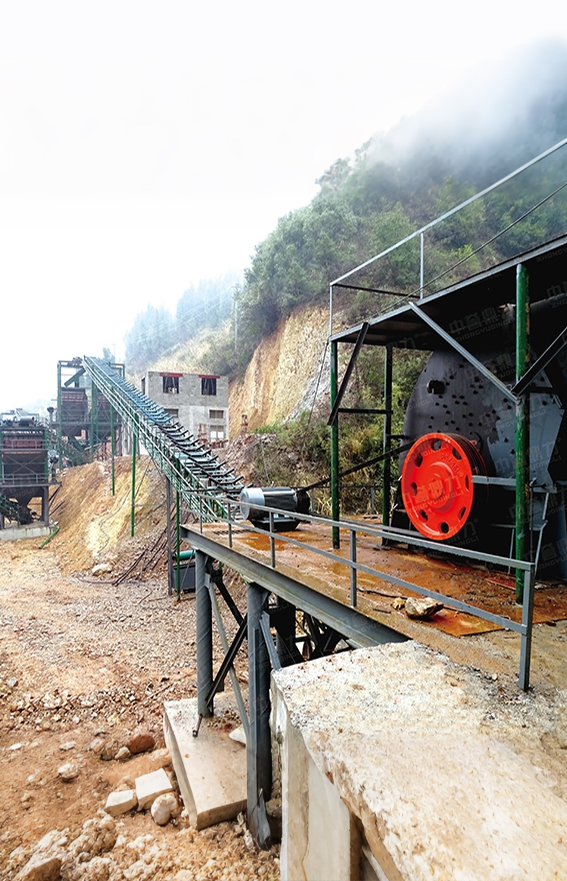
The Plant That Lost 60% Throughput – A Design Lesson
A limestone quarry in the Midwest installed a new crushing plant based on a standard equipment package from a single vendor. The layout placed the primary crusher too far from the quarry face, requiring long conveyor runs across uneven ground. Transfer points were cramped, and the secondary screen was undersized for the intended 200 tph capacity. Within three months, the plant was operating at barely 80 tph—a 60% loss in effective throughput. The operation was spending more time clearing choked chutes and replacing worn belts than crushing rock. A redesign, reconfiguring the flow path and increasing screen area, pushed throughput back to 180 tph without adding a single new crusher.
This scenario is more common than most plant designers admit. Over the past six years, mineral processing consultants have observed that a coherent crushing plant design—one that optimizes material flow, adapts to site topography, and selects the right circuit configuration—consistently delivers superior throughput and lower operating costs. Understanding the fundamentals of crushing plant design isn't just about equipment selection; it is about building a system where every component works in harmony from pit to product stockpile.
Material Flow Optimization – From Pit to Product Stockpile
The simplest metric of a well-designed plant is how few times a single particle is handled. A linear, gravity-assisted flow—from primary feed hopper to final product stacker—minimizes conveyor length, transfer points, and energy consumption. Long, misaligned belt runs and multiple drop chutes invite spillage, increase wear, and risk blockage. Sites that neglect flow geometry often see effective throughput drop by 50–60%, with machines idling while operators clear stalled chutes.
| Design Element | Optimal Practice | Common Error | Consequence |
|---|---|---|---|
| Material flow path | Linear, gravity-assisted | Zigzag, multiple transfers | Reduced throughput, increased wear |
| Conveyor length | Shortest practical | Excessively long | Higher energy, more spillage |
| Transfer points | Minimized | Multiple drop chutes | Blockage risk, maintenance delays |
| Surge capacity | Adequate between stages | Insufficient | Crusher starvation or overflow |
| Chute design | Steep, self-cleaning | Shallow, prone to clogging | Frequent stoppages |
Crushers, screens, and feeders should therefore be positioned so each downstream unit's inlet sits directly below the upstream discharge—relying on minimal surging. Surge bins and short, steep transfer conveyors between stages even out feed variations and prevent a slow screen from starving a crusher. When layout respects natural material momentum and avoids double-handling, surge capacity supports—not masks—a sound flow path.
Site-Specific Layout – Quarry Flatness vs. Mountainous Terrain
Flat Quarry Settings
Flat-quarry settings support an elongated, single-level layout where conveyors run horizontally and stockpile footprints are unrestricted. This simplicity reduces structural steelwork and power draw—but may require longer haul distances and larger land areas.
| Terrain Type | Layout Approach | Advantages | Challenges |
|---|---|---|---|
| Flat quarry | Single-level, elongated | Simpler steelwork, lower power | Longer haul distances |
| Mountainous | Vertical, bench-based | Gravity feed, shorter conveyors | Higher civil works, complex access |
Mountainous Terrain
In contrast, mountainous or bench-mine terrain forces vertical arrangements: primary crushing often occurs at the excavation level, with material lifted via steep-angle conveyors, skip hoists, or truck ramps to elevated screening stations. That elevation advantage can enable gravity-fed secondary and tertiary circuits, recovering much of the energy spent on lifting. The trade-off is greater structural complexity, higher civil works investment, and constrained maintenance access. For example, a hillside plant on three benches can cut conveyor belt length in half—but demands detailed geotechnical review and dedicated access stairways. Whether flat or stepped, the final design must preserve operator safety, accommodate mobile crane movements, and allow for future expansion—factors that directly influence total life-cycle cost.
Open vs. Closed Circuit – Balancing Throughput, Fines Control, and Recirculation
The decision to return oversize material to a crusher—or pass it directly to stockpile—defines product shape, consistency, and net capacity.
| Criterion | Open Circuit | Closed Circuit |
|---|---|---|
| Net throughput | Higher, all material exits | Lower, recirculation occupies capacity |
| Product size consistency | Broad, depends on crusher CSS | Tight, controlled by recirculation |
| Fines generation | Usually lower | Higher, due to repeated breakage |
| Recirculation load | None | Typically 15–40% of crusher feed |
| Capital cost | Simpler chute and screen setup | Requires additional conveyors and chutes |
| Typical use | Scalping, final-stage sand production | Aggregate shaping, strict specification |
An open circuit crushes material once and discharges all products, delivering high instantaneous throughput but limited control over top size and particle shape. A closed circuit recirculates screen oversize back to the same or a downstream crusher, progressively refining particle size and improving cubicity. However, recirculation reduces net fresh feed capacity and increases power consumption per finished ton. Choosing the right circuit balances desired product envelope against available crusher power and screen area.
Crusher Selection – Matching Type to Feed Characteristics
Selecting the correct crusher begins with compressive strength—expressed as Mohs hardness or psi—and free moisture content.
| Crusher Type | Typical Mohs Range | Max Feed Size (mm) | Acceptable Moisture | Primary Output |
|---|---|---|---|---|
| Jaw | 5–8 | ≤1,500 | <5% | Coarse, crushed rock |
| Gyratory | 5–8 | 1,500 | <5% | High-volume coarse |
| Cone | 5–8 | 50–400 | <5% (dry preferred) | Medium-fine, cubical |
| Impact (HSI) | 3–5 | ≤500 | <8%, non-sticky | High-fines, cubical |
| Roll | 2–4 | ≤150 | Up to 10% | Sizing of soft feeds |
Hard, abrasive rock (Mohs 5–8, 20,000 psi) demands compression crushing: jaw crushers for primary reduction of feed up to 1,500 mm; gyratory crushers for ultra-high-tonnage primary duty; and cone crushers for efficient secondary/tertiary sizing. Medium-hard to soft materials (Mohs 3–5) suit horizontal-shaft impact (HSI) crushers, which deliver high reduction ratios and cubical particles at lower wear. Roll crushers handle friable, soft feeds (Mohs 2–4), such as coal or clay.
Moisture thresholds are equally decisive. Compression crushers tolerate dry to slightly damp feed—but moisture above 5–8% risks packing and bridging, especially in cones. Impact crushers manage moderately wet, non-sticky feeds yet risk blinding if clay is present.
Limestone Case Study – Mobile Impact Crushing at 120 tph
A typical quarry producing concrete aggregate from limestone (Mohs 3, silica <2%, moisture 3%) exemplifies rational crusher selection. The goal was a high-fines gradation (–5 mm) at 120 tonnes per hour with minimal maintenance. A mobile horizontal-shaft impact (HSI) crusher in closed-circuit configuration was deployed: its high-speed blow bars generate fines naturally, while the integrated screen and recirculation conveyor allow real-time fines control without oversize contamination. Limestone's low abrasiveness keeps blow-bar wear under 0.5 g/t—yielding over 800 hours per set. Tracked mobility reduces face-to-crusher haul distance, and the 120 tph throughput is sustained with consistent 500 mm feed top-size. This configuration avoids the excessive capital of compression crushers and delivers the precise particle shape required for modern concrete mixes.
Multi-Stage Crushing – Primary, Secondary, Tertiary, and Quaternary Logic
A properly staged circuit assigns each crusher a narrow size reduction ratio—preventing the energy waste and excessive wear that occur when a single machine attempts extreme reduction. Primary jaw crushers accept run-of-mine feed up to 1,200 mm and typically produce a 150–250 mm product. Secondary cone crushers then reduce this to 30–50 mm, while tertiary crushers refine material to final specifications—often below 20 mm. This three-stage sequence keeps each unit within its efficient reduction window.
| Stage | Crusher Type | Feed Size | Product Size | Reduction Ratio |
|---|---|---|---|---|
| Primary | Jaw/Gyratory | Up to 1,200 mm | 150–250 mm | 4:1–6:1 |
| Secondary | Cone | 150–250 mm | 30–50 mm | 5:1–8:1 |
| Tertiary | Cone/VSI/HSI | 30–50 mm | 5–20 mm | 3:1–6:1 |
| Quaternary | VSI (optional) | 5–20 mm | <5 mm | 3:1–5:1 |
A quaternary stage becomes valuable when product specifications demand near 100% passing 5 mm—or when a high proportion of cubical fines is mandatory. Conversely, a screening bypass can divert part of the secondary output directly to finished stockpiles if gradation already meets target—cutting energy use. Matching capacities across stages is critical: imbalances force excessive recirculation that can inflate unit production cost by up to 20%, according to field case studies.
Capacity-Based Sizing – Matching Scale to Production Goals
| Scale | Capacity Range | Design Focus | Typical Equipment Chain |
|---|---|---|---|
| Small Quarry | 50–150 tph | Portability, compact footprint, simple control | Mobile jaw + mobile impact or cone + mobile screen |
| Large-Scale Mining | 200–500+ tph | High throughput, maximum uptime, heavy-duty wear life | Stationary gyratory/jaw → cone(s) → vibrating screen → surge bins |
Smaller operations favour modular, single-chassis solutions that can be relocated rapidly. Large mining plants require robust, permanently installed circuits with dedicated surge capacity to buffer feed fluctuations and maintain steady crusher loading.
Equipment Coordination – Feeder, Crusher, Screen, Conveyor Synchronization
Smooth material flow requires precise alignment of equipment speeds and capacities. A feeder that outpaces the primary crusher causes surge pile spillage; an undersized screen forces excessive recirculation, choking the circuit. Conveyors must handle the peak throughput of downstream crushers to prevent stockpile buildup. Industry benchmarks reveal unbalanced systems can lose up to 20% of potential production due to intermittent stoppages (Aggregate Processing Study 2022). The solution lies in synchronizing feeder rates using crusher load sensors and screen efficiency curves—enabling dynamic coordination that minimizes downtime and ensures continuous, steady throughput from excavation to product stockpile.
Common Design Pitfalls – Oversized Crushers, Inadequate Access, Insufficient Surge
| Pitfall | Consequence | Prevention |
|---|---|---|
| Oversized crushers | Single point of failure, limited flexibility | Use multiple mid-sized crushers |
| Inadequate maintenance access | Extended downtime (30%+) | Provide adequate clearances |
| Insufficient surge capacity | Crusher starvation, inconsistent quality | Install adequate surge bins |
Proactive planning against these pitfalls ensures a stable, high-output operation.
Quality Consistency – The Manufacturing Connection
Achieving consistent product quality in aggregate production requires not only the right crusher configuration but also precision in every upstream and downstream process. The same principle applies in mineral filler production for plastics and composites—where particle size distribution directly affects material properties. BXKM's expertise in plastics processing equipment—including compounding, mixing, and pelletizing systems—relies on consistent feedstock quality, which is often achieved through similar crushing, screening, and classification techniques used in mineral processing. By understanding the interplay between raw material preparation and downstream compounding, BXKM helps manufacturers achieve consistent product quality and production efficiency across their entire value chain.
FAQ
| Question | Answer |
|---|---|
| What is the importance of material flow optimization? | It minimizes conveyor length, transfer points, and energy consumption, ensuring smooth movement without bottlenecks. |
| How does site-specific terrain affect plant layout? | Flat terrain allows elongated layouts; mountainous terrain supports vertical layouts, reducing conveyor lengths but increasing structural complexity. |
| What defines an open vs. closed circuit? | Open circuit crushes once; closed circuit recirculates oversize to refine particle size and improve consistency. |
| How do crusher types match feed characteristics? | Hard, abrasive materials suit compression crushers (jaw, cone). Soft materials suit impact or roll crushers. |
| Why is multi-stage crushing critical? | It ensures efficient size reduction by assigning each crusher a narrow reduction ratio, preventing energy waste and excessive wear. |