
 EN
EN
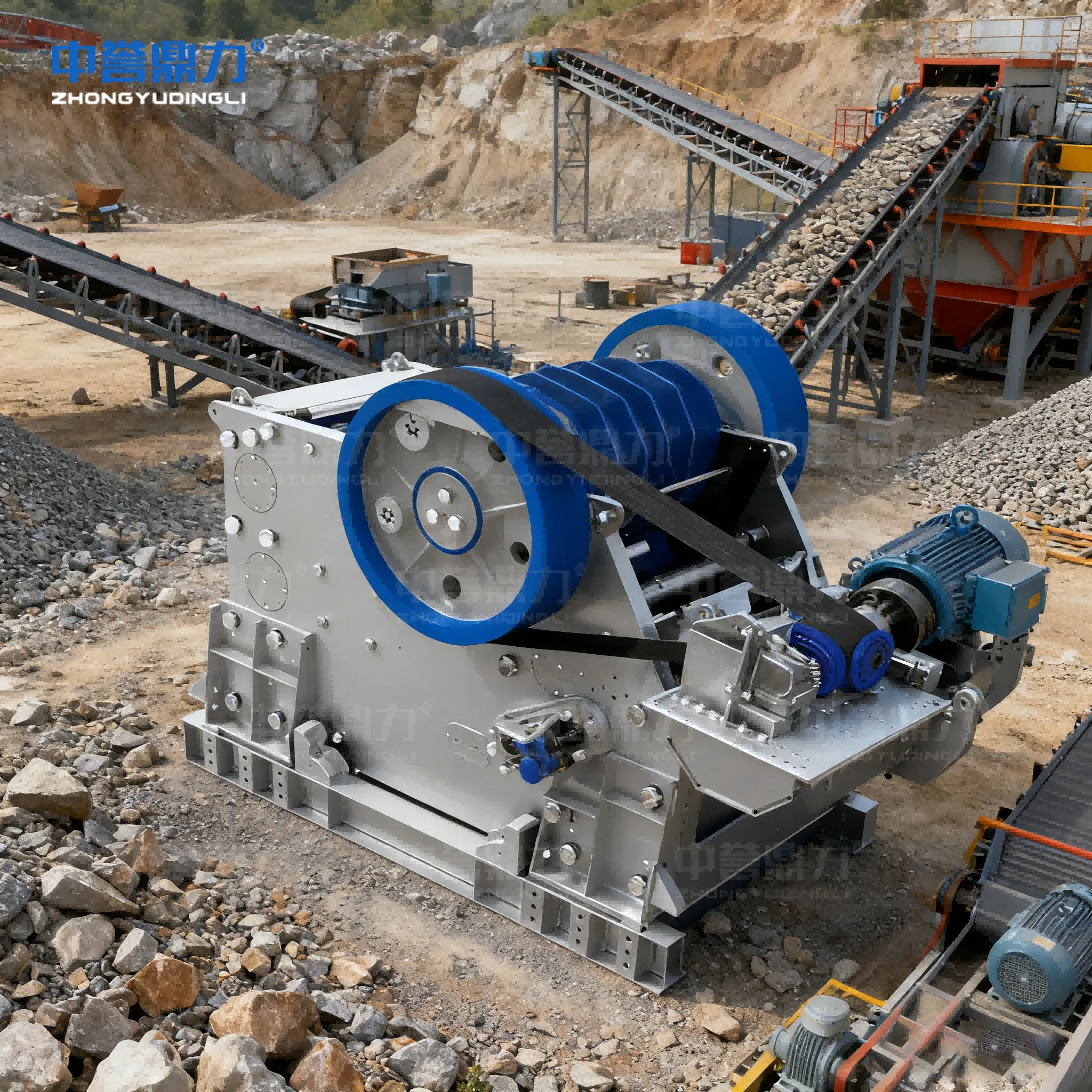
Jaw Crusher Capacity Fundamentals for Reliable 200 TPH Operation
Key jaw crusher specifications governing real-world 200 TPH output
To hit and maintain around 200 tons per hour through a crusher system, it's essential to match the equipment specs with what kind of material is going in. For starters, the opening where stuff gets fed needs to be at least 20 to 30 percent wider than the biggest pieces coming in, otherwise we run into bridging issues. Then there's the closed side setting, or CSS as it's known in the industry, which really controls how fine or coarse the end product will be and keeps things running smoothly throughout production. From what we've seen on site, machines with feed openings measuring about 1,200 mm by 800 mm and equipped with 150 kW motors can handle this 200 TPH target pretty well when dealing with medium hard limestone materials, provided all other factors are within normal ranges. Several other mechanical aspects also play their part in making sure everything works right.
- Crushing stroke ≥40 mm for effective particle reduction
- Toggle plate kinematics optimized for high inertia at mid-stroke
- Jaw plate profile designed for deep crushing chambers to maximize nip angle efficiency
Empirical capacity calculation vs. manufacturer derating: bridging theory and field performance
Theoretical capacity models—such as Taggart’s formula (Capacity = (0.6 × CSS × Width × RPM × Stroke) / 1,000)—typically overestimate real-world output by 15–20%. This gap arises from unmodeled operational variables: moisture-induced adhesion (5% moisture reduces throughput by 12–18%), inconsistent feed gradation (slabby vs. well-graded), and progressive liner wear (up to 8% monthly capacity loss).
| Calculation Method | 200 TPH Feasibility | Key Limitations |
|---|---|---|
| Theoretical | 240–260 TPH | Ignores material slip, power fluctuations, and feed variability |
| Manufacturer Rated | 220 TPH | Based on lab conditions and ideal feed material |
| Empirical Field | 180–200 TPH | Accounts for moisture, wear, feed irregularities, and maintenance cycles |
Because sustained operation at theoretical or even rated capacity correlates with 30% higher premature bearing failures, operators targeting reliable 200 TPH output should plan for ~85% of the manufacturer’s published rating—validated through continuous production logging rather than static calculations.
Critical Operational Factors That Reduce or Maximize Jaw Crusher Output
Feed size distribution, moisture content, and material hardness: quantifying throughput impact
The properties of the material being processed play a major role in determining what kind of throughput can realistically be achieved at around 200 tons per hour. When dealing with oversized feedstock that's larger than 40 mm in any dimension, efficiency drops somewhere between 15% and 22% because these bigger pieces just don't break down completely during a single pass through the system. Materials containing more than 5% moisture tend to stick together, which adds roughly 10 to maybe even 18 extra seconds onto each cycle and results in more fine particles getting carried along with the product stream. For harder substances such as granite or certain types of basalt that have compressive strengths over 250 MPa, operators need to budget about 30% additional energy consumption compared to processing softer materials like limestone. This increased energy demand naturally limits how much material can actually be processed within an hour unless there are corresponding increases in available power or changes made to the processing time parameters.
| Material Factor | Critical Threshold | Throughput Impact |
|---|---|---|
| Maximum Feed Size | 40 mm | -15% to -22% |
| Moisture Content | 5% | +10–18 s/cycle delay |
| Material Hardness | 250 MPa | -30% energy efficiency vs. limestone |
Nip angle, jaw throw, RPM, and closed-side setting: tuning parameters for consistent 200 TPH
Getting the mechanical settings right matters a lot for keeping production steady when feed conditions change around. The optimal nip angle sits at about 26 degrees for maximum compression efficiency. If this goes outside the range of plus or minus 2 degrees, output drops by as much as 12 percent. Increasing jaw throw does boost capacity in a straight line fashion each time we add 10 mm, which typically means gaining around 8 tons per hour. But there's a catch here too since liner wear speeds up by about 17 percent with those adjustments, so operators need to weigh what works best for their situation. Running between 220 and 240 revolutions per minute strikes a good balance between forces acting on the machine parts without causing excessive stress. Keeping the closed side setting somewhere between 140 and 160 millimeters helps manage particle size distribution while making sure the crushing chamber gets used properly. Plants that adjust these settings dynamically based on actual conditions have seen throughput stay pretty consistent with variations no more than 5 percent even when feed rates fluctuate normally throughout operations.
Plant-Level Design Considerations for a Robust 200 TPH Jaw Crusher System
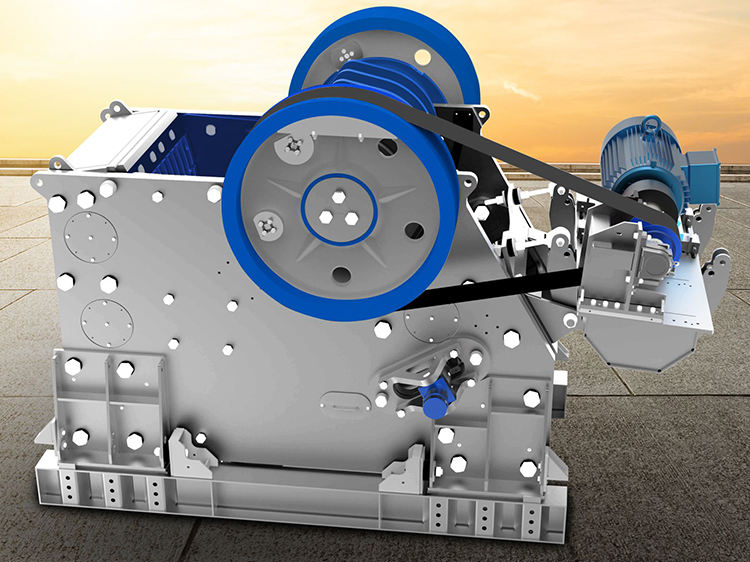
Pre-screening, feeding control, and dust suppression integration to sustain rated capacity
Without proper pre-screening, maintaining 200 tons per hour operations becomes impossible. When we take out those oversized pieces before they hit the jaw crusher, we eliminate those annoying choke points that can slash our throughput by around 15 to maybe even 20 percent. The variable speed feeders equipped with load sensing technology help control how much material goes in at any given time. This keeps things running smoothly without letting the system run too slow or getting overloaded which damages equipment. For dust control, targeted misting works wonders reducing airborne particles significantly, probably cutting them down about 80 something percent. This not only keeps regulators happy but protects workers from breathing in all that dust. These kinds of integrated solutions turn what could be paper numbers on a spec sheet into real world productivity instead of just short bursts during peak hours when everything magically works perfectly.
Conveyor sizing, hopper design, and power supply redundancy for uninterrupted 200 TPH operation
The downstream conveyors need to handle about 20% more than the standard 200 tons per hour capacity so they can manage those sudden feed surges without causing backups further upstream. When designing hoppers, walls should have angles of at least 55 degrees to avoid material bridging issues. Also important are abrasion resistant linings placed strategically in areas where materials hit hardest, which helps reduce wear and tear that leads to unplanned downtime. Keeping power running smoothly matters too. Even short drops in voltage can bring the whole crushing operation to a halt, losing around half a ton of production every three seconds it's interrupted. To stay operational during power fluctuations or when working at remote sites, having dual circuit power feeds makes sense. These systems come with automatic transfer switches and backup generators that can supply 25% more power than needed at peak times. This setup gives operators peace of mind knowing their equipment will keep running despite potential electrical problems.
Output Quality Assessment and Limitations of Primary Jaw Crushing for Road Gravel
Particle size distribution, flakiness, and gradation gaps: why jaw crusher-only output rarely meets road base specs
Jaw crushers just aren't up to the task when it comes to meeting road base specs because of how they naturally produce particles. The way these machines work creates lots of flat, long pieces that don't lock together well when compacted. Look at the particle sizes after primary crushing and what do we see? Big holes between 10 and 20 millimeters, plus way too many small bits under 4 mm. This means the material won't pack down evenly and can't support heavy loads properly. If there's no follow-up processing like screening out the bad stuff, impact crushing to reshape particles, or mixing different sizes, then the final product simply doesn't have those cube-shaped grains and smooth gradation that standards bodies such as AASHTO and EN 13242 require for roads that need to hold up over time. Contractors who stick with only jaw crushed material often end up dealing with early ruts forming and cracks developing from all the traffic going over them day after day.
FAQ
What is the importance of pre-screening in jaw crusher operations?
Pre-screening is crucial as it removes oversized pieces before they hit the crusher, preventing choke points that can significantly reduce throughput.
How does moisture content affect jaw crusher throughput?
Materials with moisture content over 5% tend to stick together, which can delay each cycle and reduce throughput efficiency.
Why is jaw crusher output often insufficient for road base specifications?
Jaw crushers produce flat, long particles without cube-shaped grains necessary for uniform gradation, making the output often inappropriate for road base use.