
 EN
EN
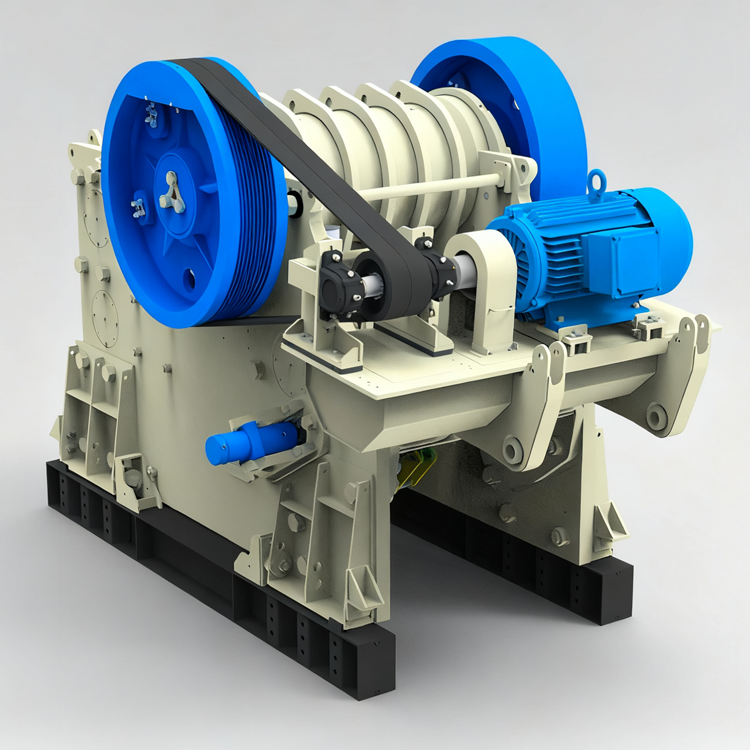
Jaw Crusher Working Principle: Core Compression Mechanism
Fixed and Movable Jaw Plates: Geometry, Motion Dynamics, and Nip Angle
In jaw crushers, the way things work involves a fixed jaw plate working together with a moving jaw that goes back and forth to create the necessary compressive force. Inside the machine, there's a specially designed chamber that gets narrower towards where the crushed material comes out. As rocks move down through this space, they get progressively smaller in size. One really important aspect here is what engineers call the nip angle, which usually measures somewhere between 22 degrees and 26 degrees between those two plates. Getting this right means the machine can actually grab onto the rocks properly instead of letting them slip away when pressure is applied. The moving jaw doesn't just go straight up and down either. Instead, it moves in an oval pattern that creates both vertical pressure to break the rocks apart and some sideways movement that helps clean off debris. This combination of actions does two main things at once: it crushes the rock against the stationary plate while pushing it along towards the exit point, making the whole operation faster and more efficient overall.
Toggle Plate System and Eccentric Shaft Rotation: Force Transmission Explained
Motor power gets sent along an eccentric shaft that turns rotation into actual crushing movement through those connecting rods and bearings we all know and love. What makes this setup work so well? The mechanical advantage is pretty impressive, with force multiplication ratios hitting around 8:1 or better, creating pressures exceeding 200 MPa. That kind of punch can crack even tough rocks such as granite and basalt right open. Now here's something interesting about the toggle plate. It does two main things at once. First, it carries the crushing force forward. Second, it serves as a built-in safety mechanism. If something indestructible slips into the crushing chamber, the toggle plate will snap at specific weak spots designed for exactly this scenario, saving expensive parts from getting wrecked. This overload protection keeps everything intact during heavy duty operations. And let's not forget how the eccentric shaft works its magic too. Its motion patterns help move energy efficiently throughout the whole process while keeping vibrations to a minimum during each crushing cycle.
Jaw Crusher in the Crushing Line: Integration and Process Flow
Positioning as Primary Crusher: Feed Hopper → Jaw Crusher → Scalping Screen → Secondary Crusher
The jaw crusher typically serves as the first line of defense in crushing operations, taking in raw material straight from the hopper where it sits waiting. What makes these machines so effective is their ability to tackle big chunks of rock, sometimes measuring nearly 1.5 meters across, despite their odd shapes. Once broken down, the crushed material gets sent through a scalping screen designed to catch all those small particles under 75mm in size. This screening process saves time and money downstream because it stops tiny bits from getting processed unnecessarily later on. The benefit? Secondary crushers like cones or impacts don't get backed up with too much material at once, which keeps everything running smoothly throughout the whole system. When operators make sure only properly sized material moves forward through each stage, they actually boost production rates while keeping maintenance costs lower on expensive downstream machinery.
Synchronization with Conveyors and Pre-Screening for Consistent Throughput
Putting in place some sort of pre-screening system right before the jaw crusher can cut down on feed load by around 15 to maybe even 20 percent according to Aggregate Processing Study from last year. The belt conveyors help manage how materials move from one stage to another, keeping things flowing at just the right pace into the actual crushing area. When it comes to adjusting Closed Side Settings or CSS for short, this lets folks running the operation tweak what kind of aggregate gets produced. Plus there are these automated controls now that keep everything working smoothly along the whole production line. All these different components working together means less downtime between operations and better consistency when it comes out the other end as spec grade material that meets all requirements.
Performance Control and Output Optimization of the Jaw Crusher
Adjustable CSS (Closed Side Setting) and Its Direct Impact on Product Gradation
The Closed Side Setting, or CSS for short, refers to how close together the jaws come at the bottom of the crusher where material exits. This setting basically controls what size rocks will pass through. Operators have several ways to change this gap depending on what kind of crushed product they need. When we make the CSS tighter, the result is much finer material. Take granite processing as an example – cutting down the setting by about 10 millimeters often leads to around 15% more fines in the final mix. The ability to adjust this setting gives jaw crushers real versatility. They can keep moving large volumes of rock through the system but still produce different sized products as needed. This helps maintain steady feeding rates for other equipment further along in the crushing process and makes running multiple stages of crushing much more efficient overall.
Compression Ratio, Reduction Efficiency, and Why Jaw Crushers Excel at Primary Crushing
Jaw crushers typically manage compression ratios between 6 to 8 times, breaking down big chunks of material into smaller pieces using controlled pressure. What makes them so effective? Well, these machines have been designed with just the right angle settings and jaw shapes that apply maximum force without wearing out too quickly. When compared to impact crushers, jaw units really shine in primary crushing operations where they can tackle tough, gritty materials and oversized rocks while using less power per ton processed. Industry data shows primary crushing eats up around two thirds of all energy used in plants, which means how well jaw crushers perform has a major effect on both bottom line expenses and production output across the board.
Real-World Jaw Crusher Performance: Benchmarks and Validation
In actual field operations, jaw crushers tend to lose around 15 to maybe even 25 percent efficiency when dealing with wet or sticky materials compared to how they perform in controlled lab settings with dry, properly graded feedstock. This difference really highlights why on-site testing matters so much for accurate assessments. Most operators now rely on constant monitoring of hydraulic pressures combined with detailed fragmentation analysis to tweak their crusher settings as needed. This approach cuts down unexpected shutdowns by roughly 30% and keeps the output gradation pretty close to what's required, usually within plus or minus 5%. By gathering data continuously over time, maintenance teams can spot patterns in liner wear early enough to replace parts before they cause problems during production runs. The result? Longer lasting equipment and significantly reduced costs per ton processed, which proves once again why jaw crushers remain dependable workhorses across all sorts of challenging industrial environments.
FAQ
What is the nip angle in jaw crushers?
The nip angle is the angle between the fixed and movable jaw plates of a jaw crusher where rock particles are held. It's typically between 22 to 26 degrees and is crucial for ensuring proper grabbing of rocks during the crushing process.
How does the toggle plate function in jaw crushers?
The toggle plate serves to transmit the crushing force and acts as a safety mechanism. It breaks at designated weak spots if uncrushable material enters the chamber, preventing damage to more expensive components.
Why are jaw crushers preferred for primary crushing?
Jaw crushers are favored for primary crushing because they efficiently turn large chunks of material into smaller pieces with controlled pressure, making them ideal for handling tough and oversized rocks.
How can Closed Side Setting (CSS) affect jaw crusher output?
CSS controls the minimum size certain rocks can be processed to. Adjusting CSS can modify the output gradation, allowing for finer material production by tightening the gap between jaws.