
 EN
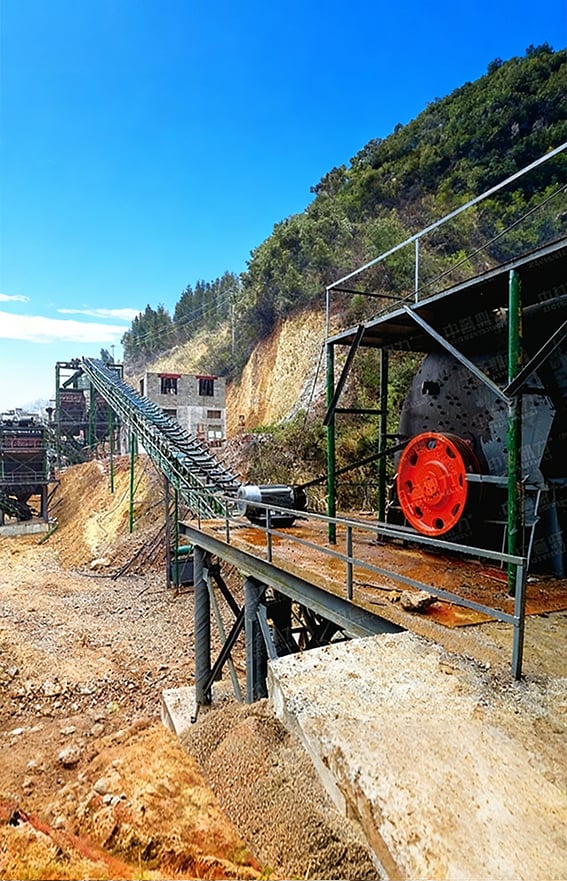
Managing the 5 Stage EPC Lifecycle for an Aggregate Production Line Timelines Lead Times and Commissioning
Building a high capacity aggregate crushing and screening plant requires synchronizing heavy civil engineering, high tonnage mechanical installations, and advanced process automation. In an Engineering, Procurement, and Construction delivery model, treating project phases as sequential handoffs is one of the primary causes of budget overruns and startup delays.
Drawing from field execution across quarry expansions and greenfield operations, this guide examines the real world timeline dynamics, critical procurement bottlenecks, and site commissioning milestones necessary to deliver an aggregate line on schedule.
The Five Integrated Stages of Aggregate Plant EPC
An efficient EPC workflow treats each phase as an overlapping milestone, where engineering decisions directly safeguard downstream installation schedules.
Stage 1 Concept and Feasibility Feed Analysis and Material Balance
Everything starts with geological feed sampling. Determining the rock compressive strength, abrasion index, and moisture content dictates whether a three stage crushing circuit with a primary jaw, secondary cone, and tertiary vertical shaft impactor or a two stage jaw and impact configuration is required. Feasibility must establish mass balance calculations, cut and fill earthwork surveys, and dust emission limits before drawing the first plant layout.
Stage 2 Detailed Engineering Eliminating Field Interference
Detailed engineering translates process flow diagrams into fabrication ready drawings. This stage calculates static and dynamic load foundations for vibrating screens and heavy cone crushers to prevent harmonic resonance. It also models chute transfer trajectories and wear liner configurations to prevent bottleneck plugging, alongside power distribution single line diagrams, motor control centers, and variable frequency drive sizing. Freezing the plant layout early protects civil construction from costly structural modifications later.
Stage 3 Strategic Procurement Managing the Long Lead Critical Path
Sourcing is not merely issuing purchase orders, as it involves active technical expediting. Long lead equipment such as heavy forged eccentric shafts for primary jaws, cone crusher bowls, modular screening media, and step down substation transformers must be released against locked preliminary civil drawings.
Stage 4 Construction and Mechanical Erection Safe Civil to Mechanical Handover
Site activities commence with massive concrete pours for primary dump hoppers and secondary crusher pedestals. Once concrete reaches 28 day design compressive strength or exceeds 70 percent verified by rebound hammer testing for early framing, mechanical alignment begins by setting chassis, leveling conveyor stringers, stringing belting, and running electrical cable trays.
Stage 5 Commissioning Ramp Up and Performance Verification
Handover progresses through systematic gating. Cold commissioning without load involves bump testing motors for correct rotation, verifying conveyor pull cord switches, checking zero speed sensors, and testing PLC safety interlocks. Hot commissioning with load trials introduces quarry feed stepwise at 25 percent, 50 percent, 75 percent, and 100 percent capacity to calibrate closed side settings, monitor motor amperage spikes, balance product return loops, and verify end product gradation against target ASTM C33 specifications.
Critical Path Drivers Procurement Lead Times and Site Constraints
Total EPC duration is governed by equipment manufacturing schedules and site readiness.
Long Lead Procurement Benchmarks
Manufacturing heavy duty crushing machinery requires specialized casting, forging, and machining capacity. Primary jaw crushers larger than 1000 by 1200 mm typically require 16 to 24 weeks due to heavy cast steel frames, forged eccentric shafts, and spherical roller bearings. Secondary and tertiary cone crushers take 18 to 26 weeks, driven by hydraulic tramp release cylinders, bronze bushings, and specialized manganese liners. Multi deck vibrating screens require 10 to 16 weeks for exciters, stress relieved side plates, and polyurethane modular media. Overland and transfer conveyors take 8 to 14 weeks for high tension belting, vulcanized drive pulleys, and geared motors. Electrical packages and PLC or MCC automation require 14 to 20 weeks for specialized switchgear, variable frequency drives, transformers, and customized automation logic. Procuring pre assembled modular crushing stations or skid mounted units can reduce manufacturing and site integration timelines by 3 to 6 weeks compared to stick built structural installations.
Ground Reality Topography Access and Geotechnical Surprises
Setting a primary crusher station into hard bedrock requires controlled blasting and hydraulic hammering, adding 3 to 6 weeks compared to standard excavation. Unstable soil conditions require deep micro piling or raft foundations to prevent differential settlement under vibrating dynamic loads. Moving a 40 to 60 ton primary crusher mainframe over mountainous terrain or rural culverts requires preliminary axle load surveys, bridge reinforcement assessments, and dedicated transport permits. Furthermore, mining permits, storm water pollution prevention plans, and air quality dust suppression permits frequently face administrative backlogs lasting 3 to 9 months. Front loading geotechnical surveys and environmental baseline filings ensures early mobilization without regulatory stop work orders.
Installation and Commissioning The Crucial Site Phase
On site execution typically represents 35 percent to 45 percent of the total project schedule. Efficient sequencing prevents mechanical crews and electrical contractors from interfering with one another.
Typical Phase Breakdown for a Standard 200 to 300 TPH Line
Foundation and civil construction takes 3 to 5 weeks, covering excavation, retaining wall construction for dump hoppers, anchor bolt cage placement, and high strength concrete curing. Mechanical alignment and installation requires 4 to 6 weeks for setting heavy equipment onto vibration dampening pads, torqueing structural anchor bolts to engineer specifications, leveling conveyor trusses, splice vulcanizing conveyor belts, and fitting dust collection ductwork. Electrical infrastructure and automation takes 3 to 5 weeks to pull shielded control cables, establish transformer substations, terminate MCC inputs and outputs, program PLC safety shutdown cascades where down line conveyor trips stop up line feed immediately, and conduct dry loop testing.
Accelerated Versus Compliance Driven Commissioning
In remote mining regions, contractors often attempt to accelerate delivery by pouring foundations while equipment anchors are still being field fabricated, or running high voltage cabling prior to finishing structural welding. Field experience demonstrates that this acceleration creates severe rework. An uninspected anchor bolt off by just 15 mm can stall a 30 ton crusher installation for days. The industry standard approach employs strict quality hold points. First is formal civil handover sign off including coordinate and level survey verification. Second is dynamic equipment alignment sign off before grout pouring. Third is megger testing and motor rotation validation prior to coupling drive belts. Fourth is a comprehensive cold interlock test before material ever touches the feed hopper.
Project Timeline Benchmarks
A standard 200 to 300 TPH stationary plant takes 5 to 7 months in total. In this schedule, detailed engineering of 4 to 6 weeks overlaps with equipment procurement of 14 to 20 weeks. Civil site preparation of 4 to 6 weeks runs concurrently with equipment transit, followed by installation and multi stage commissioning over 8 to 10 weeks.
A modular or semi mobile aggregate plant planned with a digital twin takes 3.5 to 5 months in total. Skid mounted units, containerized modular switchgear, and factory tested wiring harnesses eliminate up to 60 percent of site structural welding. Pre construction Building Information Modeling clash detection ensures zero pipe, chute, and cable tray interference before arrival on site.
Technical FAQ EPC Aggregate Project Execution
How do engineers account for dynamic resonance when designing crusher foundations?
Crushers, screens, and vibrating feeders generate continuous dynamic cyclic forces. Structural engineers must ensure the natural frequency of the foundation and soil system is at least 20 percent to 30 percent higher or lower than the operating frequency of the machine. Heavy elastomer vibration dampers or shear springs are integrated, and high strength non shrink epoxy grout is packed beneath the base plates to transfer dynamic loads safely into the reinforced foundation block.
What are the critical failure points during cold versus hot commissioning?
During cold commissioning, common failures include inverted motor phases causing crushers or screens to rotate backward, misaligned conveyor belt drift switches, and failed emergency pull cord loops. During hot load commissioning, critical risks shift to material spillage at chute transfer points, motor overheating due to uneven choke feeding, excessive vibration spikes exceeding ISO 10816 limits, and hydraulic oil temperature alarms under heavy reduction ratios.
Why is material balance calculation essential before equipment procurement?
A crushing circuit functions as an interconnected loop. If the secondary cone crusher cannot process the recirculating load from a closed circuit sizing screen, material backs up, forcing operators to widen settings and sacrifice target aggregate cubicity. Calculating exact material mass balance under expected moisture and wear states guarantees that crushers, screens, and transfer belts are sized with adequate safety margins, typically 15 percent to 20 percent operational headroom.