
 EN
EN
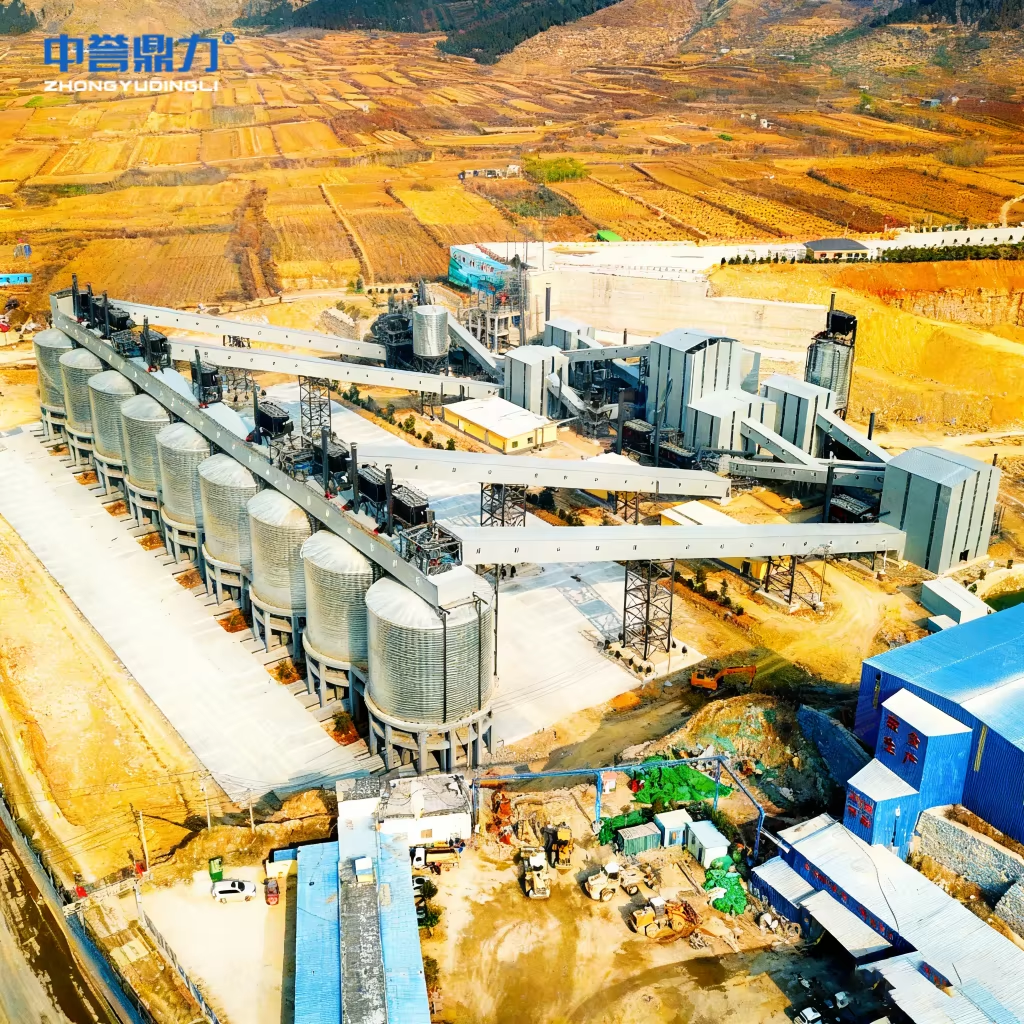
Key Layout Drivers about Crushing Plant: Feed/Discharge Size, Infrastructure, and Equipment Footprint
How feeding and discharge size dictate spatial zoning in small and large crushing plants
The size of the primary feed has a major impact on how space gets divided up around a crushing plant. Big operations dealing with those massive 1.5 cubic meter boulders need plenty of room, typically setting aside areas where haul trucks can maneuver with at least 30 to 50 meters of clearance. Smaller facilities working with material 300mm or less can usually fit everything comfortably within about 15 meters. What comes out of these primary operations also affects where equipment gets placed downstream. Secondary crushers should sit at least eight meters away from the main crushing area to stop unwanted material looping back through the system. Screening units require their own buffer spaces too since they generate quite a bit of dust during operation. Looking at overall layout, bigger plants tend to dedicate roughly 60 percent more area just for material movement compared to their smaller counterparts.
Workshop height and foundation load requirements: Structural pre-assessment for large Crushing Plant installations
Getting the structural assessment right before construction starts can save a lot of money later on when redesigns become necessary during building phases. Gyratory crushers need really strong foundations that can handle over 500 tons per square meter, which is about three times what's needed for jaw crushers. When it comes to workshop height requirements, there's something important about making room for overhead cranes during maintenance work. Big operations typically need at least 10 meters of vertical space to replace liners, while smaller setups get away with around 6 meters. After several quarry collapses happened in 2023, most top manufacturers started including seismic load calculations in their foundation designs. These days they're looking at accelerations of 0.3g or more according to both ISO 19901-7 and ASCE 7-22 standards, ensuring structures can withstand unexpected ground movements.
Equipment footprint comparison: Compact mobile jaw units (120 m²) vs. integrated gyratory + cone + VSI Crushing Plant lines (450 m²)
Footprint efficiency varies dramatically by scale:
| Plant Type | Key Equipment | Area (m²) | Flexibility Factor |
|---|---|---|---|
| Compact Mobile Units | Single jaw crusher + screening | 120 | High (relocatable) |
| Integrated Fixed Plants | Gyratory + 2 cones + VSI stack | 450 | Low (permanent) |
These constraints explain why 72% of aggregate producers (AGGPRO 2024) select modular plants for 500TPH operations, reserving large-scale installations for quarries exceeding 2M tons annual output.
Crushing Stage Integration: From Primary to Tertiary in Small and Large Crushing Plant Layouts
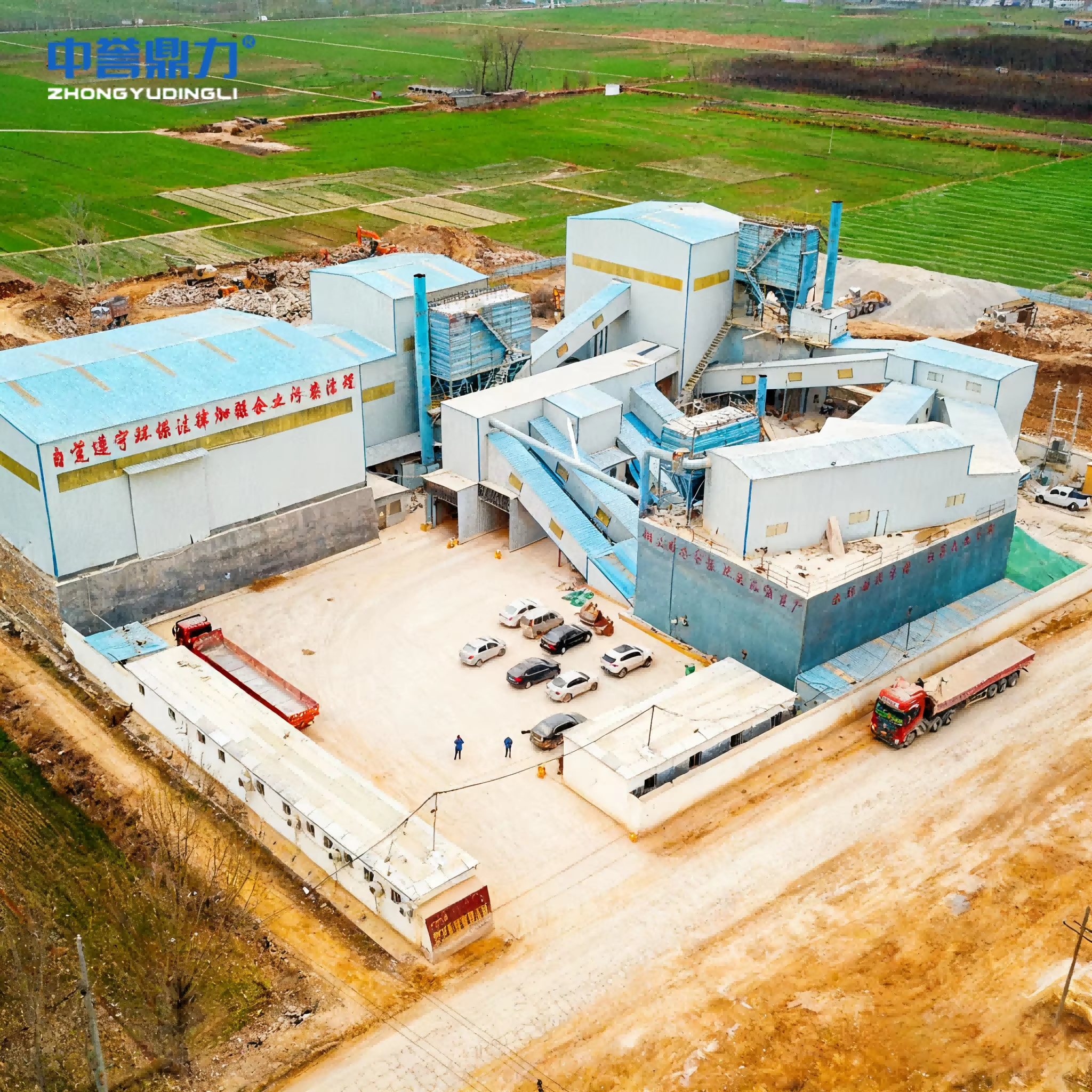
Progressive stage logic: Why large Crushing Plants deploy jaw → cone → VSI sequences—and small plants often stop at secondary crushing
Most big operations go with a three step process when it comes to crushing rock material jaw first, then cone, followed by VSI technology. This whole setup gets rocks down from over a meter in size all the way to under 25 millimeters while keeping those nice cube shapes important for things like asphalt mixtures and concrete batches where flat pieces need to stay below 15 percent according to ASTM standard D4791 specifications. Smaller facilities often stop after just two stages because of space issues and how much they can handle at once, ending up with around 50mm aggregates that meet minimum specs but nothing fancy. Sure, adding that third stage increases running expenses by somewhere between 25 and 40 percent, but manufacturers find it worth the extra money since they can charge more for their products and save headaches later on during processing steps.
Conveyor routing strategies: Optimizing horizontal transfer in space-constrained small layouts vs. inclined multi-level routing in large Crushing Plant sites
The amount of available space has a major impact on how we design conveyor systems. For smaller facilities where room is tight, engineers often go with flat layouts that stay below 15 degrees slope. This helps prevent materials from rolling back when stopped and makes maintenance work much easier. These compact setups can save anywhere between 35% to almost half the floor space compared to stacked configurations. When dealing with larger operations though, things change completely. Big installations typically install multiple levels with slopes going up to about 22 degrees. This vertical arrangement allows material to move across different heights without taking up so much horizontal space. The savings here are around 40%, yet still maintains impressive throughput rates exceeding 500 tons per hour. Materials travel smoothly from elevated processing areas down to ground level screening stations, cutting out the need for trucks between stages. According to industry standard CEMA 502, this setup actually boosts energy efficiency too.
Crusher Selection Aligned with Material Properties and Output Requirements
Hardness- and abrasion-driven crusher choice: Jaw crushers for granite (Mohs 6–7) vs. impact crushers for limestone (Mohs 3–4)
When choosing between different types of crushers, material hardness remains the main factor to consider. Jaw crushers work best on tough, gritty rocks such as granite which rates around 6 to 7 on the Mohs scale. These machines use strong compression forces inside their sturdy, slow moving chambers that help reduce wear over time. For softer materials like limestone rated about 3 to 4 on Mohs scale, impact crushers tend to perform better. They break apart these materials through fast impacts rather than grinding away at them, so liners last longer too. Getting this match right makes a real difference in operation costs. Energy savings can be somewhere between 15% and 20%, according to studies done by government agencies and what many quarries actually see when they follow safety regulations set out in OSHA standard 1926.57.
Grain shape and sizing outcomes: Cone crushers deliver 85% cubical aggregate; jaw crushers yield up to 40% flaky particles
The shape of aggregate grains has a big impact on how well materials perform in engineering applications. Things like compaction density, shear strength, and how binders stick together all depend heavily on this factor. Cone crushers are pretty good at creating around 85 percent cubical shaped particles because they crush rocks between each other inside tight spaces. That makes these machines perfect for making asphalt mixtures and structural concrete that need to meet specific standards like EN 13043 and ASTM C33 requirements. On the flip side, jaw crushers work great for breaking down large rocks first but tend to create quite a few flat, irregular shaped particles during their linear compression process. Some sources say as much as 40 percent might end up being unsuitable without going through additional processing steps if we want to use them in projects where quality specifications matter most.
| Crusher Type | Optimal Material Hardness | Key Output Characteristic | Construction Suitability |
|---|---|---|---|
| Jaw Crusher | Mohs 6–7 (e.g., granite) | Up to 40% flaky particles | Base layers, road fill |
| Cone Crusher | Mohs 4–6 (e.g., basalt) | 85% cubical aggregate | Concrete, asphalt surfacing |
| Impact Crusher | Mohs 3–4 (e.g., limestone) | High fines content | Drainage systems, agricultural lime |
FAQ
What determines the size of crushing plant equipment?
The size of the feed and discharge materials are key factors. Larger feed sizes necessitate more space and larger equipment, while smaller operations can remain more compact.
Why are gyratory crushers preferred in large installations?
Gyratory crushers offer better handling of large boulders with their strong foundations and are suitable for high-capacity operations.
What are the seismic considerations in modern crushing plant design?
Seismic load calculations are now incorporated in design to withstand unexpected ground movements, adhering to standards like ISO 19901-7 and ASCE 7-22.
How do crusher types vary by material hardness?
Jaw crushers are best for hard rock like granite, whereas impact crushers suit softer rocks such as limestone. Cone crushers work well with materials like basalt.
How do smaller crushing plant layouts differ from larger ones?
Smaller layouts prioritize flat conveyor systems to save space, while larger plants can afford multi-level conveyor setups to optimize space and efficiency.
Table of Contents
-
Key Layout Drivers about Crushing Plant: Feed/Discharge Size, Infrastructure, and Equipment Footprint
- How feeding and discharge size dictate spatial zoning in small and large crushing plants
- Workshop height and foundation load requirements: Structural pre-assessment for large Crushing Plant installations
- Equipment footprint comparison: Compact mobile jaw units (120 m²) vs. integrated gyratory + cone + VSI Crushing Plant lines (450 m²)
- Crushing Stage Integration: From Primary to Tertiary in Small and Large Crushing Plant Layouts
- Crusher Selection Aligned with Material Properties and Output Requirements
- FAQ