
 EN
EN
Mechanical Suitability for Medium-Hard Limestone
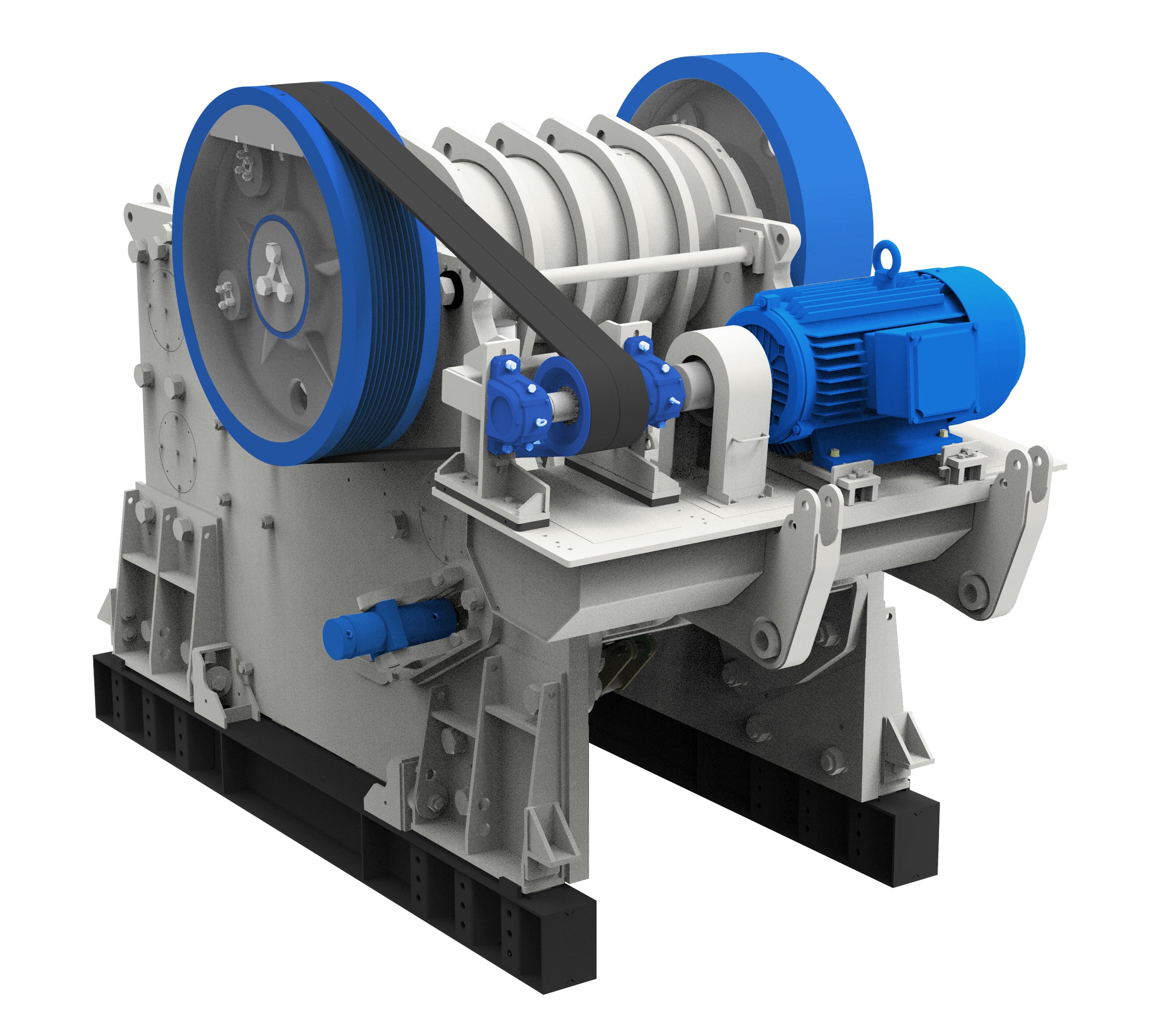
Processing medium-hard limestone with a Mohs hardness of 3.0 to 4.0 requires an optimal balance between mechanical impact and compressive force. Limestone typically exhibits lower abrasive characteristics compared to high-silica rocks due to its dominant calcite composition. This lower abrasiveness significantly reduces friction-induced wear on critical mechanical components, allowing for extended wear life of primary liners. Single-toggle jaw crushers process this material using a compressive motion between a fixed and a moving jaw plate, forming a progressive V-shaped crushing chamber. This mechanical configuration allows large raw boulders to be reduced systematically as they descend through the chamber, preventing material packing and securing a highly stable primary volumetric output.
Durability and Energy Efficiency vs. Impact Crushers
While impact crushers are frequently utilized for processing non-abrasive soft stone due to their ability to produce highly cubic shapes, they experience elevated wear rates when processing siliceous or medium-hard limestone. High-speed blow bar wear in impact models can increase operating costs by up to 40% under continuous high-capacity operations. In contrast, heavy-duty primary jaw crushers maintain a lower frequency of liner replacements and consume up to 15% less energy per processed ton. This makes jaw technology the preferred primary crushing choice for large-scale quarries and cement manufacturing plants where long-term operational cost control is critical.
Table 1: Technical and Mechanical Comparison of Primary Crusher Technologies
| Performance Metric | Compression-Based Jaw Crusher | Rotor-Driven Impact Crusher |
| Primary Crushing Mechanism | Compressive force with minimal shear | High-velocity mechanical impact |
| Optimal Feed Hardness Limit | Up to Mohs 8.0 (Versatile) | Under Mohs 5.0 to 6.0 (Restricted) |
| Liner Wear Life (Limestone) | High (Up to 1,500 to 2,000 hours) | Moderate (Frequent blow bar rotation) |
| Typical Reduction Ratio | 4:1 to 6:1 | 10:1 to 15:1 |
| Direct Operating Cost (OPEX) | Low (Predictable maintenance cycles) | High (Vulnerable to high-silica feeds) |
Integration of Primary Crushers in Cement Plant Operations
In modern cement manufacturing, the primary crushing station must coordinate seamlessly with the downstream raw milling circuits. Primary jaw crushers are engineered to reduce raw quarry run stone down to a consistent discharge size of 150 to 200 mm. This output range is ideal for direct feeding into vertical roller mills (VRMs), reducing the recirculation load within the milling circuit by up to 20%. Maintaining a consistent particle size distribution during the primary crushing stage directly enhances the blending homogeneity of the raw meal, preventing chemical segregation during storage and subsequent preheating phases.
Managing moisture content is another critical factor in primary crushing operations. When raw limestone moisture exceeds 5%, standard crushing chambers are prone to material build-up, leading to localized clogging and an excess of unwanted ultra-fines. Modifying the nip angle and adjusting the eccentric shaft speed allows operators to manage wetter feeds effectively, keeping the fine particle fraction under 75 microns within the desired 8% to 12% tolerance band required for stable raw mix chemical composition.
Optimizing Equipment Selection for Quarry Logistics
Selecting the correct primary crusher capacity requires aligning the machine's volumetric throughput with the quarry's daily hauling logistics. Operating a crusher continuously near its maximum capacity accelerates mechanical fatigue on the main eccentric shaft, pitman assembly, and heavy-duty toggle seat. To secure long-term operational reliability, industry standards suggest matching the quarry's daily target output to approximately 75% of the crusher's maximum rated hourly capacity. This operational safety margin extends the wear life of manganese liners by 200 to 300 hours, lowers thermal stress on bearings, and reduces the risk of unexpected mechanical stoppages.
Table 2: Operational and Life-Cycle Benefits of Capacity Optimization
| Operating Capacity Level | Structural Stress Index | Bearing Temperature | Average Liner Lifespan | Annual Unplanned Downtime |
| 100% (Maximum Limit) | Extremely High | High (Risk of lubrication degradation) | 1,000 Hours (Accelerated wear) | High (Frequent component stress) |
| 75% (Optimized Level) | Low to Moderate | Stable (Optimal oil film retention) | 1,300 Hours (20-30% extension) | Very Low (Stable continuous run) |
Impact of Raw Feed Consistency on Clinker Formation
The quality of the primary crushing process directly influences the efficiency of the downstream rotary kiln. When the primary crushing system delivers a highly consistent feed size with low moisture levels, it ensures stable and predictable heat transfer during the clinkerization process at 1,450 degrees Celsius. This thermal stability supports the complete conversion of calcium carbonates into high-strength tricalcium silicates. Plants that maintain tight control over their primary aggregate size distribution report up to an 18% increase in tricalcium silicate formation and a 5% reduction in overall fuel consumption per ton of clinker produced.
Engineering Partnership for High-Yield Aggregate Processing
Designing and deploying high-capacity primary crushing systems for cement and quarry operations requires deep manufacturing expertise and a robust industrial supply chain. For more than 30 years, Zhongyu Dingli has been a leading manufacturer of large-scale crushing and screening equipment, specializing in heavy-duty primary jaw crushers and complete 100 to 6000 TPH processing lines. By integrating intelligent automatic control systems with heavy-duty structural designs, Zhongyu Dingli provides robust, wear-resistant machinery that maximizes operational uptime, lowers total cost of ownership, and helps operators maintain highly efficient, profitable aggregate operations.