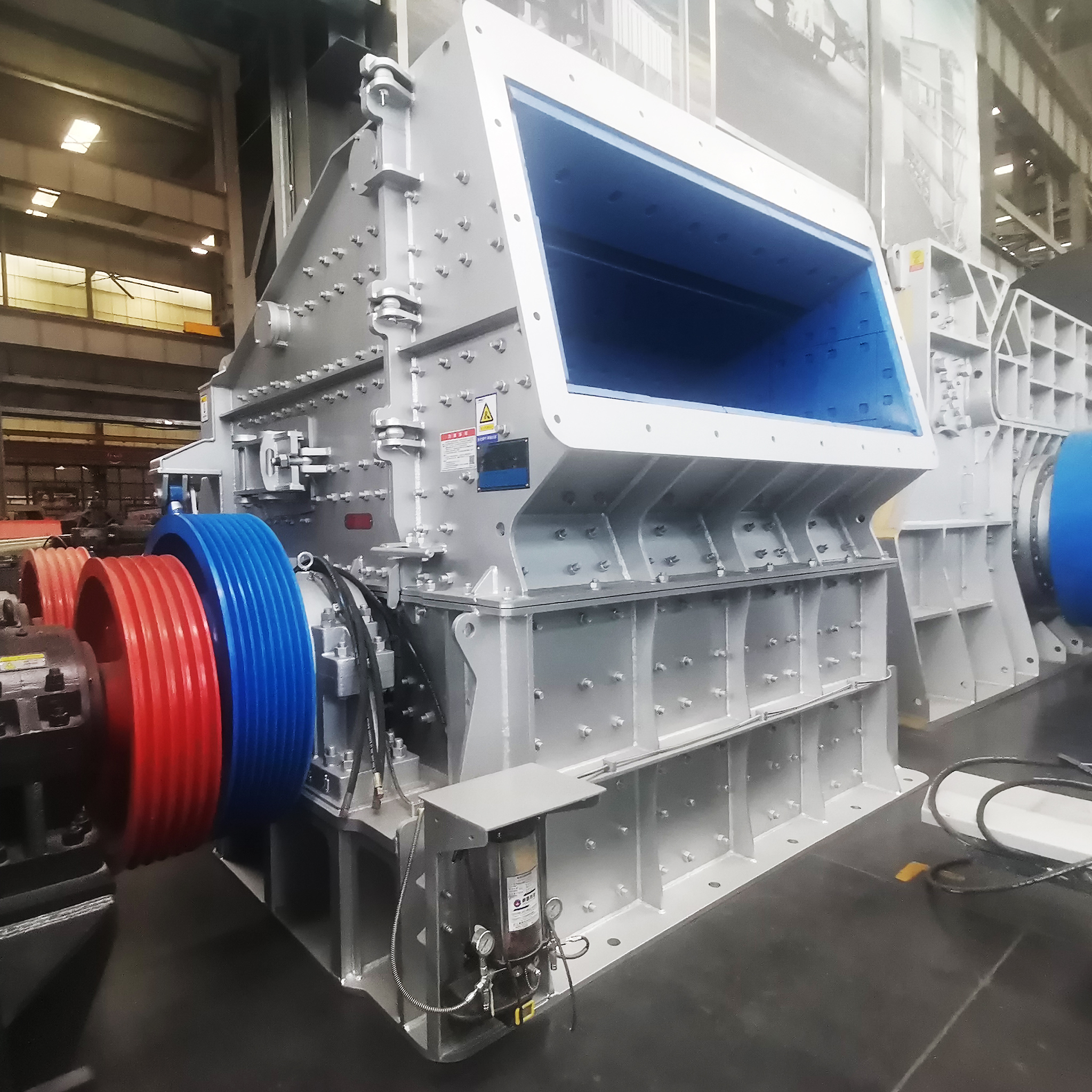
PF1315 Impact Crusher | High-Capacity Secondary Crusher for Mining & Quarrying
Updating Their Crusher Increased Concrete Recycling Plant Throughput by Over 100%
A customer in Thailand has an older, smaller hammer mill that can’t effectively process reinforced recycled concrete, resulting in unplanned down time, and consequently, margin erosion. As an interim solution while they modify their process to use our impact crusher, we supplied a PF1315 impact crusher. The PF1315 is adjustable by a hydraulic system to change the gap between the feed ears and is therefore, a non-contact crushing system, which is more desirable forcontrol and adjustment.
After the first week with the PF1315, the customer noted the improved product shape, and fewer, if any, blockages. The impact crusher has a much larger feeding opening, which allowed larger inputs, eliminating blockages that occurred with the hammer mill.
Get A Quote

 EN