Vertical Shaft Impact Crusher Application Prospects
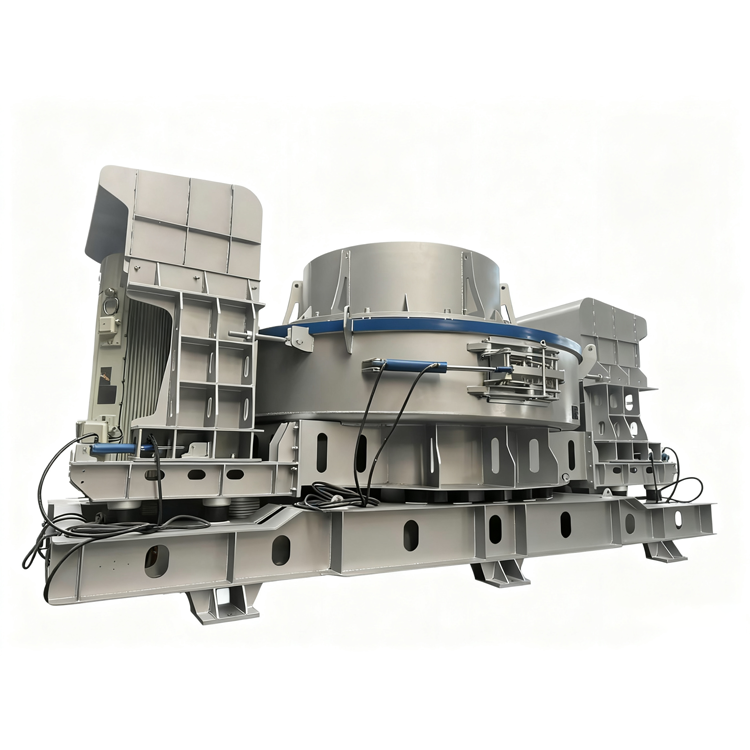
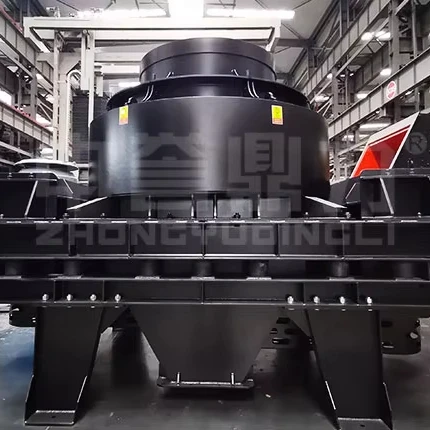
Vertical shaft impact crushers, leveraging their unique “stone-on-stone” and “stone-on-iron” crushing principles alongside precise shaping capabilities, are emerging as versatile workhorses in modern material processing. Their application prospects continue to expand alongside industrial upgrades and green transformation. In the sand and aggregate sector, they serve as the mainstay for manufactured sand production—as natural sand resources dwindle and environmental policies tighten, demand for high-quality manufactured sand surges. The VSI achieves efficient crushing and particle shape optimization by propelling materials through a high-speed rotating impeller. The resulting sand exhibits continuous gradation, rounded edges, and controllable fines content, making it perfectly suited for demanding applications like high-rise construction, high-speed rail tracks, and nuclear power projects where concrete strength and durability are critical. It has thus become the core equipment for replacing natural sand. In mining and metallurgy, it handles medium-fine crushing of hard rocks like granite and basalt while shaping ores such as magnetite and copper to enhance beneficiation efficiency. Its low-wear design and modular structure further reduce operational costs in high-hardness applications. Notably, amid the circular economy trend, the VSI's waste-to-resource capability shines: crushed concrete blocks and bricks from construction waste can be processed into recycled aggregates for road subbases; waste rock and industrial residues (like steel slag and coal gangue) from tailings piles can be transformed into new building material feedstocks, supporting “zero-waste city” initiatives. Furthermore, it demonstrates unique advantages in specialized fields like refractory materials (alumina bauxite sand production), glass raw materials (quartz sand purification), and chemical fillers (calcium carbonate micropowder). By adjusting rotational speed, feeding methods, and liner materials, it flexibly adapts to diverse material properties and product particle size requirements. Looking ahead, with intelligent upgrades (such as IoT remote monitoring and AI adaptive control) and energy-saving technology applications, the VSI will further penetrate more high-end manufacturing scenarios. It will become a pivotal driver for transforming material processing toward “high efficiency, environmental sustainability, and intelligence.” Its market potential will continue to expand alongside the recovery of global infrastructure and the deepening of sustainable development goals.