
 EN
EN
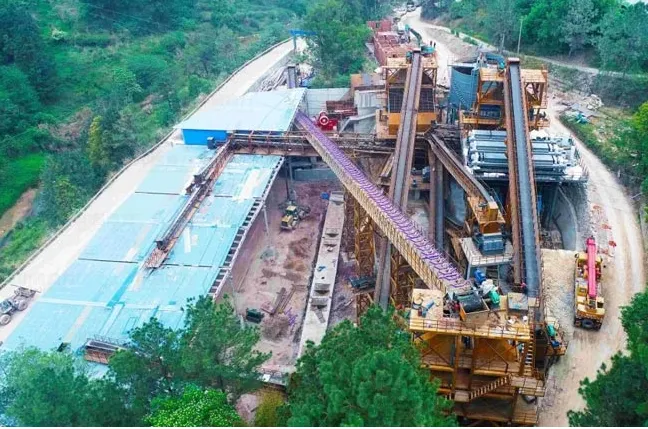
Crusher Selection Based on Rock Type and Quarry Crushing Plant Requirements
Matching Crusher Types (Jaw, Cone, VSI, HSI) to Granite, Limestone, and Basalt Hardness Profiles
When picking out crushing equipment, geology plays a big role, especially factors like compressive strength and how abrasive the material is. Granite, which rates around 6 to 7 on the Mohs scale, needs heavy duty primary jaw crushers. These machines work by using interlocking plates to actually shear through the tough quartz structure inside granite rock. For basalt, which falls somewhere in the middle range both in hardness and abrasiveness, secondary processing with cone crushers makes sense. Cone crushers squeeze material between their mantle and concave parts to maintain good shape control during processing. Limestone, much softer at 3 to 4 Mohs, works well with impact based systems like Vertical Shaft Impactors (VSI) or Horizontal Shaft Impactors (HSI). These machines speed up particles so they collide in controlled ways, creating nice cubic aggregates while keeping fines to a minimum. Granite's abrasive nature really wears down equipment fast, so manganese steel liners become crucial for jaw and cone crushers working with this material. On the flip side, limestone operations generally see longer liner life and need less frequent maintenance overall.
Primary, Secondary, and Tertiary Crusher Roles in Optimizing Aggregate Shape and Yield
The staged approach to crushing operations plays a key role in getting good yields along with aggregates that meet all the necessary specifications. First off, primary jaw crushers handle the blasted feed down to around 200 mm or less. These can manage reduction ratios of about 6:1 while still keeping the production moving at a decent pace. Next come the secondary cone crushers which work on refining the output size range between 20 and 50 mm. They do this through compression between particles, which helps create more uniform shapes and cuts down on those flat, undesirable flakes we all know too well. For the final touch, tertiary VSI units take over to really polish things up, bringing aggregates down to approximately 25 mm with most reaching that nice cubic shape required for quality asphalt mixes and structural concrete applications. The screening process happens at every stage, pulling out material that already meets specs so it doesn't get processed unnecessarily. This saves time and money since oversized bits get sent back for another round of crushing. Overall yields improve significantly compared to single stage setups, typically somewhere between 15% and 30%. Plus, this whole sequence actually lowers the amount of material needing to be recirculated, which means operators save on energy costs too – sometimes as much as 40% less power per ton processed.
End-to-End Quarry Crushing Plant Production Flow
From Blasted Feed to Final Sized Aggregate: Staged Crushing, Screening, and Washing Sequence
Quarry crushing plants take blasted rock and turn it into aggregate of specific sizes through a carefully planned process. The operation starts at the primary stage, typically using jaw or gyratory crushers to break down those big chunks of rock that come out of blasting at around 24 to 48 inches down to something closer to 6 or 7 inches. According to industry reports, putting in scalping screens right before the primary crushing can boost capacity by about 10 to 15 percent because it gets rid of all those small particles and clay stuff upfront, which makes a huge difference when dealing with wet materials or deposits full of clay. After that initial reduction, the material moves on to secondary crushing where cone or impact crushers bring it down further to between 1 and 3 inches while also making the shape of the particles better. When we're talking about high quality products like what goes into concrete mixtures or asphalt roads, there's usually a third step involving VSI crushers or fine cone units, often combined with washing systems to clean away silt, dust, and any organic matter that might be present. Throughout all these stages, screening happens constantly with either inclined or horizontal vibrating screens separating the properly sized material for storage while sending anything too big back for another round of crushing. This whole multi-stage system gives operators really good control over how big each piece ends up being, which means they recover more usable material from their raw inputs. And let's face it, that kind of efficiency translates directly into bottom line profits for companies working with sand and gravel or processing metal ores where meeting exact specification requirements determines what price customers are willing to pay.
Capacity Planning and Site-Specific Quarry Crushing Plant Configuration
Scaling Equipment Layout (50–500 tph) with Feeding Systems, Conveyance, and Stockpile Integration
When planning capacity, matching equipment size matters beyond just hitting those throughput numbers between 50 and 500 tons per hour. Site conditions really count too – things like road access, what kind of ground we're dealing with, and whether there's enough power at the location. For feeding systems, the scale determines what works best. Smaller setups from around 50 to 150 tph can get away with vibrating grizzly feeders most of the time. But when handling bigger volumes, especially with rough, uneven blasted rock, nothing beats heavy duty apron feeders for reliability. Conveyor belts need careful thought as well. Getting the angles right and keeping drops to a minimum helps cut down on dust problems, material loss, and wear on the product itself. This attention to detail often keeps operations running above 95% efficiency. Where we put our crushers makes a real difference too. Take a granite operation moving about 300 tph – placing secondary cone crushers next to primary ones instead of across the yard saves conveyor length and eats up less electricity in the long run. And don't forget stockpiles. These aren't just piles of rock sitting around. They act as safety nets so processing continues smoothly even when maintenance is needed or feedstock supply dips temporarily.
| Design Factor | 50–150 tph Layout | 200–500 tph Layout |
|---|---|---|
| Feeding System | Vibrating grizzly feeder | Heavy-duty apron feeder |
| Conveyor Length | ≤30 meters | Optimized zig-zag routing |
| Stockpile Capacity | 4–8 hours of production | 12–24 hours of production |
For larger operations handling over 300 tons per hour, radial stackers make a real difference. They give much better control over where materials are stored and can actually reduce those costly rehandling expenses by around 18%, according to industry reports from Aggregates Industry Review last year. Another advantage comes with modular plant designs that let businesses grow step by step. Want to install another VSI line? No problem, just add it on while everything else keeps running smoothly. And don't forget something basic but essential: every setup needs proper walkways for maintenance staff. Without these clear paths through the equipment, even small repairs can turn into major headaches that slow down the whole operation quite a bit.
Mobile vs. Stationary Quarry Crushing Plant Setups: Operational Flexibility and ROI Trade-offs
The decision between mobile and stationary quarry crushing plants really comes down to what the job requires, when it needs to be done, and how much material will be processed. Mobile crushing equipment can be set up surprisingly fast sometimes within just a few hours and saves money because there's no need for building roads or other infrastructure. That makes these systems perfect for contractors who work on several temporary jobs scattered across different granite or limestone quarries. With their all-in-one setup, mobile plants can operate right where the rock is being extracted, cutting down on transportation distances by roughly half. This means fewer trucks on the road, lower fuel bills, and reduced carbon emissions from hauling. On the downside though, most mobile units max out around 500 tons per hour capacity. They also tend to cost more per ton processed since they run on diesel engines that need regular maintenance and refueling compared to stationary alternatives.
| Factor | Mobile Crushing Plant | Stationary Crushing Plant |
|---|---|---|
| Relocation Time | Hours (no dismantling) | Weeks (foundation removal required) |
| Max Capacity | ≤ 500 tph | 1,000–3,000+ tph |
| Infrastructure | Minimal (self-powered) | Extensive (concrete foundations, grid power) |
| Best For | Short-term contracts, remote sites | High-volume sand gravel processing, permanent quarries |
For big volume operations that need to run year after year, stationary plants tend to offer better economics in the long run. These setups can handle around 1,000 tons per hour while cutting processing costs by roughly 20 to 30 percent over five years compared to other options. The fixed conveyor belts, screening equipment, and reliable power source help maintain consistent product sizes and grades which is really important when making top quality concrete aggregates. Sure, the initial civil work costs between 250 thousand to half a million dollars, but most operators find they reach their break even point quicker in facilities that run at full capacity all the time. This happens because these plants generally use energy more efficiently, experience less downtime, and have maintenance schedules that are easier to plan for. When weighing options, it's not just about how much money comes out of pocket at first. Project managers should look at how long the operation will last, what kind of tonnage they expect each year, and whether getting materials to and from the site will be problematic or straightforward.
FAQs
What factors should be considered when selecting a crusher for a specific rock type?
When selecting a crusher for a specific rock type, consider the compressive strength and abrasiveness of the rock, as well as its hardness profile. Granite, basalt, and limestone each require different types of crushing equipment to efficiently process the material.
How does the staged approach improve quarry crushing plant operations?
The staged approach improves operations by providing better aggregate shape, optimizing yield, and reducing the need for recirculation. It involves primary, secondary, and tertiary crushing and screening stages, which ensure efficient material processing while conserving energy.
What are the advantages of mobile crushing plants over stationary ones?
Mobile crushing plants offer flexibility and are ideal for temporary or remote sites as they require minimal infrastructure and can be set up quickly. They are suitable for small to medium-scale operations, while stationary plants are more economical long-term for high-volume operations.