
 EN
EN
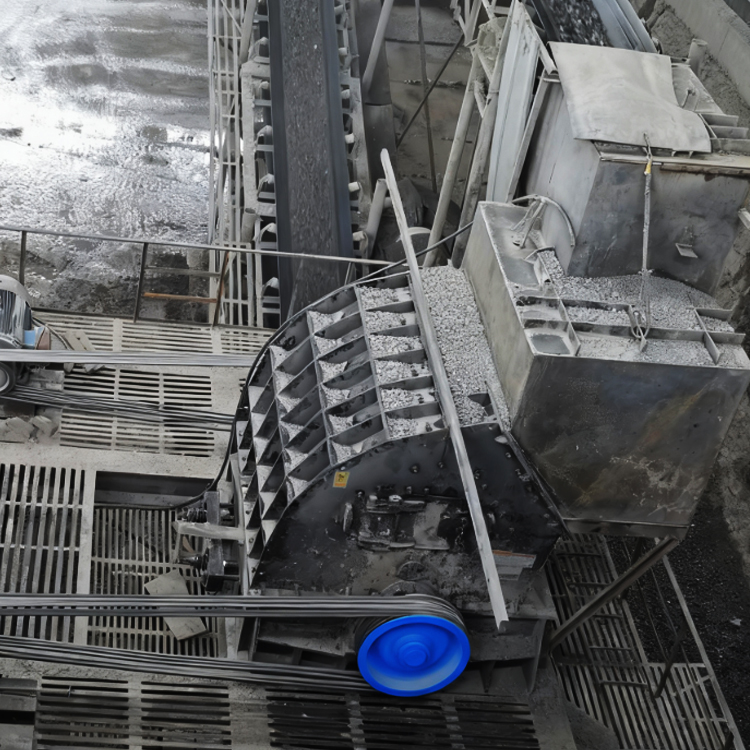
Remote Quarry Economics: Overcoming Logistical Bottlenecks and Haulage Costs
Remote quarry operations face a fundamental economic paradox: the value of extracted material is often consumed by the cost of moving it. Transporting raw, unprocessed rock from the blast face to a distant stationary crusher generates a cascade of operational expenses. Haulage—encompassing fuel, tire wear, and driver labor—can represent over 50% of total operational expenditure. Industry analysis shows truck haulage alone ranges from $0.25 to $1.50 per ton-mile, escalating sharply on the unpaved, steep-grade roads typical of isolated sites. This heavy traffic accelerates road degradation, demanding continuous grader and water-truck maintenance to manage dust and potholes.
Moreover, installing a stationary plant introduces significant infrastructure delays: constructing concrete foundations, high-voltage power lines, and permanent access roads can postpone revenue generation by 12 to 18 months—a timeline often incompatible with shorter life-of-mine profiles or volatile commodity markets. A mobile stone crusher plant resolves this by decoupling processing from fixed infrastructure, enabling the extraction point to serve as the processing hub.
The In-Pit Crushing Advantage: Reducing Transport Volume
The core economic benefit of mobile crushing lies in in-pit processing—positioning the crusher directly at the active face to process material before haulage. Rather than moving bulky, unprocessed feed laden with waste and fines, only saleable, sized aggregate is transported. This typically reduces haul volume by 60 to 80%, delivering a proportional reduction in the quarry’s largest variable cost center. For a mid-sized operation moving 500,000 tons annually, a 60% volume reduction translates to over $1.5 million in annual savings on fuel and maintenance—and enables a 30% reduction in fleet size.
Beyond cost, in-pit crushing enhances agility: as the quarry face advances, the plant relocates seamlessly, maintaining optimal proximity. This cuts emissions, contains dust and noise within a smaller footprint, and shifts the financial model from high-CAPEX, long-term grid dependency to a flexible, scalable OPEX approach—accelerating ROI and insulating operations from remote logistical constraints.
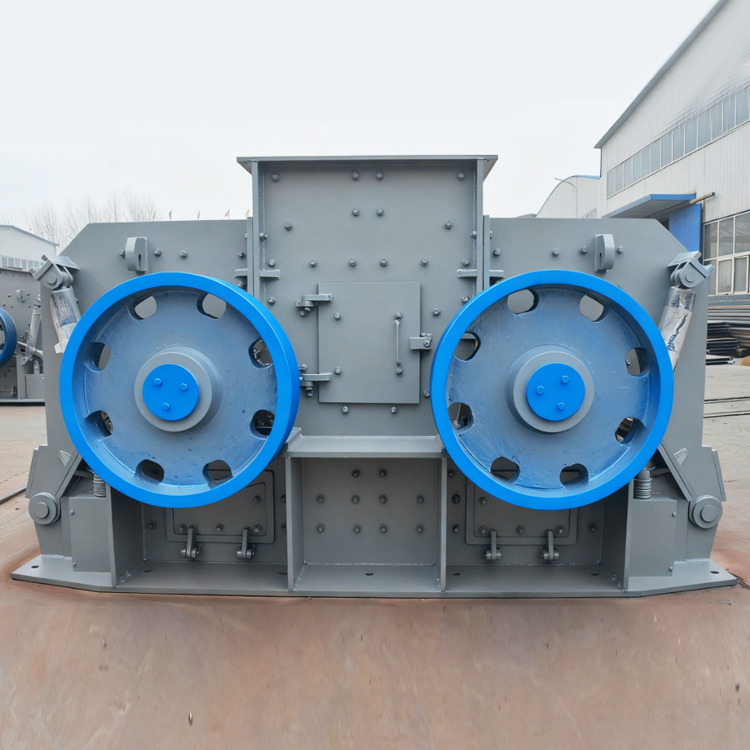
Off-Grid Power Solutions: Diesel-Hybrid and Battery-Buffered Systems
For remote quarry sites, reliable electricity is either absent or prohibitively expensive to extend. Diesel generators have long been the default, but frequent fuel resupply across rough terrain inflates logistics costs, worsens road wear, and exposes operations to price volatility. Since stone crusher plants demand continuous high-power output for crushing, screening, and conveying—even brief interruptions halt production and erode margins—grid dependency is no longer viable. Modern off-grid hybrid systems, integrating diesel with battery storage and renewable inputs, now deliver resilient, cost-effective power without fuel-supply chains. This independence eliminates infrastructure delays and unlocks consistent, efficient crushing in the world’s most inaccessible locations.
Today’s off-grid stone crusher plants operate autonomously by pairing diesel generators with lithium-ion battery buffers and intelligent load controllers. The battery bank handles base loads and short-duration peaks, allowing the diesel unit to run only at its most efficient load point—typically 70 to 85% of rated capacity—where fuel consumption per kWh is minimized. When battery charge drops, the generator starts, replenishes the buffer, and shuts down, cutting total diesel run hours by up to 80% versus generator-only systems. Smart load management prioritizes critical equipment, staggers motor starts, and transitions between power sources without interruption. This architecture reduces fuel use by 50% or more, extends engine life, and supports uninterrupted 24/7 operation with minimal onsite personnel—turning energy from a constraint into a competitive advantage.
Rapid Deployment and Modular Design for Short-Term Quarries
Quarry and mining projects rarely follow linear timelines. Exploration pits open and close within months; decommissioned mines pivot to reclamation, requiring on-demand aggregate. Short-term contracts and unpredictable material volumes make permanent infrastructure a liability. Fixed plants lock capital into a single location while contract durations shrink. A modular mobile approach enables rapid relocation, aligning processing capacity with project lifecycles. This agility prevents stranded assets and avoids the need for multiple stationary installations. For example, when a lithium exploration site in a high-altitude region concludes operations, the same crushing unit can be redeployed to a new pit—compressing the gap between prospecting and full-scale extraction. Such responsiveness is essential for multi-site operators navigating volatile markets.
Traditional crusher installations require extensive civil works—concrete footings, ramps, and lengthy permitting—that delay production by weeks. Modular stone crusher plants eliminate these barriers. Pre-assembled, skid-mounted, and track-mounted units arrive on site, connect via plug-and-play interfaces, and begin crushing within 72 hours. No foundations are poured, slashing upfront CAPEX. Contractors avoid sunk costs tied to permanent structures. On a 50-km road construction project, relocating the plant along the route reduces haul distances and handling costs. The result is faster ROI: lower initial investment, minimal idle time, and the ability to redeploy the same asset across multiple short-term contracts—transforming a fixed cost into a revenue-generating mobile resource.
Remote Monitoring and Predictive Automation for Unmanned Operations
A persistent skills shortage in remote quarrying often leaves operators without on-site expertise. Cloud-based SCADA systems allow a single engineer to monitor multiple remote crushing operations from a central control room. Real-time sensor data—tracking vibration, temperature, throughput, and bearing condition—feeds AI-driven diagnostics that detect anomalies like incipient bearing wear or misalignment. This early-warning capability bridges the expertise gap, enabling proactive maintenance without requiring specialists to travel to isolated locations.
Predictive maintenance algorithms, trained on historical failure patterns, forecast component failures days in advance. In extreme environments—from Saharan heat to Arctic freeze—these systems have reduced onsite staffing by up to 70%. Instead of routine manual inspections, crews deploy only when AI confirms a critical intervention is required. One Canadian Arctic operator achieved 98% uptime across its mobile crushing fleet after integrating vibration and oil analysis sensors with a cloud analytics platform. Savings in travel, accommodation, and hazard pay quickly offset the technology investment. The stone crusher plant becomes a self-monitoring asset—maximizing production while minimizing human exposure to hazardous conditions.
Frequently Asked Questions
What are the main benefits of using a mobile stone crusher plant? Mobile stone crusher plants reduce haulage and infrastructure costs, enhance operational flexibility, and accelerate ROI by eliminating the need for fixed installations. They also improve fuel efficiency and can be easily relocated to align with quarry advancement or project needs.
How do mobile stone crusher plants impact haulage costs? By processing material at the extraction site, mobile crushers reduce the volume of waste and fines transported, cutting haulage costs by 60 to 80%. This also leads to reduced fuel consumption and fleet size.
How do off-grid power solutions for stone crusher plants work? Off-grid power solutions use diesel generators integrated with lithium-ion battery buffers and renewable energy inputs. These systems provide uninterrupted power and optimize fuel consumption by allowing the diesel unit to operate only at peak efficiency.
What makes modular mobile stone crusher plants ideal for short-term operations? Modular mobile stone crusher plants offer rapid deployment, require no concrete foundations, and can begin crushing within 72 hours. This flexibility is essential for short-term contracts and exploratory quarry operations.
How does remote monitoring enhance the efficiency of stone crusher plants? Remote monitoring allows operators to oversee multiple sites from a central control room. Real-time analytics and predictive maintenance reduce equipment downtime, optimize performance, and minimize the need for onsite staffing.