
 EN
EN
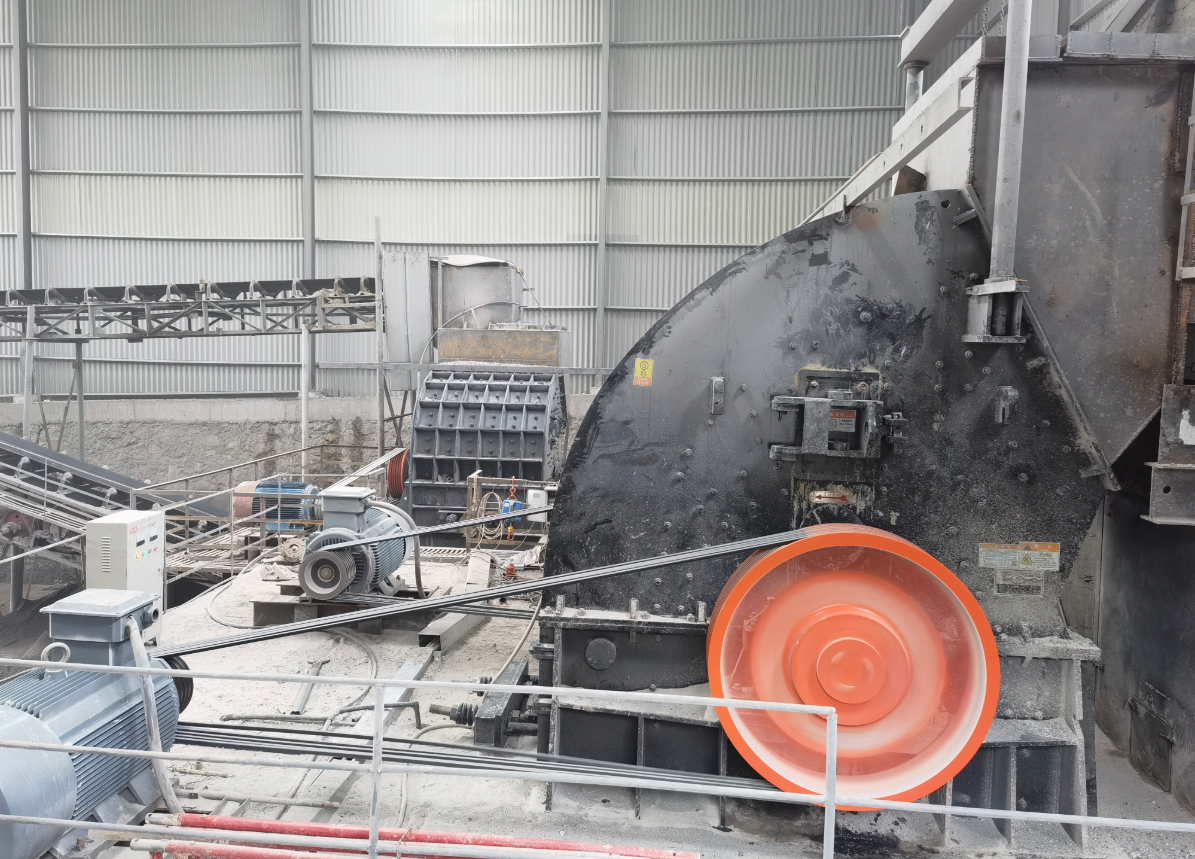
Real-Time Adaptability: Why Mobility Drives Demand for On-Site Stone Crusher Plant Flexibility
Tight deadlines and evolving site layouts demand equipment that repositions in hours—not weeks. A mobile stone crusher plant delivers real-time adaptability: when a quarry face advances or a demolition zone shifts, the unit can be relocated within a single shift, keeping production uninterrupted.
This agility eliminates multiple loading and hauling cycles. Crushing at the extraction point cuts transportation costs by up to 30% of total project expenses. In remote mining, following the ore body with the crusher avoids costly permanent infrastructure—like roads and power lines—required for fixed plants. Contractors also gain flexibility to reconfigure the crushing train for varying output sizes without long-term commitments. The result is a leaner, responsive operation whose capacity aligns precisely with project dynamics.
Configuration Comparison: Track-Mounted Versus Wheel-Mounted Designs
Choosing between track- and wheel-mounted designs hinges on terrain, project duration, and mobility needs. The table below outlines key performance and cost-of-ownership differences:
| Feature | Track-Mounted Plant | Wheel-Mounted Plant |
| Mobility | Self-propelled via crawler tracks | Requires towing vehicle (semi-trailer or truck-mounted) |
| Setup Time | Operational in minutes after arrival | Quick setup, but relocation depends on tractor unit availability |
| Terrain Suitability | Excels on rough, uneven, or soft ground—ideal for open-pit mines and steep slopes | Best suited for firm, level surfaces; optimal for short-term or urban sites |
| Transport Over Long Distances | Slower and more expensive due to weight and track limitations | Faster, more economical highway transport between sites |
| Operating Cost | Higher fuel use (diesel-powered track drives) | Lower fuel consumption; often supports hybrid or grid-connected electric operation |
| Maintenance | Track undercarriage demands frequent service; wear parts are costly | Tires are less expensive to replace; drivetrain is simpler |
| Production Capacity | 100 to 500 tph, engineered for frequent relocation | 50 to 500 tph, well-suited for medium-scale aggregates and recycling applications |
For projects relocating every few days—such as exploration drilling or linear infrastructure works—a track-mounted unit offers unmatched autonomy. When site stability allows periodic moves, a wheel-mounted system provides a more economical balance of mobility and operating efficiency. Both configurations preserve the core advantage: keeping the crusher close to the material.
Matching Stone Crusher Plant Technology to Material and Output Requirements
The optimal primary crushing technology in a mobile plant depends on feed hardness and required product shape. Jaw crushers use compressive force to handle feed up to 1,200 mm and remain the standard for hard, abrasive rock like granite or basalt. Cone crushers follow in secondary and tertiary stages, delivering high reduction ratios and consistent gradation—critical for specification-driven aggregate production. Impact crushers, by contrast, rely on high-speed impact forces and excel with softer, less abrasive materials such as limestone or recycled concrete, while also producing a more cubical particle shape. Matching the crusher type—jaw, cone, or impact—to material properties prevents premature wear, sustains rated capacity, and ensures compliance with end-product specifications.
Modern mobile stone crusher plants integrate screening units to enable closed-circuit processing. A scalping screen removes fines before material enters the crusher—reducing unnecessary wear and bypassing already-sized product. After crushing, a final sizing screen classifies output into precise fractions; oversize material recirculates to the crusher inlet via return conveyors. This self-contained loop eliminates the need for standalone screening equipment, shrinking site footprint and cutting logistics costs. Closed-circuit configurations are especially valuable where strict aggregate specifications—or variable feed conditions—demand consistent, on-spec gradations. As a single, mobile processing unit, the plant adapts autonomously to changing infeed while maintaining uniform output quality.
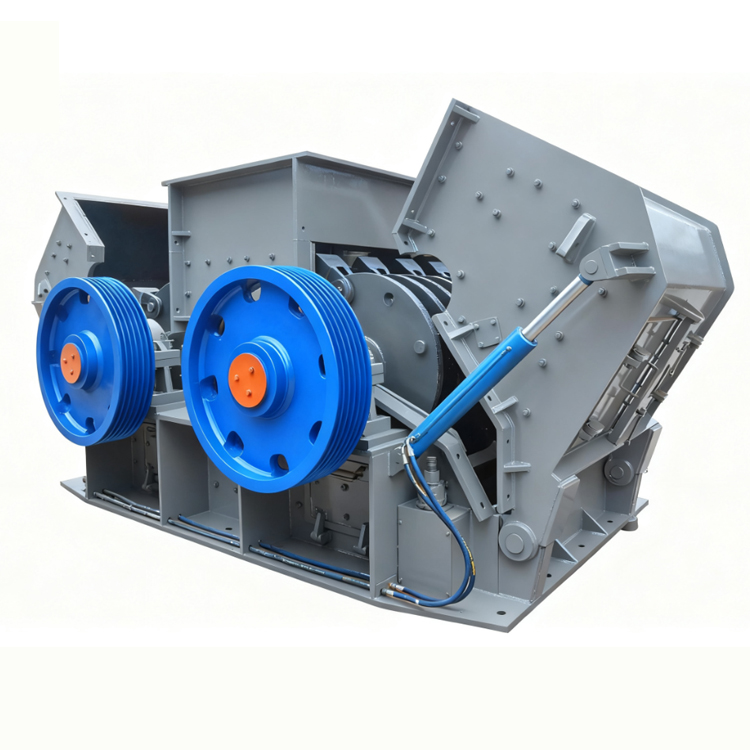
Operational Advantages Over Fixed Installations and Smart Control Integration
Mobile stone crusher plants deliver decisive operational advantages over fixed installations—starting with deployment speed. Traditional fixed plants require weeks of civil works, including heavy concrete foundations: a 200 t/h unit may need over 260 m³ of concrete, costing tens of thousands of dollars and delaying revenue-generating production. In contrast, track- or wheel-mounted plants become operational within days—eliminating capital-intensive site prep entirely.
Mobility also dramatically reduces haulage costs. By positioning the crusher directly at the excavation face, diesel consumption and trucking expenses drop by up to 50% in many applications. Beyond logistics, integrated smart control systems provide real-time monitoring of throughput, liner wear, and engine performance—enabling predictive maintenance and remote optimization. Advanced telematics automatically adjust crusher settings in response to feed variations, maximizing uptime and output consistency. Together, these capabilities lower per-ton processing costs and position the mobile stone crusher plant as the most adaptable solution for time-sensitive, high-efficiency projects.
Frequently Asked Questions
What are the advantages of a mobile stone crusher plant?
Mobile stone crusher plants offer real-time adaptability, faster deployment, reduced haulage costs, and the ability to relocate facilities directly to the job location for efficient operation, among other advantages.
What is the difference between track-mounted and wheel-mounted designs?
Track-mounted units are self-propelled via crawler tracks, excelling on rough terrain and allowing for frequent relocation, while wheel-mounted units require towing vehicles and are better suited for more stable, less-frequent relocation scenarios.
Which crusher type is suitable for different materials?
Jaw crushers are ideal for hard, abrasive materials such as granite, while cone crushers work best for consistent secondary and tertiary reduction. Impact crushers are better suited for soft materials like limestone or recycled concrete and provide cubical-shaped outputs.
What are the benefits of closed-circuit processing?
Closed-circuit processing integrates screening to remove fines, classify output, and recirculate oversize material for re-crushing. This results in higher efficiency and reduced logistics costs.
How does mobility reduce stone crushing project costs?
By eliminating extra hauling cycles and positioning the crusher at the source, mobile plants cut transportation and logistics costs by up to 30 to 50%, especially in remote locations or when handling variable site conditions.