
 EN
EN
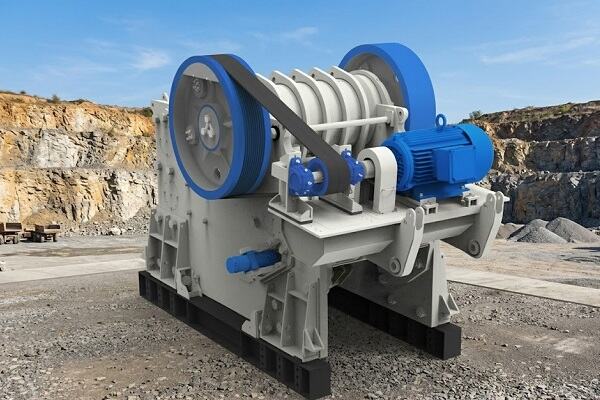
In the mining, quarrying, and construction materials industries, jaw crushers are among the most essential pieces of equipment. They are widely used for primary crushing operations because of their simple structure, high efficiency, and reliable performance.
Whether processing granite, limestone, basalt, or ore, jaw crushers play a critical role in reducing large rocks into manageable sizes for further crushing and screening.
Understanding how a jaw crusher works can help operators improve productivity, reduce downtime, and maximize equipment lifespan.
What Is a Jaw Crusher?
A jaw crusher is a primary crushing machine designed to break large materials into smaller particles using compressive force. It consists mainly of two jaw plates:
Fixed jaw plate
Moving jaw plate
The moving jaw exerts force on the material against the fixed jaw, crushing the material into smaller sizes. Jaw crushers are commonly used in:
Mining operations
Aggregate production
Cement plants
Road and railway construction
Recycling industries
Because of their robust design and high crushing ratio, jaw crushers are suitable for handling hard and abrasive materials.
Main Components of a Jaw Crusher
To understand the working principle, it is important to know the major parts of the machine.
Feed Opening
The feed opening is where raw materials enter the crusher. Larger feed openings allow the machine to process bigger rocks and stones.
Fixed Jaw Plate
This jaw remains stationary and provides a solid surface against which the material is crushed.
Moving Jaw Plate
The moving jaw plate is mounted on a swing jaw and moves back and forth through the eccentric shaft mechanism.
Eccentric Shaft
The eccentric shaft is the driving component that generates the swinging motion of the moving jaw.
Toggle Plate
The toggle plate transfers power from the motor to the moving jaw and also acts as a safety device to protect the crusher from overload.
Discharge Opening
The crushed material exits through the discharge opening at the bottom of the crusher. The size of the final product can be adjusted by changing the discharge setting.
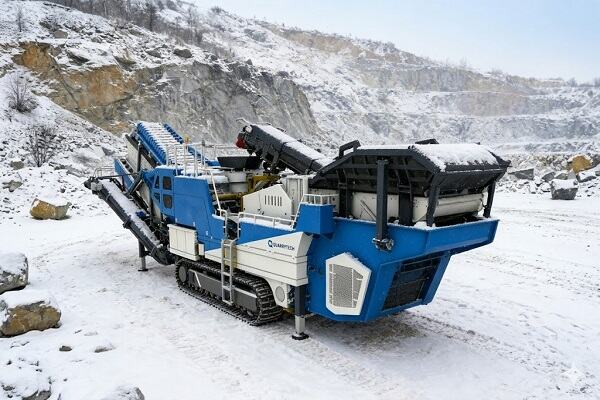
Jaw Crusher Working Principle Step by Step
The working process of a jaw crusher can be explained in several simple steps.
Step 1: Feeding the Material
Large rocks or ores are fed into the crushing chamber through the feed opening. The materials are usually delivered by vibrating feeders to ensure continuous and uniform feeding.
Step 2: Motor Drives the Eccentric Shaft
The electric motor powers the eccentric shaft through belts and pulleys. As the eccentric shaft rotates, it causes the moving jaw to swing toward and away from the fixed jaw.
Step 3: Compression Crushing Begins
When the moving jaw approaches the fixed jaw, the material trapped between them is compressed and crushed. The compressive force breaks the material into smaller pieces.
Hard materials such as granite and basalt can be efficiently crushed because jaw crushers are designed to withstand high pressure.
Step 4: Material Moves Downward
As the moving jaw retreats from the fixed jaw, the crushed material moves downward due to gravity. Larger particles remain in the chamber for additional crushing cycles.
This repeated motion ensures consistent size reduction throughout the crushing process.
Step 5: Discharge of Crushed Material
Once the material reaches the desired size, it passes through the discharge opening at the bottom of the crusher and is transported to the next stage of processing, such as secondary crushing or screening.
Advantages of Jaw Crushers
Jaw crushers continue to be widely used because they offer several important advantages.
High Crushing Efficiency
Jaw crushers can process large volumes of material with excellent crushing performance.
Simple Structure
Their mechanical design is relatively simple, making maintenance easier and reducing operational costs.
Strong Durability
Heavy-duty components allow jaw crushers to handle tough working conditions and abrasive materials.
Adjustable Output Size
Operators can easily control the final product size by adjusting the discharge opening.
Wide Application Range
Jaw crushers are suitable for various industries, including mining, aggregates, cement, and recycling.
Applications of Jaw Crushers
Jaw crushers are commonly used in the following applications:
Granite crushing plants
Limestone processing lines
Metal ore mining
Sand and gravel production
Construction waste recycling
Cement manufacturing
In modern aggregate production lines, jaw crushers are often combined with cone crushers, impact crushers, vibrating screens, and intelligent control systems to achieve higher efficiency and automation.
Conclusion
Jaw crushers are fundamental machines in the mining and construction materials industries. Their working principle is based on the compression of materials between a fixed jaw and a moving jaw, resulting in efficient primary crushing.
By understanding the jaw crusher working principle step by step, operators can improve performance, optimize maintenance, and enhance overall production efficiency.
With rich industry experience and advanced intelligent technologies, Zhongyu Dingli continues to provide high-quality crushing equipment and comprehensive EPC solutions for customers worldwide.