
 EN
Foundation Requirements: How Modular Crushing and Screening Plants Minimize Concrete Dependency
Elimination of Reinforced Concrete Foundations in Modular Systems
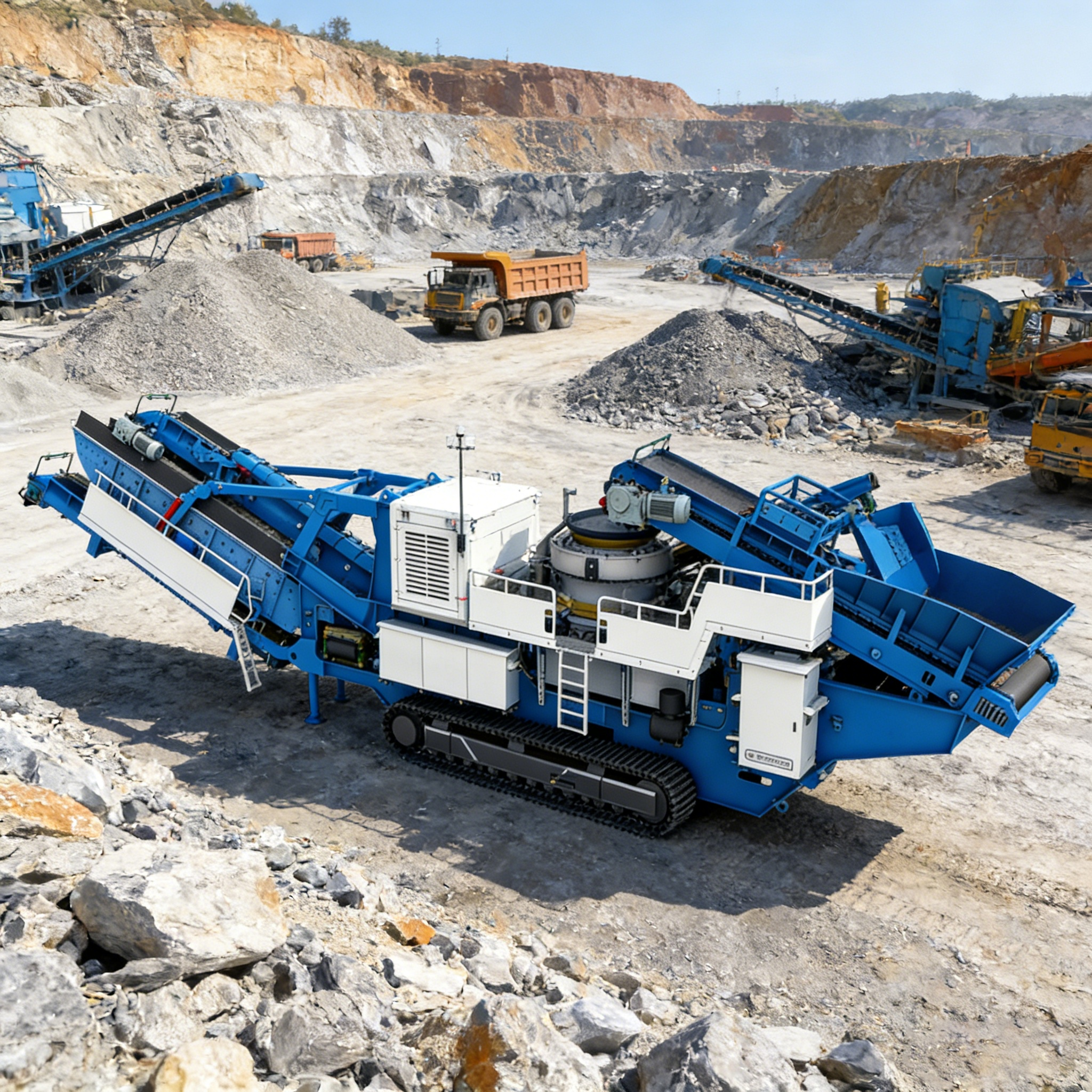
Modular crushing and screening plants eliminate the need for cast-in-place reinforced concrete foundations by using factory-engineered steel skids. Traditional fixed installations require extensive civil works: excavation, formwork, rebar placement, large-volume concrete pours, and multi-week curing periods—often delaying equipment installation by several weeks. In contrast, modular systems rest directly on compacted gravel pads, stabilized earth, or shallow concrete strip footings. This approach removes heavy formwork, bulk concrete, most reinforcing steel, spoil removal, backfilling, and foundation dewatering—especially critical on weak or sloping ground. Site preparation becomes faster, less weather-dependent, and more adaptable to unexpected subsurface conditions. Because modules are pre-integrated and standardized, anchor bolt layouts and foundation interfaces are consistent across units—eliminating custom civil detailing per machine. Civil design reviews simplify significantly, as load data and interface requirements are supplied directly by the module manufacturer.
Steel-Based Structural Integration and Load Distribution Advantages
Modular plants use integrated steel frames that unify structural support, walkways, platforms, and equipment mounting into a single, engineered load path. Unlike discrete concrete pedestals—which concentrate dynamic forces at isolated points—this unified frame distributes crushing and screening loads evenly, reducing peak soil bearing pressure. As a result, stable operation is achievable on compacted fill or minimal footings. The steel structure also absorbs vibration and shock through controlled flexure, minimizing transmission to adjacent equipment and reducing fatigue at connections. Factory alignment eliminates field shimming or corrective welding during installation. Crucially, all major components share a common base, limiting differential settlement. When relocated or reconfigured, these steel foundations can be unbolted, transported, and reused—unlike poured concrete, which becomes demolition waste and a sunk cost. For operators in remote, brownfield, or geotechnically challenging sites, this reusability and simplified civil scope significantly reduce engineering risk and accelerate approvals.
Quantified Civil Cost Savings from Modular Crushing and Screening Plants
Benchmark Data: 40–65% Lower Civil Works Expenditure in Modular Deployments
Industry data from 2023 projects consistently shows modular crushing and screening plants reduce civil works expenditure by 40–65% versus equivalent fixed installations. These savings stem primarily from lower foundation loads and the elimination of mass concrete structures. Conventional plants typically require deep reinforced footings, individual pedestals, retaining walls, and separate foundations for each crusher, screen, and conveyor gallery. Modular systems arrive on pre-aligned steel skids or containerized frames, allowing civil teams to install only compact leveling pads, edge beams, or aggregate-based sub-bases. This slashes excavation volume, formwork labor, rebar tonnage, concrete volume, curing time, and associated drainage and dewatering work. It also reduces temporary infrastructure—including crane pads, access roads, and spoil handling. Uniform load distribution through integrated steel frames lowers required ground-bearing capacity, enabling thinner pavement layers and simplified geotechnical preparation. Projects facing high water tables, expansive soils, or logistical constraints (e.g., remote locations) tend to realize savings toward the upper end of this range.
Case Study: Limestone Quarry in Rajasthan — ₹2.3 Crore Saved on Site Preparation
A limestone quarry in Rajasthan achieved a ₹2.3 crore reduction in site preparation costs after adopting a modular crushing and screening plant. The original civil estimate for a fixed plant was ₹5.6 crore—covering deep foundations for a primary jaw crusher, secondary cone crusher, multiple screens, and extended conveyor galleries. With modular engineering, the team replaced most deep foundations with compacted aggregate pads and minimal concrete edge strips. Final civil expenditure totaled ₹3.3 crore—a 41% reduction aligned with industry benchmarks. Beyond cost, the modular approach cut site establishment time by two months, eliminated extensive dewatering, and reduced temporary road construction. Freed-up capital was redirected to dust suppression systems and stockpile conveyors. Lower earthworks volumes decreased spoil disposal needs, while faster pad stabilization minimized weather-related delays—since no multi-week concrete curing was required.
Accelerated Installation and Operational Flexibility as Civil Cost Multipliers
From 12 Weeks to 10 Days: Faster Commissioning Reducing Labor, Temporary Works, and Site Holding Costs
Field data from 2024 aggregate projects confirms that conventional crushing spreads often require 12 weeks for civil works—including grading, formwork, rebar, concrete pouring, and full curing. A modular crushing and screening plant compresses this timeline to approximately 10 days on a prepared surface. Pre-assembled steel modules and bolted connections eliminate nearly all cast-in-place concrete, slashing labor hours, temporary access road construction, dewatering, and on-site supervision. Shorter schedules directly reduce holding costs for leased land, security, and idle equipment—and significantly lower carrying costs across multi-site programs. Weather-related delays diminish, as outdoor curing and wet-concrete operations are largely removed. Critically, accelerated commissioning converts fixed civil overhead into productive operating hours sooner—improving project cash flow and accelerating return on infrastructure investment. It also enables phased capacity expansion without additional civil scope, offering unmatched operational agility.
Integrated Auxiliary Systems: Reducing Civil Enclosures, Trenching, and Infrastructure Footprint
Conveying, Dust Suppression, and Power Integration in Modular Crushing and Screening Plants
Modular crushing and screening plants integrate conveying, dust suppression, and power distribution into pre-engineered skids—reducing or eliminating the need for concrete enclosures, deep cable trenches, and dispersed foundation pads. Conveyors, misting manifolds, control panels, and internal wiring arrive factory-fitted and interconnected, with walkways and service corridors built into the structural frame. Civil teams therefore pour fewer isolated plinths, retaining walls, or transformer pads. The result is a smaller physical footprint, reduced underground ducting, shorter earthworks duration, and lower preliminary civil investment. This integration not only cuts material and labor but also simplifies permitting, inspection, and long-term maintenance—further reinforcing the civil efficiency advantages of modular design.
FAQs
What are the main advantages of modular crushing and screening plants?
These plants minimize dependency on reinforced concrete foundations, reduce installation timelines, lower civil works expenditure, and offer operational flexibility through portable steel-based structures.
How do modular systems eliminate reinforced concrete foundations?
They use factory-engineered steel skids that rest on compacted gravel pads, stabilized earth, or shallow concrete footings instead of requiring heavy civil infrastructure.
What cost savings can be expected with modular plants?
Modular systems typically reduce civil works expenditure by 40–65%, depending on site conditions and project scope.
Can modular systems be reused after relocation?
Yes, steel foundations in modular systems can be unbolted, transported, and reused, which is not possible with poured concrete.
How do modular plants accelerate installation timelines?
By compressing commissioning timelines from 12 weeks to approximately 10 days, pre-assembled steel modules eliminate extensive site preparation and concrete curing times.
Table of Contents
- Foundation Requirements: How Modular Crushing and Screening Plants Minimize Concrete Dependency
- Quantified Civil Cost Savings from Modular Crushing and Screening Plants
- Accelerated Installation and Operational Flexibility as Civil Cost Multipliers
- Integrated Auxiliary Systems: Reducing Civil Enclosures, Trenching, and Infrastructure Footprint
- FAQs