
 EN
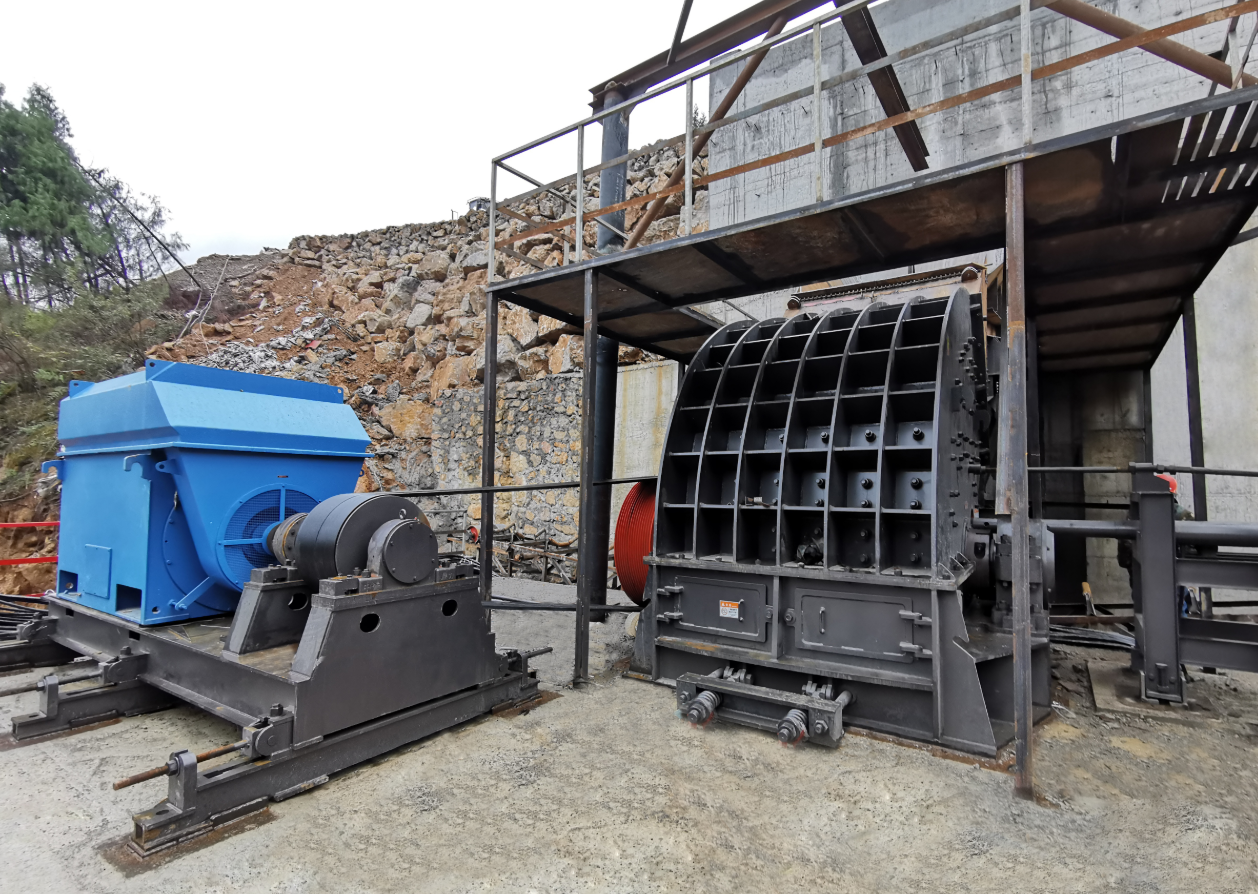
Gravity Separation: First-Stage Liberation of Coarse Free Gold
How Gravity Concentrators Recover High-Density Gold Early in the Circuit
Gold’s high specific gravity—approximately 19.3 g/cm³—contrasts sharply with most gangue minerals (typically <3.0 g/cm³), enabling efficient early-stage recovery of coarse, free gold. Gravity concentrators exploit this density difference using water-assisted settling or centrifugal force to separate liberated gold from quartz, calcite, and sulfides before flotation or cyanidation. This first-stage recovery delivers a high-grade concentrate, reduces gold loading in downstream circuits, lowers reagent consumption, and protects pumps and mills from abrasive coarse gold recirculation. For ores containing visible or granular gold, gravity separation often captures a substantial portion of total gold at minimal operational cost—requiring no cyanide or flotation reagents—and simplifies tailings management. As such, it is the logical and most economical initial unit operation in virtually all hard-rock gold processing plants.
Key Gold Mining Equipment: Falcon SB, Knelson, and Centrifugal Concentrators
Centrifugal concentrators—including Falcon SB and Knelson-type units—are the industry-standard gold mining equipment for first-stage coarse gold recovery. Operating at enhanced gravitational forces (60–200× g), they rapidly separate free gold across a broad particle-size range—from several hundred microns down to fine particles—making them suitable after primary grinding or as pre-leach scavengers. In Falcon SB units, low fluidization water promotes dense particle settling into retention grooves; Knelson units use controlled wall-injected water to fluidize the concentrate bed and reject lighter gangue. Both produce high-grade gold concentrates within minutes. Their compact footprint, low water demand, and reagent-free operation make them especially practical for remote operations and support simplified tailings and water management. Regular concentrate removal minimizes gold re-entrainment and ensures stable, repeatable performance.
Cyanidation (CIP/CIL): Core Dissolution for Fine and Refractory Gold
Why CIL Is the Industry Standard—and How Modern Gold Mining Equipment Optimizes It
CIL (Carbon-in-Leach) remains the industry standard for fine and complex gold ores because it integrates leaching and adsorption into a single, continuous process—reducing capital expenditure by 15–20% compared to standalone CIP (Carbon-in-Pulp) circuits. CIL typically achieves 92–97% gold recovery for fine-grained, high-clay, or mineralogically complex feeds, while CIP delivers 85–93% in lower-sulfur, more amenable ores. Modern gold mining equipment enhances CIL efficiency through automated carbon transfer systems, real-time cyanide dosing, and precise oxygen control—each reducing reagent waste and preventing soluble gold losses. By adsorbing gold as it dissolves, CIL also minimizes cyanide oxidation, further lowering reagent cost per tonne. That said, CIP retains advantages for high-silver or high-grade ores where delayed carbon contact allows more complete dissolution and loading of slower-reacting species. Final configuration decisions hinge on ore mineralogy, grade consistency, and slurry rheology—guided by rigorous test work and dynamic circuit modeling to maximize recovery without inflating reagent or carbon handling costs. Strict cyanide management and post-leach tailings detoxification remain non-negotiable in both configurations.
Flotation Preconcentration: Targeting Sulfide-Bound Gold Before Leaching
When Flotation Adds Value: Pyrite-Hosted Gold and Its Impact on Cyanide Consumption
Direct whole-ore cyanidation of pyrite-hosted gold is often inefficient: sulfide minerals consume cyanide and dissolved oxygen, driving up reagent costs and complicating detoxification. Flotation preconcentration addresses this by upgrading gold-bearing sulfides—such as pyrite, arsenopyrite, or chalcopyrite—into a small, high-grade concentrate (typically 5–15% of feed mass). This strategy slashes cyanide demand, reduces grinding energy, and shrinks leach tank volume. Only the flotation concentrate undergoes fine regrinding and subsequent cyanidation—avoiding unnecessary comminution of barren gangue. Flotation also mitigates preg-robbing in carbonaceous ores by removing organic-rich particles early. Success depends on properly configured gold mining equipment—including robust conditioning tanks, selective flotation cells, and precision regrind mills—that preserves coarse sulfide integrity and prevents slime coating. Bottle-roll testwork comparing direct cyanidation versus flotation-leach economics is essential before committing capital.
Integrated Flow Sheets: Combining Gravity, Flotation, and Cyanidation for Maximum Recovery & ROI
Integrated flow sheets align each separation method with the gold occurrence it handles most economically: gravity recovers coarse free gold first, flotation preconcentrates sulfide-hosted gold, and cyanidation dissolves the remaining fine or liberated gold. This staged approach systematically reduces reagent demand, minimizes downstream load, and optimizes equipment utilization. Selecting compatible, purpose-fit gold mining equipment—centrifugal concentrators, flotation cells, and agitated leach tanks—ensures balanced capital and operating costs against recovery targets.
A well-designed combined circuit consistently achieves ≥95% overall gold recovery, outperforming single-method plants, which average only 85–90%. Capturing “easy gold” early—especially via gravity—directly lowers cyanide and activated carbon consumption, improving both metallurgical efficiency and ROI.
| Process stage | Typical recovery contribution | Main role |
|---|---|---|
| Gravity separation | 30–60% of free gold | Remove coarse gold early and cut downstream load |
| Flotation | 85–95% of sulfide-associated gold | Preconcentrate fine gold locked in sulfides |
| Cyanidation | 92–98% dissolution for free-milling ore | Leach remaining exposed gold |
The most profitable flow sheet is therefore not defined by a single technology—but by a sequenced, mineralogy-driven integration that lets each unit operation perform where it delivers the highest marginal return.
FAQ
What is gravity separation in gold mining?
Gravity separation involves exploiting gold’s high specific gravity to separate it from lighter gangue minerals using water-assisted settling or centrifugal force.
Why are Falcon SB and Knelson concentrators ideal for gold recovery?
These centrifugal concentrators operate at high gravitational forces, enabling rapid separation of free gold over a broad particle-size range and producing high-grade concentrates quickly.
What differentiates CIL and CIP processes?
CIL integrates leaching and adsorption into a single process for fine and complex ores, whereas CIP separates these functions, often used for high-silver or high-grade ores.
What is flotation preconcentration?
Flotation preconcentration selectively upgrades sulfide-hosted gold into a small concentrate to decrease cyanide demand and comminution requirements during subsequent processing.
How can integrated flow sheets optimize gold recovery?
By sequencing gravity, flotation, and cyanidation methods, integrated flow sheets reduce reagent consumption, minimize downstream load, and achieve overall recovery rates of ≥95%.
Table of Contents
- Gravity Separation: First-Stage Liberation of Coarse Free Gold
- Cyanidation (CIP/CIL): Core Dissolution for Fine and Refractory Gold
- Flotation Preconcentration: Targeting Sulfide-Bound Gold Before Leaching
- Integrated Flow Sheets: Combining Gravity, Flotation, and Cyanidation for Maximum Recovery & ROI
- FAQ