
 EN
Why Buyers Must Model ROI Before Purchase
The Limitation of Upfront Capital Budgeting
A quarry owner evaluating a stone crusher investment often starts by comparing equipment price tags. That approach hides the real economics. Capital expenditure represents only part of lifetime spend, and a low bid can carry higher energy draw, faster wear-part consumption, or a smaller reduction ratio that forces extra screening stages. The purchase decision should rest on cash generated per ton over the asset's working life, not on the invoice alone. Total cost of ownership spans energy, wear parts, maintenance, and downtime.
Revenue-per-Ton as the Core Metric
Revenue-per-ton modeling translates engineering choices into dollars. Multiply planned throughput by achievable gradation mix and local aggregate price, then subtract operating cost to reach net contribution. A line producing 300 TPH of well-graded material at a healthy margin recovers capital faster than a cheaper plant running at 200 TPH with poor gradation. Buyers who model this before signing avoid capacity shortfalls that cap revenue for a decade. When a stone crusher is sized to demand, payback stays predictable. Sensitivity analysis helps: test price drops, feed size variation, and silica content swings to see which variable moves the recovery timeline most. A robust model survives market cycles instead of breaking at the first downturn.
Building a Total Cost of Ownership Model
Capital Expenditure Components
Capex covers the crushing plant, vibrating feeder, vibrating screen, conveyor belt, hopper, civil foundation, and electrical work. EPC packages from experienced suppliers fold equipment selection, process design, and commissioning into one scope, reducing coordination risk. Site survey and feasibility study cost belong here too. A 250–6000 TPH range means configurations differ widely, so comparing quotes line by line prevents hidden exclusions. The right stone crusher configuration matches capacity without gold-plating. Request a written scope that lists civil works, electrical supply, and spare parts starter kit. Experienced manufacturers with 30-plus years in aggregates clarify these items during the feasibility study, avoiding change-order surprises.
Recurring Operating Cost Drivers
Operating cost decides the payback period. Motor power dominates the energy bill; a heavy hammer crusher or impact crusher tuned to material hardness uses less kWh per ton than an oversized unit. Wear parts — liner plate, rotor, hammer — consume budget with every thousand tons. Dust control and noise control systems add minor running cost but protect permits and workers under OSHA and ISO 9001 discipline. Spare parts inventory and maintenance labor complete the recurring picture. Stone crusher uptime directly drives this cost line. Dust and noise control also reduce permit risk; non-compliant sites face stoppages that freeze revenue entirely. A disciplined maintenance plan with scheduled liner plate and rotor inspection keeps the crushing chamber producing.
Real Project Evidence from a 250–300 TPH Granite Line
Background and Production Targets
Sichuan Xichang operators faced hard granite with high silica content and needed 26–31 mm, 16–26 mm, 13–16 mm, 5–13 mm, and 1–5 mm products for regional construction. The problem was achieving stable gradation without excessive recirculation that would waste energy and wear parts. Throughput had to stay above 250 TPH through the crushing chamber across variable feed size. A poorly matched stone crusher would have stalled at lower output. The team needed a crushing equipment setup that balanced hard rock durability with precise gradation, because selling mixed-size aggregate at a single low price would erase margin regardless of volume.
Equipment Configuration and Outcome
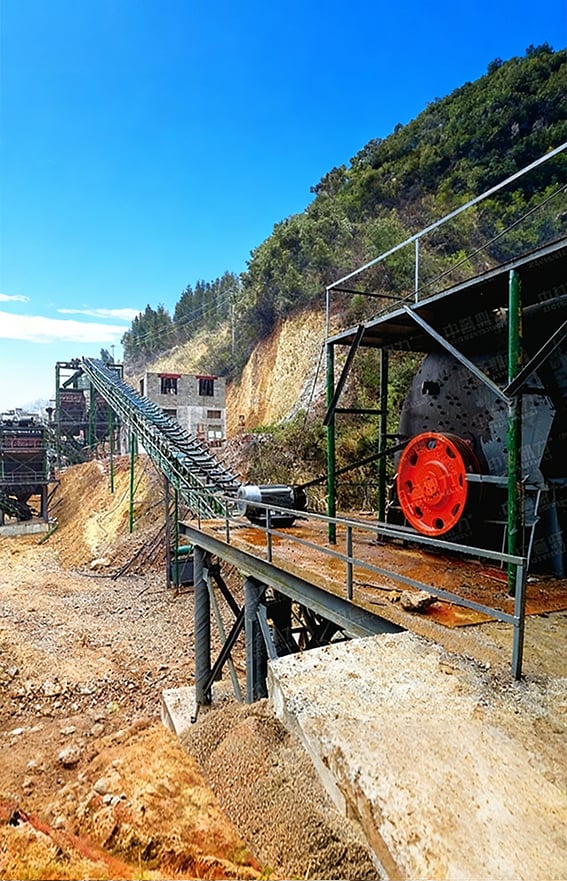
The solution paired a KPC1313 double-chamber hard rock crusher with a ZGC1250 vibrating feeder and 3YKQ2470 vibrating screens. Background problem met measurable effect: stable multi-size output held production near 280 TPH, while the dual-chamber design lowered recirculation load. Smart control system monitoring kept the line running within target particle size, and the operator recovered the investment inside the planned payback period thanks to strong revenue-per-ton from premium aggregate grades. Selecting this stone crusher type matched the rock's Mohs hardness. The dual-chamber design also lowered recirculation load, meaning less material re-entered the crushing chamber and fewer wear parts were consumed per thousand tons, a measurable effect that strengthened the return on investment case.
Reducing Payback Period Through Smarter Design
Modular Structure and Faster Commissioning
Modular design shortens the timeline from purchase to first saleable ton. A prefabricated steel-structure line can cut installation time roughly in half and lower labor versus traditional build, as seen on the Timor-Leste granite project. Faster commissioning means earlier cash flow, directly compressing the payback period. For buyers financing the spend, every week saved is interest and revenue earned. The modular stone crusher approach also eases future capacity expansion. Containerizable modules also simplify logistics to remote quarries, and smart control system dashboards give operators live throughput and particle size data to protect output quality.
Energy and Wear-Part Optimization
Tuning reduction ratio and matching the crusher to rock hardness on the Mohs scale extends liner plate and hammer life. Selecting a green mine configuration with efficient motor power and conditioned dust control reduces both cost and compliance risk. ANSI guarding and NFPA electrical standards protect uptime. These expertise-led choices trim operating cost per ton, lifting return on investment without raising throughput artificially. Each unit in the fleet benefits from this discipline. Repair crews should follow ANSI machine guarding and NFPA electrical rules during liner plate swaps, because a safe shutdown protects both workers and the production schedule that drives revenue.
Justifying a stone crusher purchase to finance teams comes down to one number: payback period supported by a transparent total cost of ownership model. Buyers who model revenue per ton, pressure-test operating cost, and choose a configuration matched to material hardness protect margin for the asset's full life. The right decision is rarely the lowest bid — it is the line that earns back capital fastest while staying reliable. Run a written feasibility study, demand a complete scope, and verify wear-part lead times before committing capital to build a defensible return on investment case.
Frequently Asked Questions
Question
What factors shorten the payback period of a crushing investment?
Answer: Payback shortens when revenue per ton rises and operating cost falls. A stone crusher running near its designed throughput with correct gradation sells more premium aggregate each hour. Faster commissioning, modular structure, and tuned motor power add cash flow earlier. Controlling wear-part and energy spend protects margin. Site survey and feasibility study before purchase prevent costly mismatch that extends recovery time.
Question
Why does a lower equipment price not mean lower total cost?
Answer: A low bid can hide exclusions such as conveyors, electrical work, or commissioning. Oversized or mismatched units draw more motor power and burn wear parts faster, raising operating cost for years. Hidden civil foundation or site survey gaps surface during installation. Total cost of ownership, not the invoice, determines return on investment. Comparing scope line by line reveals the true figure.
Question
How should capacity be sized against market demand?
Answer: Start from local aggregate demand and selling price, then model required tons per hour. Oversizing wastes capital and lifts operating cost; undersizing caps revenue and extends payback. Match the crushing chamber and reduction ratio to rock hardness and feed size. A feasibility study with measured material samples prevents error. Right-sizing protects margin across the asset's full working life.
Question
Can a modular design reduce commissioning time?
Answer: Modular steel-structure lines arrive prefabricated and need only on-site assembly, cutting installation time versus traditional concrete builds. The Timor-Leste granite project showed roughly half the installation period and lower labor. Earlier commissioning means the aggregate production line earns revenue sooner, compressing payback. Modular layout also simplifies future expansion. Buyers financing the spend gain cash flow weeks earlier through this approach.
Question
Which operating cost item most affects aggregate line profitability?
Answer: Energy and wear parts dominate recurring spend. Motor power drives the electricity bill, while liner plate, rotor, and hammer consumption scale with throughput and material hardness. Dust control and noise control add minor cost but protect permits and workers under OSHA and ISO 9001. Spare parts and maintenance labor complete the picture. Trimming energy and wear-part cost per ton lifts return on investment fastest.