
 EN
EN
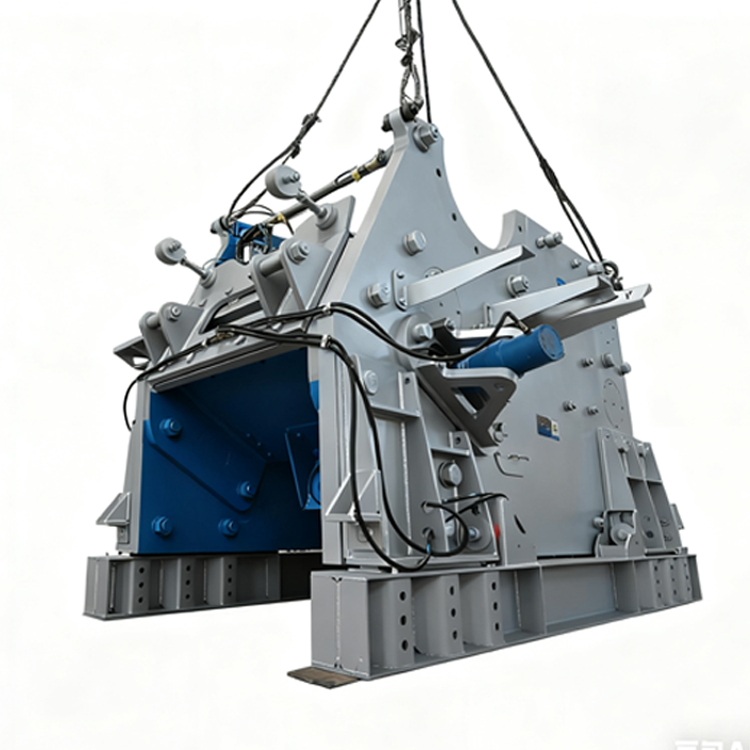
How Rock Hardness Influences Jaw Crusher Design and Liner Selection
Processing raw stone with high compressive resistance requires an in-depth analysis of mineral hardness and material behavior under high stress. Geological materials such as granite and quartzite, which typically register between 7 and 8 on the Mohs hardness scale, exhibit compressive strengths exceeding 250 MPa. Efficient primary reduction of these high-strength materials requires specific mechanical configurations, including a steep nip angle optimized between 18 and 22 degrees to ensure positive material engagement without slippage. Under these high-impact conditions, selecting the proper wear liner metallurgy is critical. Hadfield manganese steel alloys, featuring a 14% to 18% manganese concentration, are widely utilized because they undergo work-hardening under continuous impact, transforming the outer layer into a highly wear-resistant surface while maintaining a ductile, shock-absorbing core.
For highly abrasive materials with high silica content, such as certain granites or quartzites, standard liners wear down rapidly. In these challenging applications, utilizing chromium-molybdenum alloy steels or martensitic white irons provides superior resistance against abrasive micro-cutting. Additionally, selecting the correct jaw plate profile is essential for directing mechanical stress efficiently. Corrugated jaw profiles are highly effective for processing hard, stratified stones by concentrating compressive forces along natural geological cleavage planes, whereas flat, heavy-duty plates are better suited for extremely abrasive, non-stratified rock to distribute localized wear more evenly.
Table 1: Material Hardness and Optimal Liner Selection Guide
| Material Type | Mohs Hardness | Compressive Strength (MPa) | Recommended Jaw Liner Metallurgy | Optimal Jaw Profile Design |
| Limestone / Shales | 3.0 to 4.0 | 80 to 120 MPa | Medium Manganese Steel (13% Mn) | Standard Flat / Utility Wave |
| Basalt / Diabase | 6.0 to 7.0 | 150 to 220 MPa | High Manganese with Chrome (18% Mn, 2% Cr) | Heavy-Duty Corrugated |
| Granite / Quartzite | 7.0 to 8.0 | 220 to 280+ MPa | Premium Hadfield Steel or Martensitic Iron | Sharp Deep-Toothed / Rock-Shedding |
Optimizing Capacity and Gradation Control
Maximizing the volumetric throughput of a primary crushing station requires maintaining a disciplined choke-feeding configuration. Engineering data indicates that a jaw crusher operates at peak thermal and mechanical efficiency when the incoming feed occupies approximately 60% to 70% of the active crushing chamber depth. This spatial distribution ensures that crushing forces are distributed evenly across the upper and lower sections of the jaw plates, preventing localized high-stress wear zones near the discharge area. Maintaining this optimal feed level prevents material bridging at the feed opening and reduces energy consumption per processed ton by up to 15%.
Precise control of the final aggregate size distribution is managed by adjusting the Closed Side Setting (CSS). Modern primary crushers utilize integrated hydraulic wedge adjustments or automated hydraulic cylinders to calibrate the CSS on-the-fly. This real-time precision ensures strict compliance with international aggregate specifications, such as ASTM C33 or EN 12620, by continuously compensating for progressive liner wear. Keeping the CSS within tight tolerances minimizes the recirculating load of oversized materials, optimizing downstream secondary crushing efficiency.
Table 2: Throughput Capacity vs. Chamber Load Optimization Analysis
| Chamber Fill Level (%) | Operating Load Condition | Relative Liner Wear Rate | Energy Efficiency Index | Risk of Material Bridging |
| Under 50% | Under-fed (Slabby output) | Accelerated lower-plate wear | Poor (High idle energy) | Very Low |
| 60% to 70% | Optimized Choke-Feed | Evenly distributed wear | Maximum (15% savings) | Negligible |
| Over 90% | Overloaded (Stalling risk) | Severe wear, high thermal stress | Low (High motor strain) | High risk of bridging |
Understanding the Throughput Degradation Curve
Operating a primary jaw crusher continuously at its maximum mechanical limit accelerates component wear and increases unplanned downtime. When a machine operates at 90% or higher of its rated load capacity, structural components undergo elevated mechanical fatigue, and bearing operating temperatures increase significantly. This high thermal and mechanical stress can reduce the operating lifespan of toggle plates, pitman assemblies, and heavy-duty eccentric shafts.
In contrast, maintaining a sustainable operating threshold of approximately 75% of maximum rated capacity extends liner wear life by 200 to 300 operating hours. This conservative operating strategy stabilizes structural load cycles and reduces the risk of fatigue-related mechanical failures. By maintaining steady, uninterrupted operations, processing plants can achieve higher annual production targets compared to facilities that continuously push equipment to its absolute mechanical limits.
Primary vs. Secondary Roles in Processing Lines
Jaw crushers are highly effective as primary reduction units because their robust, open-mouth design allows them to accept large run-of-mine boulders and reduce them efficiently to manageable sizes. However, because they rely purely on compressive force, jaw crushers have limited ability to control the shape of the final aggregate. The output from a primary jaw crusher often contains elongated, flaky particles that may not meet the strict cubicity requirements of modern concrete or asphalt specifications. Consequently, achieving high-quality, cubic final products under 20 mm requires integrating secondary and tertiary crushing stages, such as cone crushers or impact crushers, to refine particle shape and optimize final size distribution.
Logistical Evaluation of Mobile and Stationary Configurations
Choosing between a stationary primary station and a mobile, track-mounted configuration depends on the planned lifespan of the quarry and local logistical infrastructure. Track-mounted mobile units can be fully commissioned within days, eliminating the need for extensive concrete foundation work and complex local permitting. This mobility allows operators to position the primary crusher directly at the quarry face, significantly reducing dump truck haulage distances and lowering fuel expenses.
However, for long-term operations with a projected lifespan exceeding five years, stationary installations remain the industry standard. Stationary plants can accommodate heavier structural steel feeds, integrate advanced dust suppression and noise dampening systems, and deliver higher hourly processing capacities with lower long-term maintenance costs per ton.
Engineering Expertise for High-Capacity Mineral Processing
Designing high-efficiency primary crushing systems that balance wear life with consistent capacity requires deep manufacturing experience and advanced structural engineering. For over 30 years, Zhongyu Dingli has been a leading manufacturer of large-scale mining and aggregate machinery, specializing in heavy-duty primary crushers and complete 100 to 6000 TPH processing lines. By combining advanced finite element analysis (FEA) with heavy-duty casting capabilities, Zhongyu Dingli delivers robust, wear-resistant crushing solutions that maximize operational uptime, lower total cost of ownership, and support global operators in running highly profitable, sustainable quarrying operations.