
 EN
EN
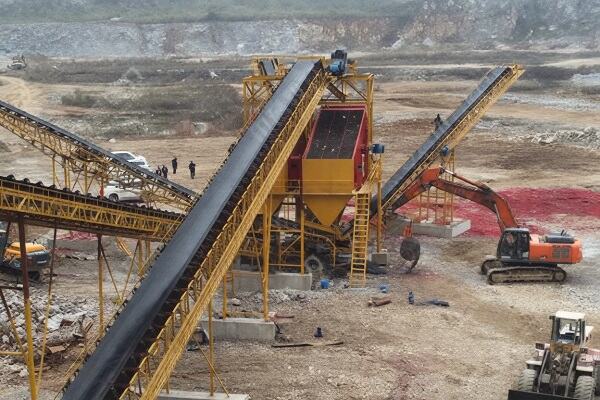
In the mining and building materials industries, the efficiency of a crushing production line directly affects productivity, operating costs, product quality, and long-term profitability. A well-designed crushing line not only improves material handling capacity but also reduces downtime, energy consumption, and maintenance requirements.
With more than 30 years of experience in the mining and construction materials sector, Zhongyu Dingli provides advanced crushing and screening equipment, EPC project solutions, and intelligent management systems to help customers achieve high-efficiency aggregate production.
Understanding Crushing Production Line Layout
A crushing production line is a complete system designed to process raw materials such as limestone, granite, basalt, river stone, and other aggregates into finished products with specific particle sizes. The layout of the production line determines how efficiently materials move through each processing stage.
A typical crushing production line includes feeding equipment, a primary crushing system, secondary and tertiary crushing systems, screening equipment, conveying systems, dust collection and environmental protection systems, as well as intelligent control systems to ensure efficient, stable, and automated material processing.
Key Principles of Crushing Line Layout Design
Material Characteristics Analysis
Before designing a crushing line, it is essential to thoroughly understand the physical and chemical properties of the raw materials, as these directly determine the overall system configuration and equipment selection.
Key factors such as hardness, moisture content, abrasiveness, and feed size all influence how the material behaves during crushing and screening processes, affecting both efficiency and equipment wear.
For instance, hard rock such as granite typically requires robust jaw crushers and cone crushers, while softer materials like limestone can be processed effectively using impact crushers, and high-moisture materials need specially designed feeding and screening solutions to prevent clogging and ensure smooth operation.
Capacity and Production Requirements
Production capacity is one of the most important considerations in crushing line design. The layout should be optimized according to the customer’s required hourly output and final product specifications.
An efficient layout minimizes bottlenecks between equipment stages and ensures continuous material flow. Oversized equipment may increase investment costs unnecessarily, while undersized equipment can reduce overall productivity.
Therefore, balancing equipment capacity throughout the entire production line is essential for achieving stable output.
Optimized Equipment Configuration
Selecting the appropriate combination of crushing and screening equipment is essential for achieving high efficiency, stable operation, and consistent product quality.
A typical configuration includes a vibrating feeder for uniform material feeding, a jaw crusher for primary crushing, a cone crusher or impact crusher for secondary crushing, and a vibrating screen for accurate material classification, with optional sand-making equipment for fine aggregate production.
In modern crushing plants, intelligent automation systems are also widely applied to monitor equipment status in real time, optimize operating parameters, and improve overall production efficiency.
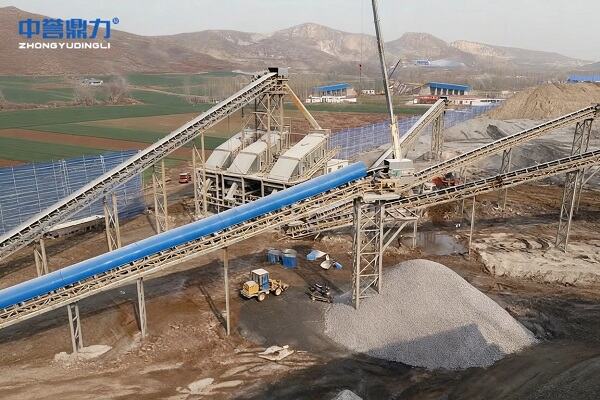
Importance of Process Flow Optimization
A scientifically designed process flow reduces material circulation, energy waste, and unnecessary equipment wear.
Reducing Material Transfer Distance
Shorter conveyor distances reduce energy consumption and lower operational costs. Compact layouts also simplify maintenance and improve site management efficiency.
Multi-Stage Crushing Optimization
Properly distributing the crushing ratio across different crushing stages helps improve product shape and reduce equipment stress.
For example:
Primary crushers handle large feed materials.
Secondary crushers reduce material size further.
Tertiary crushers improve aggregate shaping and grading.
This staged approach improves both product quality and equipment lifespan.
Screening Efficiency Improvement
Efficient screening systems are essential for maintaining product consistency. High-performance vibrating screens separate materials accurately and reduce recirculating loads within the crushing circuit.
Optimized screen layouts also help increase final product yield and reduce waste generation.
Environmental Protection in Crushing Line Design
Environmental compliance is now a major requirement in mining and aggregate production. Modern crushing production lines must incorporate environmental protection measures to minimize dust, noise, and wastewater pollution.
Dust Control Systems
Dust suppression equipment such as spray systems, enclosed conveyors, and pulse dust collectors help improve working conditions and reduce environmental impact.
Noise Reduction Measures
Low-noise equipment design and sound insulation systems help create safer and more environmentally friendly production sites.
Green Production Concepts
Energy-saving motors, intelligent power management systems, and optimized process flows contribute to lower carbon emissions and sustainable production.
A green and intelligent crushing plant not only improves environmental performance but also enhances corporate competitiveness.
Conclusion
Crushing production line layout and optimization play a crucial role in improving aggregate production efficiency, reducing operating costs, and ensuring stable product quality. From equipment selection and process design to intelligent automation and environmental protection, every aspect of the production line must be carefully planned and optimized.
With over 30 years of experience in the mining and building materials industries, Zhongyu Dingli continues to provide reliable crushing and screening equipment for customers worldwide. Through innovative technology and professional engineering services, Zhongyu Dingli helps clients build efficient, intelligent, and sustainable crushing production lines for long-term success.