
 EN
EN
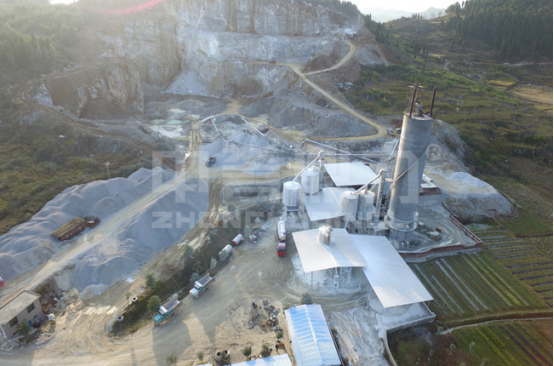
Primary Crushing Equipment: Handling Raw Feed and Setting Throughput Capacity
Jaw Crushers for Initial Reduction of Hard Rock (Granite, Basalt)
Jaw crushers are the workhorses of primary crushing for hard, abrasive materials like granite and basalt. Using compressive force between a fixed and moving jaw, they reliably reduce large feed sizes up to 1,500 mm with minimal maintenance due to their robust, simple design. To maximize throughput and equipment longevity:
- Continuous feeding sustains rated capacity; intermittent operation can cut efficiency by 10–20%
- Pre-crushing scalping (removing fines before the crusher) increases effective throughput by 15–20%
- Sizing with contingency is essential: A target of 240 TPH requires selecting a unit rated for 280–340 TPH, accounting for real-world utilization rates of 70–85%
| Crusher Attribute | Jaw Crusher | Gyratory Crusher |
|---|---|---|
| Max Feed Size | 1,500 mm | 1,500 mm |
| Material Suitability | Hard/abrasive (Mohs 5–8) | Hard/abrasive (Mohs 5–8) |
| Throughput Range | 200–1,000 TPH | Typically exceeds 1,000 TPH |
Gyratory Crushers in High-Volume Mining and Quarrying Operations
Gyratory crushers are engineered for continuous, high-capacity primary crushing in large-scale mining and quarrying operations. Their deep crushing chambers and rotating eccentric motion allow them to process feed sizes exceeding 1,500 mm at unmatched volumes, making them the preferred choice where uptime, throughput, and reliability outweigh mobility requirements.
Key operational advantages include:
- Higher reduction ratios per pass than jaw crushers
- Reduced bridging risk with sticky or slightly damp feeds
- Integrated automation that stabilizes output despite variable feed rates
For operations consistently exceeding 1,000 TPH, gyratory crushers deliver measurable lifecycle benefits: wear parts last 20–30% longer than comparable jaw units when processing highly abrasive rock, translating directly into lower cost-per-ton and fewer unplanned shutdowns.
Secondary and Tertiary Crushing Equipment: Achieving Target Gradation and Particle Shape
Secondary and tertiary crushing refine coarsely crushed material into precisely sized, shape-optimized aggregates. These stages are critical for meeting specifications in concrete, asphalt, and specialized construction applications, where particle gradation and cubical shape directly influence strength, workability, and durability.
Cone Crushers for Consistent Size Reduction of Medium-Hard to Hard Stone
Cone crushers apply compressive force within a conical chamber formed by a rotating mantle and stationary concave. This geometry enables progressive, controlled size reduction ideal for medium-hard to hard stone such as granite and basalt.
Their strengths include:
- High reduction ratios (up to 8:1), efficiently converting 100–200 mm feed into tightly banded 10–50 mm product
- Automatic tramp release systems, which protect internal components from uncrushable contaminants without manual intervention
- Adjustable eccentric bushings, allowing fine-tuned control over closed-side setting and final product gradation
In tertiary roles, cone crushers consistently produce sub-12 mm aggregates required for high-performance concrete mixes, delivering both precision sizing and excellent particle shape across diverse quarrying and mining settings.
Impact Crushers (HSI/VSI) for Cubical Aggregate in Recycling and Soft-Medium Stone Applications
Horizontal Shaft Impactors (HSI) and Vertical Shaft Impactors (VSI) rely on high-velocity impact rather than compression, making them uniquely suited for applications demanding superior particle shape especially cubical, low-elongation aggregates essential for asphalt compaction, drainage layers, and high-strength concrete.
- HSI crushers excel in secondary circuits, handling larger feed sizes while delivering consistent shape and moderate reduction
- VSI crushers dominate tertiary and finishing roles, producing <5 mm material with exceptional cubicality and surface texture particularly valuable in premium asphalt and manufactured sand production
Impact crushers also shine in recycling: Their kinetic energy mechanism effectively fractures weathered concrete and asphalt pavement into angular, mechanically stable aggregates achieving higher reduction ratios and better shape control than cone alternatives. This makes them indispensable in sustainable aggregate operations targeting circular economy goals.
Specialized Crushing Equipment for Challenging Feed Conditions
Heavy-Duty Hammer Crushers for Wet, Clayey, or High-Moisture Limestone
Conventional compressive crushers suffer significant throughput loss up to 50% when processing wet, clay-laden limestone due to material adhesion and screen blinding (Ponemon, 2023). Heavy-duty hammer crushers overcome these limitations through impact-driven mechanics and purpose-built structural resilience.
Design features enabling reliable performance include:
- Reinforced rotors and high-inertia hammers, delivering sufficient kinetic energy to fracture sticky material without relying on compression
- Non-clogging grate systems, engineered with self-cleaning geometry and adjustable openings to prevent buildup
- Torsion-resistant frames and vibration-dampening mounts, absorbing dynamic stresses induced by inconsistent, clay-heavy feed
Operating at up to 1,200 RPM, these units disintegrate moist aggregates while minimizing wear via replaceable tungsten-carbide hammer tips. In field applications with limestone containing 15% moisture, they sustain stable gradation and achieve ~40% higher operational efficiency compared to jaw crushers, eliminating frequent stoppages for manual cleaning and bridging remediation.
System Integration: Screening, Feeding, and Flow Optimization for Efficient Crushing Equipment Deployment
Getting the most out of a crushing plant isn’t just about picking top quality machines for each part of the process. What really matters is how everything works together as a complete system. Let’s talk about screening first since it plays such a critical role. Modern day multi deck vibratory screens can separate big chunks from smaller ones with over 90 percent effectiveness. This helps protect equipment further down the line, especially things like cone crushers and impact crushers. When we keep those oversized materials from getting through, we reduce the strain on our main crushing units. Plus, there’s less material bouncing back around the system which means lower maintenance costs and longer equipment life overall.
Feeding control is equally decisive. Intelligent feeders equipped with variable-speed drives and load-sensing feedback maintain steady, non-overloading flow into primary crushers. For jaw units, choke feeding (keeping the crushing chamber full) maximizes throughput and improves particle consistency.
Flow optimization ties the system together:
- Strategic conveyor layouts minimize drop height and dust generation
- Closed-circuit configurations with recirculating conveyors ensure consistent final gradation by returning oversize material for reprocessing
- PLC-based control systems monitor real-time parameters including vibration, power draw, and feed rate enabling predictive adjustments
This integrated approach reduces bottlenecks, cuts unplanned downtime by up to 30%, and elevates overall plant efficiency, turning individual crushing assets into a coordinated, high-yield production system.
FAQs: Primary and Secondary Crushing Equipment
What are the main differences between jaw and gyratory crushers?
Jaw crushers are best suited for initial reduction of hard rock materials using compressive force, while gyratory crushers handle continuous, high-capacity crushing operations for large-scale mining and quarrying with their rotating eccentric motion, allowing them to manage even larger feed sizes.
How do cone crushers differ from impact crushers?
Cone crushers use compressive force for consistent size reduction of medium-hard to hard stone, with adjustable settings for precision; impact crushers rely on high-velocity impact to achieve superior particle shape, making them ideal for applications requiring cubical aggregates, such as recycling.
What makes heavy-duty hammer crushers suitable for wet, clayey limestone?
Heavy-duty hammer crushers employ impact-driven mechanics and structurally resilient design features, such as reinforced rotors and non-clogging grates, to effectively process materials with high moisture content without significant throughput loss.
Table of Contents
- Primary Crushing Equipment: Handling Raw Feed and Setting Throughput Capacity
- Secondary and Tertiary Crushing Equipment: Achieving Target Gradation and Particle Shape
- Specialized Crushing Equipment for Challenging Feed Conditions
- System Integration: Screening, Feeding, and Flow Optimization for Efficient Crushing Equipment Deployment
- FAQs: Primary and Secondary Crushing Equipment