
 EN
EN
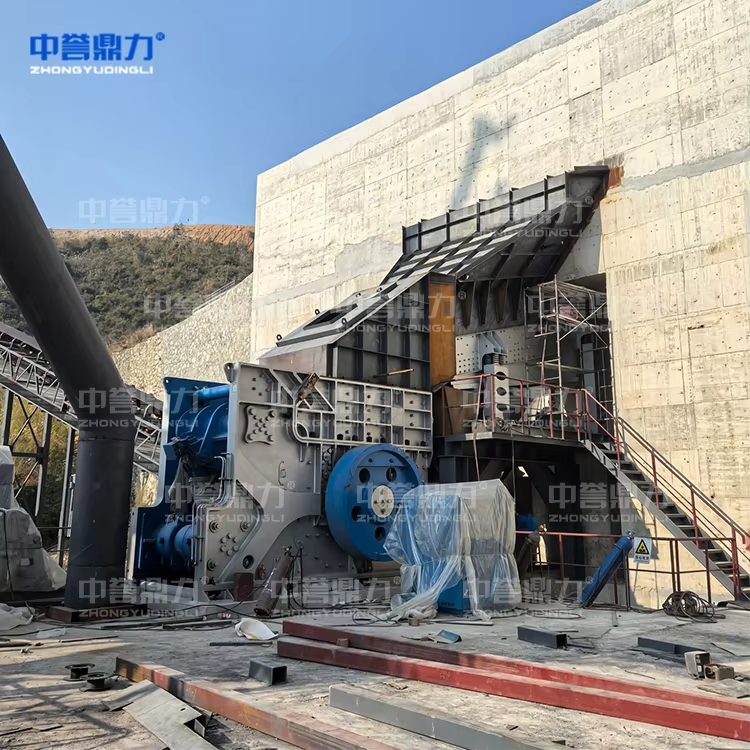
Why Aggregate Crushing Plants Are Critical for Modern Road and Construction Projects
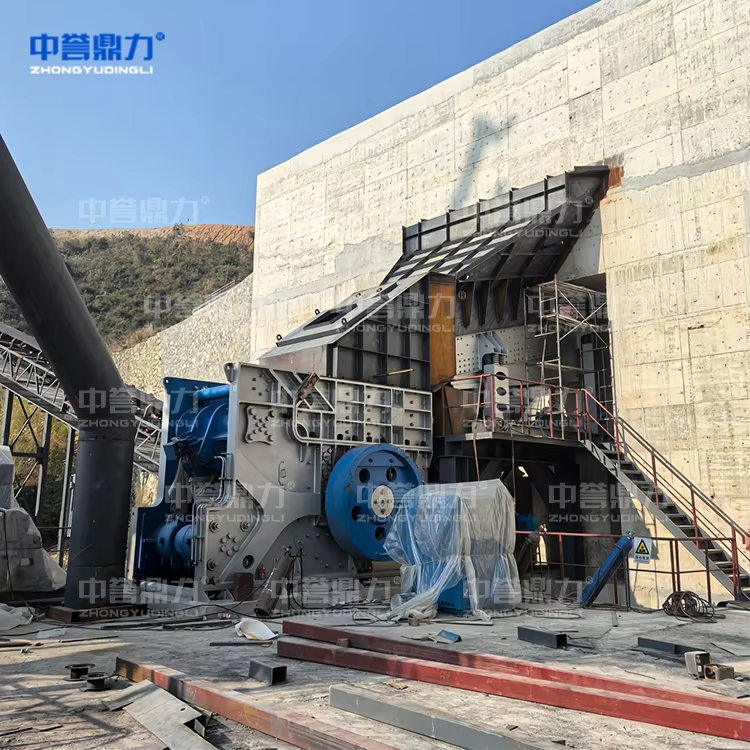
The right aggregates are what hold up our roads and bridges for years to come. When specs aren't met properly, we end up with shorter lasting roads, weaker foundations, and structures that just don't stand up to wear and tear. Today's aggregate crushing plants let contractors process raw rock right at the site into materials that meet ASTM, EN, or AASHTO standards. Think crushed stone for road bases, gravel for drainage systems, and sand mixed into concrete. This approach cuts down on all the headaches and environmental impact of shipping massive amounts of aggregate across country. Local crushing can save construction projects around 40% in costs when compared to buying pre-crushed materials and paying for expensive freight. Plus, these plants help recycle old concrete from demolished buildings back into usable aggregates, keeping hundreds of millions of tons out of landfills every year worldwide. The modular design means they can be set up quickly after disasters hit, getting much needed road building materials into areas where recovery needs are urgent. Without good crushing operations running smoothly, big infrastructure projects often run into serious delays, struggle to find enough materials, and sometimes have to compromise on quality standards just to finish on time.
How an Aggregate Crushing Plant Works: From Raw Rock to Specification-Compliant Aggregates
Primary Crushing: Jaw and Gyratory Crushers for High-Capacity, Abrasion-Resistant Feed Handling
Both jaw and gyratory crushers break down blasted quarry rock into manageable pieces around 6 to 8 inches in size. They do this by applying massive compressive forces, sometimes reaching as high as 350 MPa, through specially hardened steel surfaces designed to withstand the constant grinding and abrasion. When dealing with particularly tough materials like granite, gyratory crushers tend to perform better thanks to their full 360 degree crushing action and ability to handle large volumes. For softer rocks such as limestone or similar medium hardness materials, most operators prefer jaw crushers because of their strong back and forth movement pattern. Vibration feeders play a critical role in keeping things moving smoothly by controlling how much material gets fed into the system at once, preventing jams and allowing for continuous operation at impressive speeds over 1,200 tons per hour. Getting the right size reduction at this initial stage makes all the difference downstream, cutting down on wasted material that would otherwise need reprocessing while also extending the lifespan of the entire crushing setup.
Secondary & Tertiary Processing: Cone and VSI Crushers for Precise Gradation in Asphalt and Concrete Aggregates
Cone crushers work by compressing materials between moving parts called mantles and fixed concaves, which helps create aggregates that are just right for asphalt mixes ranging from three quarters of an inch up to two inches. After this step comes Vertical Shaft Impactors, or VSIs for short. These machines take the crushed material and smash it against itself at high speed. This process is really important because it creates those cube-shaped aggregates with minimal flakiness needed for strong concrete mixtures, usually below half an inch in size. Most modern aggregate processing facilities now combine both these steps together thanks to programmable logic controllers known as PLCs. These systems can tweak things like how tight the crusher gets, how fast the rotor spins, and what pressure builds up inside the chamber while trying to hit specific gradation targets instantly. When everything works smoothly together like this, around seventy to eighty five percent of the material meets specifications right away, cutting down on waste and saving money in the long run.
Screening and Classification: Ensuring Compliance with ASTM D448, EN 13043, and National Highway Agency Standards
Multi-deck vibrating screens segregate crushed material into precise size fractions using woven wire or polyurethane panels calibrated to project-specific gradation bands. Particles travel along inclined decks at calculated trajectories, with undersized material falling through designated apertures. This mechanical classification ensures:
- Base course aggregates meet AASHTO M147 gradation and durability requirements
- Asphalt aggregates comply with ASTM D692 (coarse) and D1073 (fine) angularity indexes
- Concrete aggregates satisfy EN 12620 shape, flakiness, and elongation criteria
Integrated moisture sensors and automated reject gates divert non-conforming batches for reprocessing. Final certification requires gradation curves to fall within ±5% of DOT-specified bands—a requirement essential for structural performance in high-load applications such as interstate highway foundations, where bearing capacities exceed 30 MPa.
Selecting the Right Aggregate Crushing Plant: Capacity, Material, and Application Alignment
Matching Crusher Type (Jaw, Cone, VSI, Impact) to Rock Hardness, Moisture, and End-Use Requirements
Choosing the right crusher really comes down to matching what the equipment can do with the type of material being processed and what kind of final product is needed. For tough stuff like granite or basalt that needs breaking down first, jaw and gyratory crushers work best because they handle large volumes and produce coarse outputs efficiently. When dealing with softer materials such as limestone or old concrete rubble, impact and vertical shaft impact (VSI) crushers tend to perform better since they create those nice cube-shaped particles that make concrete stronger and easier to work with. Moisture levels matter too. Sticky clayey materials often stick together and clog machines, so impact crushers with their self cleaning action become preferable here. Dry materials that flow freely usually respond better to cone crushers which offer fine control over particle size distribution. What happens at the end determines what shape matters most. Angular crushed stone from compression methods works great in road base layers where interlocking helps hold everything together, while rounder gravel produced by impact crushing fits better in drainage systems where water needs to pass through easily.
Modular vs. Stationary Configurations: Case Example—Leading Manufacturer’s Plant for Highway Reconstruction
The choice between stationary and modular plants really comes down to three main factors: how big the project is, what kind of mobility requirements exist, and any limitations at the actual site location. Stationary systems generally handle much larger volumes, somewhere around 300 to 800 tons per hour, and tend to cost less per ton when running for extended periods at fixed locations. These are typically best suited for big quarries where they have steady supply of raw material coming in all the time. Modular plants work differently though. They're built for flexibility. Take the recent highway reconstruction along G312 as just one example. A major equipment company managed to set up their modular system at 11 different sites throughout the project area. At each stop, installation took less than three days flat, and they were able to process whatever local materials happened to be available on site. The whole operation ran smoothly across those 18 months despite moving from place to place.
FAQ
What are the main types of crushers used in aggregate crushing plants?
The main types of crushers used in aggregate crushing plants are jaw crushers, gyratory crushers, cone crushers, and Vertical Shaft Impactors (VSIs).
How do aggregate crushing plants contribute to environmental sustainability?
Aggregate crushing plants contribute to environmental sustainability by processing aggregate locally, reducing transportation emissions, and recycling old concrete into usable aggregates, thereby decreasing landfill waste.
Why is it important to choose the right configuration for an aggregate crushing plant?
Choosing the right configuration is crucial for matching capacity and application requirements, optimizing cost efficiency, and minimizing relocation time during operations.
What standards must aggregate crushing plants comply with?
Aggregate crushing plants typically comply with standards such as ASTM D448, EN 13043, AASHTO M147, ASTM D692, and others, ensuring materials meet the necessary gradation and durability requirements.
Table of Contents
- Why Aggregate Crushing Plants Are Critical for Modern Road and Construction Projects
-
How an Aggregate Crushing Plant Works: From Raw Rock to Specification-Compliant Aggregates
- Primary Crushing: Jaw and Gyratory Crushers for High-Capacity, Abrasion-Resistant Feed Handling
- Secondary & Tertiary Processing: Cone and VSI Crushers for Precise Gradation in Asphalt and Concrete Aggregates
- Screening and Classification: Ensuring Compliance with ASTM D448, EN 13043, and National Highway Agency Standards
- Selecting the Right Aggregate Crushing Plant: Capacity, Material, and Application Alignment
- FAQ