
 EN
EN
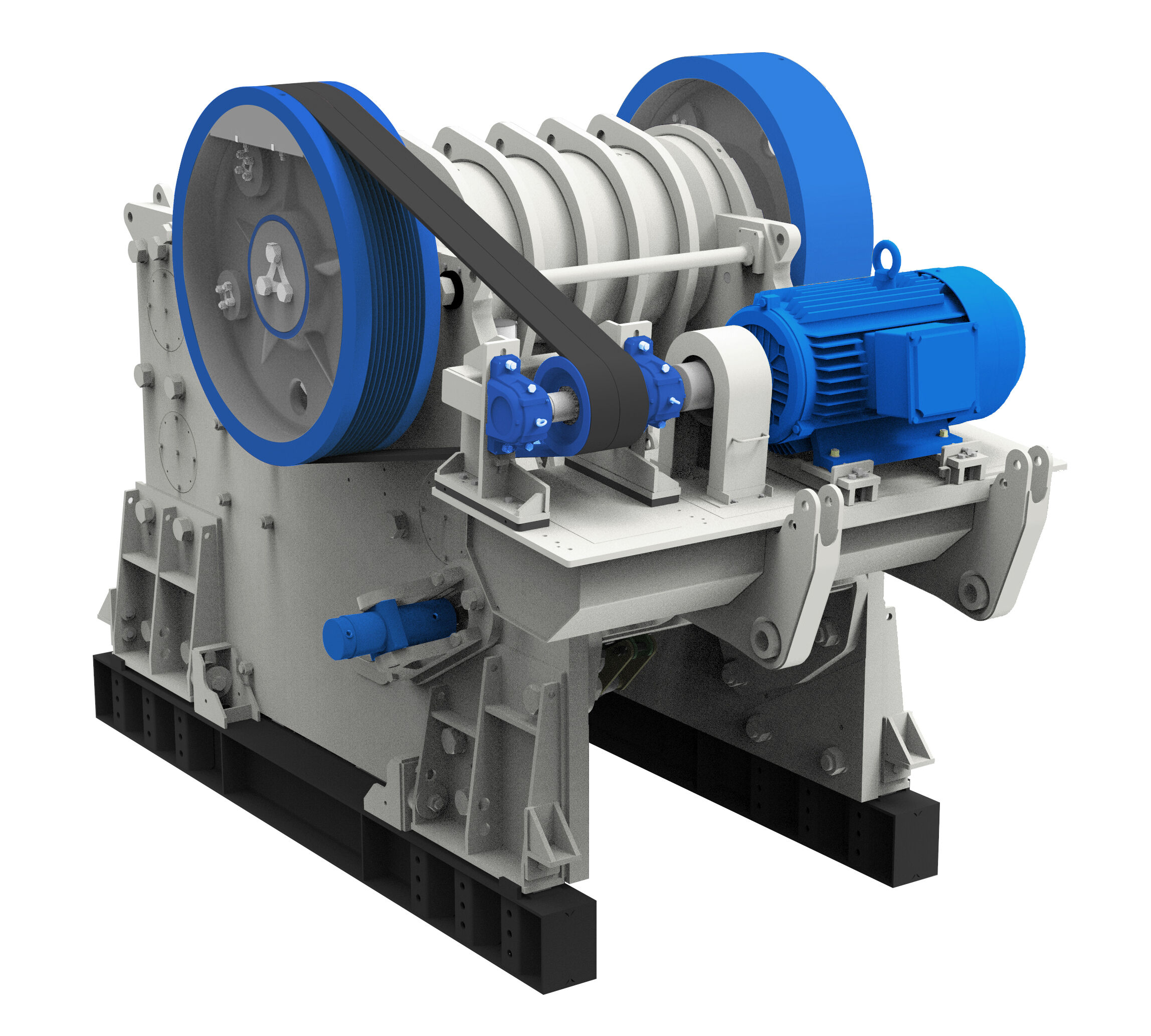
Why Jaw Crushers Are the Optimal Choice for Primary Crushing of Large, Hard Stone
Compressive force advantage: Efficient breakdown of high-Mohs materials (e.g., granite, basalt, quartzite)
Jaw crushers are really good for breaking down tough, gritty rocks like granite, basalt, and quartzite which sit above 6 on the Mohs scale. They work by squeezing these materials between two solid plates with massive pressure. What makes them stand out compared to other methods is how consistently they break things apart without creating too many tiny particles. Operators notice around 30 percent fewer big chunks ending up in the final mix too. Big quarries rely on these machines to handle over 1,200 tons per hour while still keeping energy costs reasonable. The secret lies in their design that concentrates force exactly where it needs to go instead of wasting energy on unnecessary bouncing or spreading around loose material.
Robustness and simplicity: Minimal moving parts, high uptime in demanding quarry and mining environments
Jaw crushers have generally less than five main moving parts and don't rely on hydraulic systems, which makes them really reliable when operating in tough dusty environments. The heavy duty manganese steel used for the jaws stands up well against wear caused by repeated stress cycles, so these machines last around 40% longer compared to other more complicated options out there. Real world testing at granite quarries indicates they stay operational between 92% to almost 95% of the time, even when subjected to constant shocks and vibrations. Because of this straightforward mechanical design, maintenance expenses drop significantly and there's far less risk of expensive downtime. This matters a lot for mines located far from civilization where unexpected shutdowns can cost upwards of $740k every single hour lost, as highlighted in recent research published by Ponemon Institute back in 2023 regarding industrial operation interruptions.
Critical Technical Specifications for Large-Scale Jaw Crusher Selection
Feed size compatibility: Ensuring maximum particle size 85% of feed opening (e.g., 500 mm jaw 425 mm max feed)
Getting good results starts with getting the feed size right. The rule of thumb in the industry is simple enough: never let any single piece of material come close to matching the crusher's opening size. For instance, if we're talking about a machine with a 500mm gap between jaws, then rocks bigger than around 425mm just won't work properly. When stuff gets too big for what the machine can handle, all sorts of problems pop up. The material tends to bridge across the opening, creates lopsided loads inside the chamber, and wears down one side of the jaw plates faster than the other. This kind of imbalance can really hurt production rates sometimes dropping them by nearly a third. On the flip side, feeding material that's too small isn't great either. It makes the compression process less effective and actually speeds up wear because the smaller pieces just bounce around too much what operators call chatter. Checking the sizes of materials going into the system first thing helps maintain the proper shape of the crushing chamber and keeps things running smoothly without sacrificing efficiency.
Jaw Crusher Design Types and Their Application Fit for Large Stone
Single toggle vs. double toggle: Throughput capacity (up to 2,500 tph), maintenance frequency, and structural load handling
In high capacity operations, single toggle jaw crushers are the go to choice for many quarry owners, capable of processing around 2500 tons per hour at maximum capacity. These machines feature an eccentric shaft design that actually cuts down on frame stress when running under tough conditions, which makes maintenance easier overall since there are simply fewer parts that need attention over time. Double toggle versions exist too but aren't seen as often anymore. They offer better force multiplication though and spread stress more evenly throughout the crushing chamber, so they work particularly well with really tough materials or mixed feeds that rate above 7 on the Mohs scale. The downside? Those extra mechanical links come at a cost. Maintenance needs jump somewhere between 30 and 40 percent higher in environments where abrasion is a big issue, which explains why most operators stick with single toggles unless dealing with extremely hard rock types specifically.
Blake-style stationary jaw design: Superior rigidity for abrasive, oversized feed (>500 mm) in hard-rock operations
The Blake style setup with its fixed vertical jaw offers exceptional structural strength when dealing with large abrasive materials over 500mm in size. The heavy duty toggle mechanism stands up better against frame bending during tough granite or basalt crushing tasks. We've seen this design last significantly longer than newer models that use swinging fixed jaws, probably cutting down on early wear issues by around a quarter or so. Rock processors appreciate how stable this configuration remains, maintaining uniform particle sizes even when faced with oddly shaped boulders. That's why many primary crushing sites still go with Blake style machines for their main operations, especially where they need to handle substantial volumes of hard rock material day after day.
FAQ
What makes jaw crushers ideal for large-scale primary crushing?
Jaw crushers are optimal for primary crushing due to their robust compressive force that efficiently breaks down high-Mohs hard materials while maintaining reliable and straightforward operations in quarry environments.
How does the feed size affect jaw crusher performance?
The feed size should be 85% of the jaw's opening to prevent blockages and ensure smooth operation. Oversized materials can lead to operational bottlenecks, while undersized materials may cause increased wear.
What are the advantages of using single toggle jaw crushers?
Single toggle jaw crushers are preferred for their higher throughput capacity, simplicity, and reduced maintenance needs compared to double toggle alternatives, particularly in handling tough materials.